



Guide
First Adult Tricycle Buying Guide
Choose your first adult tricycle by checking rider fit, storage, weight limits, gears, brakes, assembly, and service before buying.
We research everything we recommend. When you buy through our links, we may earn a commission. Learn more
Guide
Understand recumbent trike toe-in, manufacturer measurement methods, component condition, alignment service requests, and post-service checks.

Updated · 12 min read
Toe describes how paired wheels are oriented relative to each other when the trike is positioned for the prescribed measurement. On a tadpole recumbent, that relationship can affect tire behavior and rolling. A straight-looking handlebar or a photograph of parallel wheels does not establish the correct setting.
This guide explains terminology, observations, and a useful service inquiry. It does not supply a universal toe value or a generic tie-rod adjustment procedure. Use the exact trike's current manual and qualified service where required. Steering condition must be assessed before an adjustment is used to hide a fault.

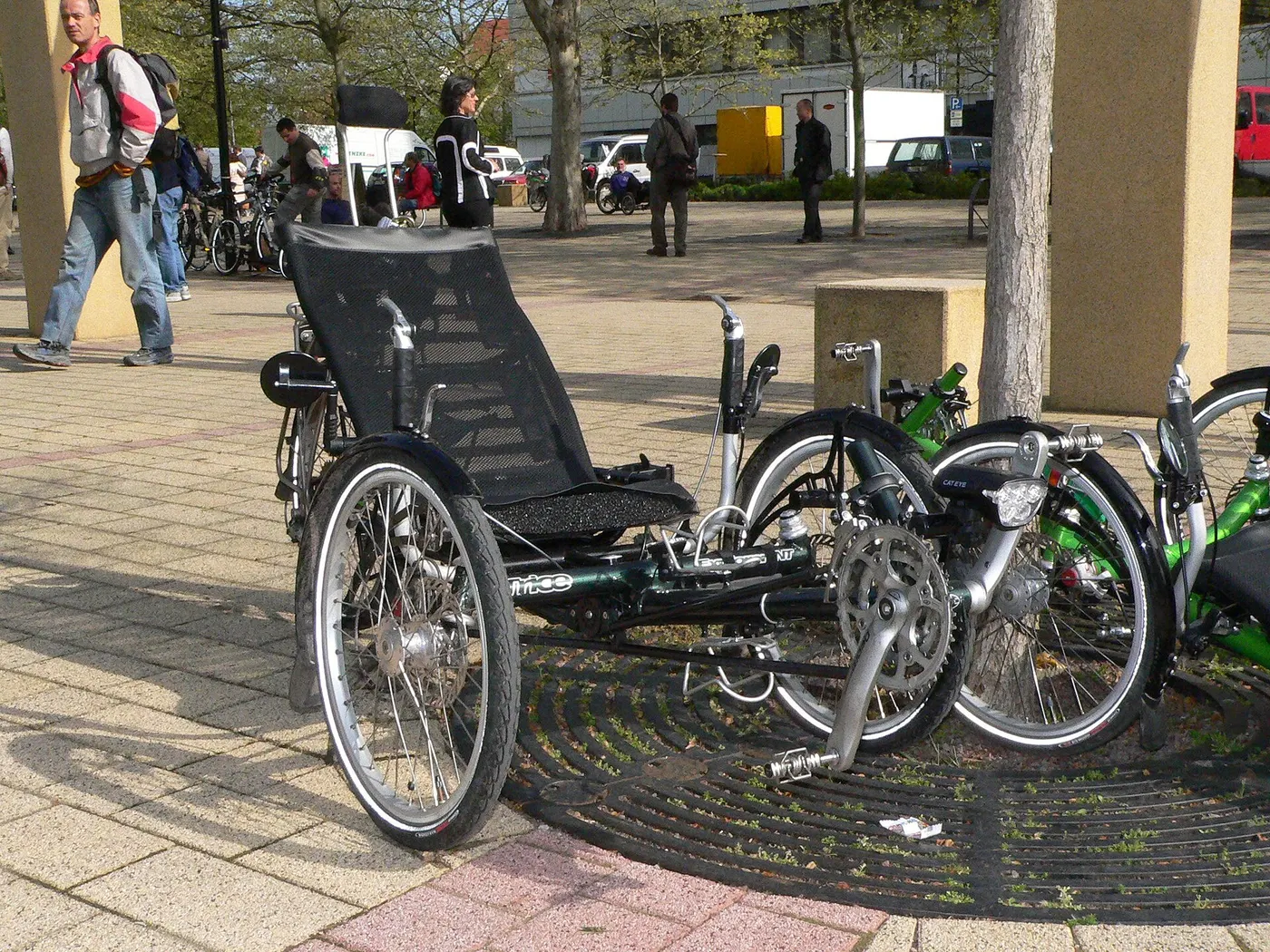
A tadpole has two front wheels and typically a single rear wheel. A delta has a different arrangement. Do not assume the same steering-alignment procedure applies because both vehicles have three wheels.
Record model, generation, front-wheel specification, steering components, and suspension configuration. A manual for another family can use different measurement points and loading conditions. Match the actual installed parts.
The layout guide provides the broader comparison. This article concerns a defined paired-front-wheel alignment task, not every cause of steering discomfort on an adult tricycle.
Toe-in generally describes paired wheels directed slightly toward each other at their front, while toe-out describes the reverse. The exact measurement method and target belong to the manufacturer. A visual estimate is not a substitute.
Wheel track, camber, handlebar orientation, and toe describe different relationships. An aligned-looking control can coexist with an incorrect wheel setting, and a road cross-slope can feel different even when the mechanism is sound.
The camber guide separates surface influence from observations on level ground. Do not adjust toe because a trike pulls only on one sloping street without assessing the whole situation.
AZUB's current instructions page links a trike guide and an alignment tutorial. Its guide includes a front-wheel alignment section and instructs checking steering components before adjusting. That is an example of model-specific procedure and preconditions, not a universal setting for all recumbents.
Do not use an old forum's degree or millimeter figure as the target. The maker may specify particular measurement points, rider or load condition, and a sequence for the steering parts. Those details determine what the number means.
If the manual does not match the installed components, ask the manufacturer or dealer. A used vehicle may have modifications, damage, or another generation's parts. Identity uncertainty belongs ahead of adjustment.

Inspect only through the prescribed owner checks and note damage, play, binding, or a recent impact. A bent steering part or worn joint is not corrected merely by changing toe. Stop use when condition affects predictable control.
AZUB's alignment guidance specifically addresses component condition before the adjustment. Keep that priority rather than choosing a setting that makes the vehicle roll despite an unresolved fault.
The maintenance checklist supplies the wider inspection habit. Do not dismantle steering joints or tighten random hardware while trying to identify which part feels loose.
Check tire specification, condition, and inflation through the exact instructions. A mismatched or damaged tire can complicate the comparison. Do not lower pressure to make an alignment symptom less noticeable.
Visible wheel wobble, rim damage, or another condition may affect measurement points and rolling. Arrange qualified inspection when the base wheel condition is uncertain. The tire guide covers those separate tasks.
Keep all relevant observations in the service report. A tire wearing unevenly is useful evidence but does not prove toe is the only cause. The diagnosis should reflect the complete vehicle.
Read where measurements are taken and how the wheels are positioned. Tire sidewalls, rims, and other references can produce different results. Do not compare a number taken by one method with a target defined by another.
Follow the stated rider or loading condition. A setting may depend on how the exact design responds under load. Do not assume unloaded and ridden measurements are interchangeable or invent a universal correction.
If owner measurement is permitted, use the required equipment and stable arrangement. Record the method, condition, and result without adjusting unless the procedure and scope are clear. An observation can support service without becoming a home repair.
A handlebar can shift after an impact or careless handling while the wheel relationship needs separate assessment. Conversely, toe can be wrong even when the bars appear symmetrical. Keep the two issues distinct in the report.
Do not rotate controls to make a steering fault feel centered. Use the exact manufacturer's guidance for orientation, clamping, and inspection. The torque guide explains why generic tightening values are insufficient.
If the trike has been knocked during transport, describe the event and avoid forcing the bars back by leverage. The service provider needs the original observation and damage history to choose the correct assessment.
Use normal control and the manufacturer's permitted trial method in a suitable setting. Releasing the bars to see whether the trike runs straight can create a different risk and is not needed for a useful observation.
Record whether behavior appears on a level familiar surface in both directions, with the same approved configuration. That can help separate surface effects without establishing a final diagnosis. Keep the trial modest and stop for unpredictable control.
The safe-riding guide provides the practice foundation. A concerning steering symptom should not be tested at higher speed or on a steep descent to make it more obvious.

Identify whether a documented change to suspension, wheels, or another component requires a particular alignment check. Do not assume every adjustment changes toe, but do not ignore a required follow-up either.
The suspension guide explains configuration and setup. Keep the exact manual ahead of general advice and report recent changes with the symptom.
For a shared vehicle, rider fit and steering alignment are not the same daily reset. A seat adjustment should not trigger arbitrary tie-rod changes. Use the manufacturer or service provider's defined process.
Ask whether the shop handles the exact recumbent and steering system. A general bicycle mechanic may need manufacturer documentation or specialized tools. Confirm willingness before transporting the vehicle.
Provide the manual, parts identity, symptom, load condition, and any impact or adjustment history. Ask what was inspected and corrected and what verification is required before normal use.
Keep the service record with the vehicle. An invoice saying alignment does not automatically certify every steering or wheel component unless that work was included. Understand the actual result and remaining owner checks.
Ask a used seller about crashes, wheel repairs, steering changes, and transport damage. Do not accept an unexplained adjustment as proof that a pull is fixed. The used-buying guide helps classify unresolved condition.
On delivery, follow the manufacturer-required assembly and inspection. A packaged trike standing on its wheels is not proof of steering readiness. The assembly guide covers that handover.
After external transport, inspect through the documented process before riding. Do not clamp, lift, or secure a steering rod as an improvised transport point. The load arrangement should preserve the trike's intended condition.
If toe seems to change or the symptom returns, stop and report it. A loose, damaged, or incorrectly assembled component may need another assessment. Repeatedly resetting a number without finding the cause can obscure the problem.
Do not increase clamping force beyond instructions or add an unapproved locking product. The correct hardware, preparation, and tightening sequence govern the joint. A torque wrench does not approve a guessed setting.
The useful outcome is a stable documented configuration and predictable control under intended use. Keep adjustment and component repair separate so one is not used to conceal the other.
| Entry | Useful detail |
|---|---|
| Identity | Exact model, wheels, suspension, and steering parts |
| Symptom | Wear, pull, noise, binding, or changed behavior |
| Conditions | Surface, direction, rider/load, and speed context |
| History | Impact, transport, repair, or recent adjustment |
| Measurement | Only prescribed method and conditions if owner scope permits |
| Service | Component assessment, correction, and verification |
Leave the cause uncertain until appropriately assessed. The record helps a qualified provider and avoids treating a generic toe number as the answer to every steering complaint.
Toe describes the relationship between the two steerable front wheels in a tadpole layout when viewed from above. It is one part of the complete steering geometry. A measured difference between front and rear reference distances can be meaningful only when the measurement follows the manufacturer's method. That method establishes which points are used, the vehicle's condition, and the specified setting. A number from another brand cannot establish whether your trike is correctly aligned.
Symptoms such as tire wear, heavy steering, or a feeling of drag are useful observations, but they do not identify toe as the sole cause. Tire condition, inflation, wheel condition, brake behavior, steering-joint wear, load, and road surface can also matter. Record what you notice and under which conditions. Do not alter an alignment setting simply to make one symptom disappear without inspecting the relevant components and following the manual's diagnostic sequence.
A change after impact or transport deserves particular attention. If a steering rod is bent or a joint is loose, setting a distance to the nominal value can conceal rather than correct the underlying damage. The AZUB manual specifically places component condition within the alignment context. Use that principle to frame a service request: identify the incident, the new behavior, and the parts that need inspection. Do not treat an adjustable linkage as permission to compensate for a damaged assembly.
A tape measure or ruler can produce a plausible-looking result even when the setup is inconsistent. The reference height, wheel position, measurement location, and seating of the vehicle can change what is being compared. Tire sidewalls may not be suitable references if the procedure calls for rim locations, and decorative marks do not automatically identify repeatable points. Follow the exact manual rather than constructing a method from photographs of another recumbent.
The specified condition of the vehicle matters as well. A manufacturer may define checks involving load, tire pressure, or a particular position. Do not assume that a setting measured while the trike is lifted or unloaded is interchangeable with one measured under different conditions. If the required setup cannot be reproduced accurately at home, ask a shop to perform it. Buying a more precise ruler will not solve a procedure that uses the wrong reference points.
Repeatability is useful, but it is not the same as correctness. Repeating an unsuitable method can give the same wrong result every time. Record the manual section and measurement method alongside any reading. If two readings disagree, investigate the setup and component condition rather than averaging them into a confident answer. The useful question is whether the procedure and references are valid and stable, not whether a convenient arithmetic mean falls near an internet recommendation.
Alignment work can involve threaded rods, joints, locknuts, and related steering parts. The direction and sequence of adjustment, required engagement, and final securing method depend on the design. Read the complete procedure before loosening anything. Do not assume that every rod end uses the same thread direction or that equal turns have the same effect on every trike. If a step, specification, or component identity is unclear, obtain the manufacturer's answer first.
Pay attention to instructions for maintaining orientation and avoiding binding. A distance measurement may look correct while a joint or linkage has been left in an unsuitable position. The manual's final checks are therefore part of the task, not optional refinements. Do not improvise a torque value for a steering locknut, and do not over-tighten a joint to remove perceived play. Wear, incorrect assembly, and inadequate adjustment require different responses.
Stop if you encounter corrosion, damaged threads, a bent rod, unexpected looseness, or a part that cannot be secured through its instructions. Do not use heat, penetrating chemicals, or force without an approved service procedure. A steering assembly is not a suitable place to experiment with a method intended for an unrelated bicycle fitting. A clear photograph and exact part identity can help the maker or shop advise which replacement or inspection is necessary.
Describe when the issue started and whether it followed an impact, tire change, transport, maintenance, or another event. Note whether it occurs continuously or only with a certain load or route. Give the exact trike model, manual revision, tire setup, and any recent component changes. If you have measurements, include the method and conditions rather than reporting only a final number. That allows the technician to decide whether the readings are useful.
Photograph visible tire wear, linkage condition, and the overall vehicle without claiming that an image proves a diagnosis. Uneven wear can be documented as a pattern; its cause still needs assessment. State any stop-use concerns explicitly, such as new steering play, visible damage, or an inability to complete a required check. Avoid asking only for the toe to be set if the actual need is a broader steering and wheel inspection.
Ask the shop to record the applicable specification, inspected component condition, measurement method, and completed checks. A service invoice that says adjusted steering may be insufficient for understanding what was corrected. This is a request for clarity, not a demand for a particular setting. Retain the report with the trike's maintenance record so future work can distinguish a previous verified configuration from a new symptom or changed component.
Complete the manufacturer's post-service inspection and any controlled verification that the technician specifies. Do not immediately choose a difficult route to see whether the trike feels better. If an abnormal condition persists, stop and contact the service provider with the observations. A successful measurement does not invalidate the rider's report of binding, play, or unusual behavior. It indicates that another part of the assessment may need attention.
Avoid routine alignment adjustments merely because a calendar interval has passed unless the maker calls for them. Inspection requirements, impact response, and maintenance schedules differ. Check through the manual and seek service when condition or symptoms justify it. An accurate alignment record is useful precisely because it resists casual changes: it identifies the intended method and sound assembly, while leaving room to investigate new problems without assuming every handling issue is toe-in.
Research-based explanation; no alignment measurement or steering repair was performed. No universal toe value or adjustment sequence is supplied.
Guide
Choose your first adult tricycle by checking rider fit, storage, weight limits, gears, brakes, assembly, and service before buying.

Guide
Learn how to compare adult electric tricycles for control, fit, batteries, braking, transport, and ownership support.

Guide
Understand the leg and hip muscles used when pedaling a tricycle, plus how fit, resistance, and electric assistance change the effort.