
Guide
First Adult Tricycle Buying Guide
Choose your first adult tricycle by checking rider fit, storage, weight limits, gears, brakes, assembly, and service before buying.
We research everything we recommend. When you buy through our links, we may earn a commission. Learn more
Guide
Inspect a used adult tricycle for identity, fit, frame condition, brakes, drivetrain, battery history, repair support, and complete purchase cost.

Updated · 12 min read
A used adult tricycle can be a practical purchase when the model suits your route, its condition is understood, and service is available. A low price does not make an unidentified axle, damaged frame, or unsupported electric system a good project. Start with the vehicle's identity and your requirements before negotiating.
This guide is a buyer's inspection framework, not a remote certification. It separates checks you can make without dismantling the vehicle from work that belongs to a qualified mechanic. Use an independent inspection when condition or repair cost would materially affect the purchase.

Ask for the model name, generation, original receipt if available, serial information, and relevant manuals. Confirm that the seller has a credible basis to sell it. A frame sticker or marketplace title may not be enough to distinguish versions with different brakes, folding joints, or electrical components.
Ask why the vehicle is being sold, how it was stored, whether it has crashed, and what repairs or modifications were made. Treat the answers as information to verify rather than as a guarantee. A vehicle described as hardly used may still have deteriorated through unsuitable storage.
Check manufacturer and official product-safety information for the exact identifiers. Do not rely on a broad brand search alone. If the model cannot be identified, parts and support may be difficult to assess. That uncertainty should affect whether you proceed, not merely the offered price.
Confirm that the seat and controls can be adjusted within their permitted limits for the intended rider. Check entry and exit, brake reach, and the ability to steer comfortably. A bargain that requires raising a stem beyond its mark is not an acceptable fit solution.
Measure complete width, length, and any folded dimensions. Compare them with storage, gates, vehicle loading, and the route. The clearance worksheet is useful here. Do not pay first and discover later that the tricycle cannot enter the shed.
Evaluate the vehicle's intended terrain and load limits against your routine. A flat-path leisure tricycle is not automatically suitable for steep routes or heavy cargo. Use the first-tricycle buying guide to define the purchase criteria before condition makes the decision emotionally attractive.
Inspect accessible frame areas, welds, joints, and mounting points in good light. Look for cracks, unusual deformation, corrosion, or evidence of a repair. A fresh paint patch is not proof of damage, but it is a reason to ask what was done and request inspection if necessary.
Pay attention to folding joints and axle attachments. Do not open or adjust critical hardware without permission and the proper procedure. If a latch has play, does not close correctly, or has undocumented replacement parts, stop the purchase assessment until a qualified person resolves it.
A visual inspection cannot rule out every structural problem. Do not describe a frame as safe merely because no crack is visible. For a crash history or suspicious repair, an independent professional assessment is more valuable than a discount. Some uncertainties are reasons to walk away rather than negotiate.

Check tire size, condition, cracking, embedded objects, and inflation against the correct specifications. Mismatched replacement tires may be acceptable or may violate the manufacturer's requirements; do not assume either without checking. Include replacement cost in the estimate if condition is poor.
Observe wheels through the approved stationary checks. Look for visible wobble, damaged rims, loose spokes, or abnormal play, without using a risky lifting arrangement. A paired rear axle can include specialized components that require a mechanic familiar with the design.
Ask about previous wheel or axle repairs and whether parts are available. The tire guide explains compatibility, while the drive-layout guide helps identify what you are inspecting. A wheel that rotates is not automatically a wheel in good condition.
Identify the service and parking functions and check lever reach while stationary. Inspect visible cables or hoses for damage and ask when the brakes were last serviced. Use the model's prescribed checks and stop if a lever, brake release, or parking function behaves abnormally.
Do not accept “the rear brake just needs tightening” as a diagnosis. The repair may involve wear, contamination, routing, or another component. Get a quote for the actual work from a qualified service provider rather than deducting an arbitrary small amount from the price.
If the seller discourages a basic permitted brake check or cannot explain the controls, be cautious. A powered test ride should never be the first verification that the vehicle stops. The brake guide provides background for asking component-specific questions.
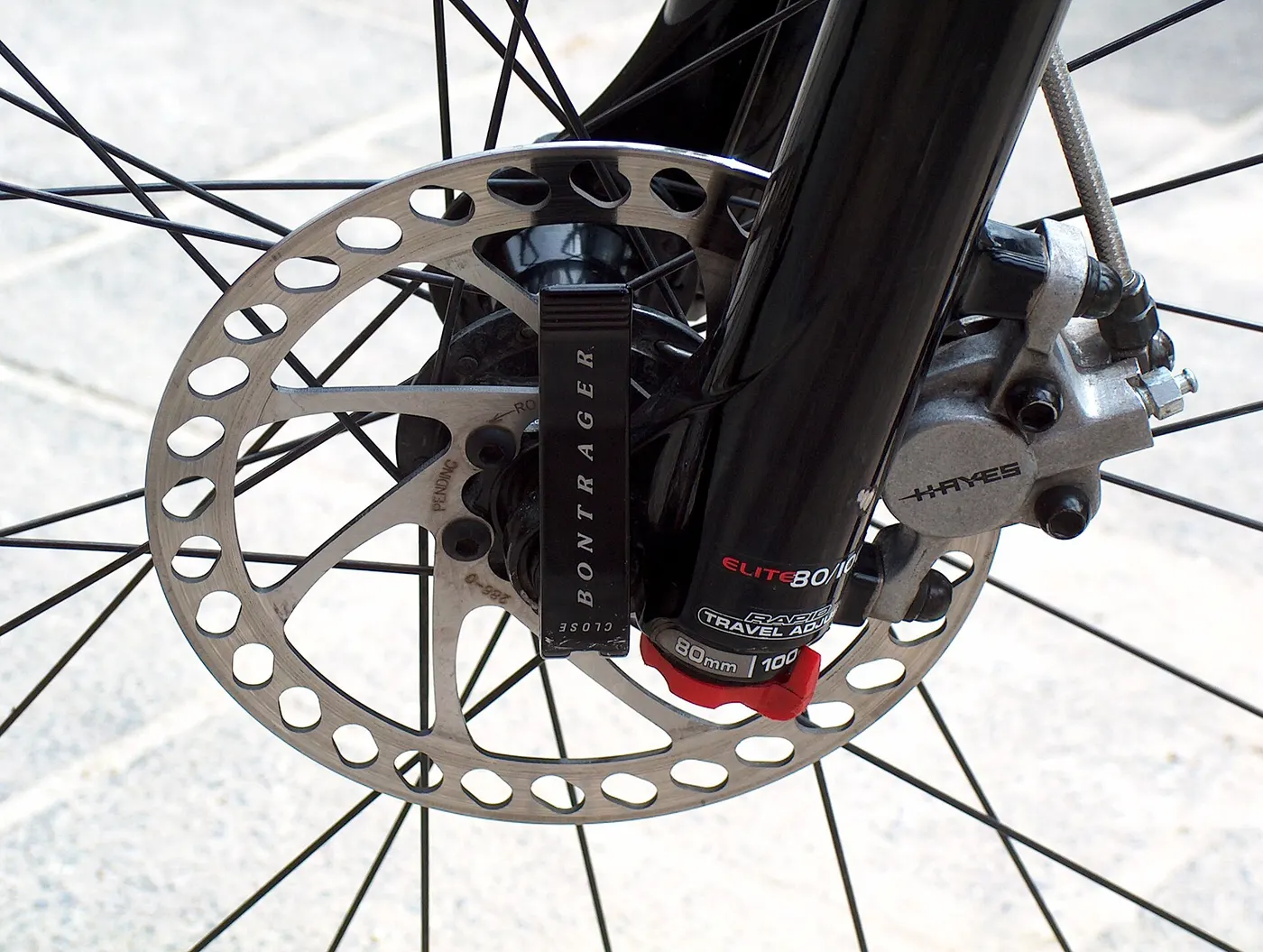
Inspect the chain or other drive components using the manufacturer's permitted process. Look for heavy corrosion, damaged parts, and evidence of improvised repair. Ask whether chain, cassette, or axle service has been performed and by whom.
During a permitted low-speed trial, note when a noise occurs: pedaling, coasting, braking, turning, or motor use. Do not diagnose the axle solely from a sound. Loose cargo, a fender rub, or brake drag can imitate drivetrain problems. Record the conditions for the mechanic.
Avoid dismantling a gearbox or adding oil to an unspecified opening during the viewing. You need to understand the cost and feasibility of repair before ownership, not attempt an undocumented fix on the seller's driveway. If the seller cannot permit inspection, decide whether the remaining uncertainty is acceptable; do not pretend it has been resolved.
Identify the pack and charger and verify manufacturer approval for the exact system. Ask about age, storage, impact, water exposure, and replacement history. An original charger is useful evidence but does not prove the pack is healthy or that it has always been used correctly.
Look for housing damage, swelling, leakage, abnormal heat, or modified wiring. Do not charge or ride with suspect equipment. A display showing full charge does not establish usable capacity, remaining life, or electrical safety. A brief test ride cannot settle all those questions either.
Check the cost and availability of an approved replacement battery before making an offer. The battery-care guide covers the handling boundaries. If an approved pack is unavailable or the electrical system is undocumented, a cheap used electric tricycle may be an expensive ownership problem.

Ask which parts are original and which were added. A larger basket, replacement saddle, upgraded motor, or altered controller may affect compatibility, intended use, and support. Do not assume that an expensive-looking modification adds value.
Check accessories for secure attachment and interference with brakes, steering, wheels, lights, and folding. A mirror or basket can change overall dimensions. A support handle may not be rated as a lifting point. Use the accessory compatibility guide rather than treating every attached item as part of the approved vehicle.
For electrical changes, request manufacturer approval and documentation. Avoid systems with spliced wiring or bypassed sensors that the seller describes as an improvement. The right response may be declining the purchase, not bargaining for the parts needed to reverse an unknown modification.
Only ride after basic condition and brakes have been checked sufficiently and the seller permits the trial. Use a level, traffic-free area with suitable room and normal protective equipment. Confirm your fit and start with the documented low-output mode on an electric model.
Try straight starts, gradual stops, and broad turns in both directions. Do not test maximum speed, steep hills, deliberate wheelspin, or a tipping limit. A useful comparison looks for predictable operation under simple conditions. The safe-riding guide provides the practice foundation.
If you are inexperienced, consider a dealer or independent inspection arrangement instead of using the test ride as a solo diagnostic exercise. Stop if the vehicle binds, wobbles, pulls unexpectedly, or makes a concerning noise. Describe the symptom rather than trying to overcome it with more power.
List the asking price, transport, inspection, required service, replacement consumables, compatible accessories, and any approved battery replacement. Include the cost of getting the tricycle to a willing shop. A wide heavy vehicle can make transport a meaningful part of the budget.
Separate confirmed costs from estimates and unknowns. A mechanic's quote for brakes is stronger than the seller's guess. An unavailable axle part is not simply a price to add; it may prevent the repair entirely. Keep a walk-away threshold based on your requirements rather than only the apparent discount from new.
Compare with an appropriate new or dealer-serviced alternative on the same basis. Warranty, support, and a professional handover may have practical value. The ownership-cost guide develops that comparison without assuming a universal repair budget.
Read the manufacturer's actual terms for the model and location. A warranty may not transfer to a second owner, and a seller's statement that it is “still under warranty” may be incomplete. Request written confirmation from the manufacturer where it materially affects your decision.
Ask whether manuals, keys, spare parts, and original accessories are included. Missing battery keys or an incomplete folding mechanism can complicate use. Do not treat those items as minor until the manufacturer confirms a replacement path.
Check the return or inspection arrangement before paying. Private-sale terms vary, and this guide does not give a universal legal remedy. Document the agreed condition and included items in a written record. If the seller will not permit a necessary assessment, you can decline without solving the uncertainty yourself.
| Verdict | Meaning |
|---|---|
| Suitable after documented service | Fit and route work; repair scope and parts are confirmed |
| Unresolved | Identity, condition, battery, or support needs further evidence |
| Unsuitable | Fit fails, damage is concerning, or essential repair/support is unavailable |
Do not collapse unresolved into acceptable because the price is low. Waiting for an inspection or another listing is a legitimate result. Equally, a used vehicle with ordinary wear and a clear service plan can be worth considering when the full cost remains sensible.
Collect the agreed manuals, keys, receipt, and service documents. Record the exact configuration and arrange outstanding work before using the tricycle. Do not ride home through traffic if the inspection identified a repair requirement or you have not practiced the controls.
After service, begin with a controlled first ride and an ownership checklist. Keep the maintenance schedule from the exact manual. A used tricycle's previous owner's habits should not become your routine by default, especially for battery charging and folding checks.
The best used purchase is one whose identity, condition, and daily practicality you can explain clearly. If the buying story depends on guessing at a cheap repair, trusting a full battery icon, and overlooking an awkward gate, the bargain is incomplete.
Imagine a used electric tricycle offered well below the price of a new alternative. The seller reports little use and shows a full battery icon. Start by identifying the exact model and approved pack, then check fit, access, condition, and support. The apparent discount is only meaningful after those requirements are met.
Suppose the tires need replacement and the battery history is unknown. Obtain actual compatible-part and service information. Include transport to the shop and the cost of an approved replacement pack if that uncertainty is material. Do not substitute a cheap unapproved marketplace battery to make the budget look favorable.
If the seller cannot permit a necessary inspection or provide identity information, classify the purchase as unresolved. You can decline without diagnosing the vehicle yourself. A bargain does not become better because you accept uncertainty that prevents a reliable cost estimate.
Discuss the scope, location, and permission before meeting. Choose a suitable place with good light and a controlled area for any permitted test. Do not conduct a brake or throttle experiment on a sloping driveway beside traffic. Bring the relevant checklist and normal riding equipment.
If an independent mechanic is involved, confirm that they handle the exact tricycle and electrical system. Ask whether the seller will allow that assessment and what happens if it identifies a critical fault. A written agreement about the process can prevent the viewing from turning into an improvised repair session.
Keep the test within the vehicle's intended use. There is no need to discover its maximum cornering speed or force a motor up a steep hill. Simple predictable operation is useful evidence; a dramatic test can damage the vehicle while still failing to answer the ownership questions.
A receipt and credible ownership history help establish identity and the seller's basis to sell. They do not prove mechanical condition. Equally, a clean-looking frame does not resolve missing ownership information. Assess both areas and keep the unresolved points visible.
Ask for included keys, manuals, chargers, and any service records. Verify that the charger is approved for the pack rather than assuming the item handed over with the tricycle is correct. Missing documents may be obtainable from the manufacturer, but confirm that before relying on them.
Use a written purchase record describing the exact vehicle, included items, agreed condition, and terms. This guide does not interpret local sale law, so seek appropriate advice if the legal arrangement is material or unclear. Avoid making payment depend on verbal promises about an easy future repair.
Ordinary consumable wear with available compatible parts and a confirmed service quote can be included in an offer. A structural crack, undocumented electrical modification, or essential unavailable component may make the vehicle unsuitable regardless of discount. Do not treat every problem as a number to subtract.
A condition issue can also be unresolved rather than immediately good or bad. For example, a noise may need inspection before its cause and cost are known. Wait for that result or choose another listing. Guessing at the cheapest possible cause creates an unreliable budget.
Set your purchase threshold before negotiating. Include fit, route, storage, service, and total cost. That helps you resist the pressure of a seller saying another buyer is coming. The right used tricycle is one you can put into a documented workable routine, not merely one you can obtain cheaply.
Measure the vehicle and verify the loading or rack arrangement. Include any approved battery removal and accessory handling. A friend with a car may not have enough opening width or suitable securing points. Do not discover that after payment and then ride an uninspected tricycle home.
Arrange appropriate transport or a service appointment and keep the vehicle out of use until required work is complete. Collection is part of the purchase cost and safety plan. A clear arrangement makes it easier to choose a vehicle based on suitability rather than on whichever one can be moved immediately.
Research-based inspection framework; no specific used vehicle was inspected or valued. Obtain qualified assessment where condition changes the purchase decision.
Guide
Choose your first adult tricycle by checking rider fit, storage, weight limits, gears, brakes, assembly, and service before buying.

Guide
Learn how to compare adult electric tricycles for control, fit, batteries, braking, transport, and ownership support.

Guide
Understand the leg and hip muscles used when pedaling a tricycle, plus how fit, resistance, and electric assistance change the effort.