
Guide
First Adult Tricycle Buying Guide
Choose your first adult tricycle by checking rider fit, storage, weight limits, gears, brakes, assembly, and service before buying.
We research everything we recommend. When you buy through our links, we may earn a commission. Learn more
Guide
Understand tricycle differentials, driven wheels, motor locations, braking paths, traction limits, and the service questions to ask before buying.

Updated · 12 min read
A differential helps driven wheels rotate at different speeds when the tricycle turns. That is a drivetrain function, not a promise that the vehicle cannot tip, slip, or pull on a side-slope. Compare the whole tricycle, including braking, steering, load limits, and service access, rather than treating the word “differential” as a safety rating.
This guide explains common drive descriptions and the questions to ask before buying. It focuses on practical identification and ownership rather than gearbox repair. Manufacturers use different mechanisms, and a listing's phrase “two-wheel drive” may not explain how power reaches each wheel.

A delta tricycle has one wheel at the front and two at the rear. A tadpole arrangement has two front wheels and one rear wheel. Those descriptions identify the layout, not the motor location, gearing, braking system, or number of driven wheels.
On a delta tricycle, power may reach one rear wheel, both rear wheels through a mechanism, or another wheel in an electric design. On a tadpole recumbent, the rear wheel is commonly driven, but you should verify the particular vehicle. Do not infer drivetrain details from seating position alone.
Start a comparison by drawing a simple list: which wheels steer, which wheels are driven, and which wheels or axle components are braked. The same frame shape can contain different systems. Our upright-versus-recumbent guide covers the broader layout trade-offs before you narrow the choice to drive hardware.
During a turn, the outside wheel follows a longer path than the inside wheel. If both are forced to rotate together at the same rate, the tires or surface must accommodate the difference. The resulting behavior depends on the mechanism, tire grip, load, and turning radius.
A differential is one way to allow different wheel speeds while transmitting drive. It can make the drive behavior through a bend more appropriate than a rigidly linked arrangement under the same conditions. That description does not mean every tricycle with a differential handles identically.
Avoid dramatic numerical claims about tire scrub or rollover prevention unless they come from applicable testing. A basic mechanical explanation is enough to support a buying question: “How does this model allow the paired driven wheels to rotate at different speeds?” Ask for the manufacturer's explanation or a service diagram.
Some conventional tricycles drive one rear wheel while the other rotates independently. This avoids requiring both rear wheels to turn at the same speed, but it also means traction and power delivery are associated with the driven side. The real experience depends on the complete design and surface.
Do not declare one-wheel drive unsuitable for all everyday riding. A simple drivetrain can be appropriate for a specific flat, paved routine and may have different maintenance demands. Equally, do not assume simplicity makes every model easy to service. Parts availability and the local mechanic's familiarity still matter.
Ask which wheel is driven and how to identify the arrangement in the manual. If a test ride feels uneven, report the condition and surface to the dealer. A pull can arise from camber, brakes, tire condition, or assembly as well as the drive layout. The camber guide helps separate observations without making a remote diagnosis.
The phrase “differential” does not mean the vehicle can always send useful power to whichever tire has the best grip. Differential designs differ, and an open mechanism can behave differently when one wheel has limited traction. Do not assume it functions like a locking or limited-slip system.
Ask the manufacturer to identify the actual mechanism and any surface restrictions. Avoid relying on automobile terminology copied into a tricycle listing without an explanation. A claim that the axle is suitable for “all terrain” is not a substitute for the vehicle's intended-use instructions.
In practical riding, choose a suitable surface and keep inputs smooth. If a wheel slips, adding more throttle is not automatically the answer. Stop and reassess the route and load. A drivetrain feature cannot make flooding, loose steep terrain, or an unsuitable corner acceptable.
A front hub motor acts at the front wheel. A rear hub or axle-associated motor can use different arrangements to transmit power. A mid-drive uses the drivetrain in another way. The name of the motor location alone does not establish which paired wheels are driven on a delta tricycle.
Read the manufacturer's technical description and ask where the power goes. The historical Lectric XP Trike introduction describes a rear hub motor paired with a differential axle. That is an example for that model, not a definition of all rear-motor tricycles or a current specification for every generation.
Motor location also affects service and handling questions. Wheel removal, cable protection, and drivetrain wear can differ. Keep those questions separate from headline watts. The electric-tricycle category guide provides the wider buying framework.

Driving two wheels does not automatically mean two separate wheel brakes are fitted. A brake may act at an axle or drivetrain component, depending on the design. Read the brake section of the manual and identify the lever functions, parking method, and service requirements.
Ask what happens during normal braking and which components require adjustment. Do not count visible rotors in a photograph as the whole assessment. A concealed axle brake, cable routing, or parking mechanism can be important. A seller should be able to provide the relevant documentation.
The brake guide explains why physical brake function, electrical motor cutoff, and parking retention are separate. None should be inferred solely from a differential claim. Test the controls through the manufacturer's permitted pre-ride process before evaluating motor performance.
Allowing different wheel speeds addresses one part of turning. It does not eliminate lateral force or the effect of the rider and cargo position. A tricycle can still become unstable if it turns too sharply or too quickly for the conditions.
Slow before the bend and follow the model-specific guidance for power input and body position. Do not use the presence of a differential as permission to accelerate through a tight corner. Side-slopes, potholes, and a high load remain relevant even when the axle works correctly.
During a test ride, use broad turns on level ground and assess predictable control rather than trying to find a maximum speed. A comfortable trial should leave spare room and a simple stopping option. The safe-riding guide is the foundation for that comparison.
Ask who can service the axle and whether the manufacturer supplies parts, diagrams, and approved procedures. A local bicycle shop may be comfortable with standard components but unfamiliar with a particular tricycle axle. Confirm willingness before assuming every shop can take the vehicle.
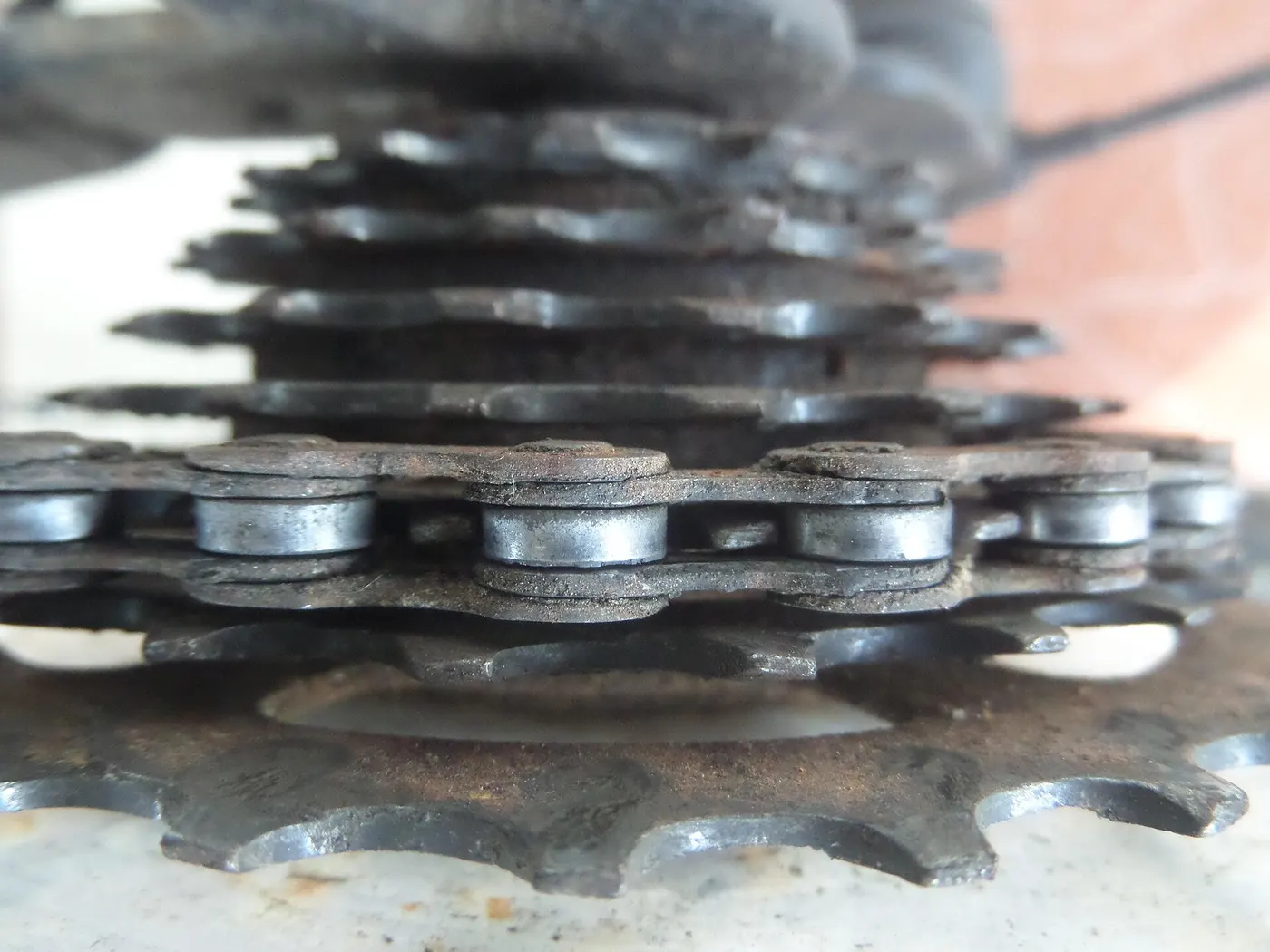
Find out whether the drivetrain uses one chain, multiple chains, belts, or enclosed components. Ask what routine owner care is permitted and what requires professional service. Do not open a gearbox to inspect it without the approved procedure. Lubrication requirements cannot be guessed from appearance.
Check replacement availability and the likely downtime if a specialized part fails. A feature that improves the ride can still make ownership difficult if the required service is inaccessible. Compare support arrangements as carefully as motor output and basket size.

“Dual drive,” “two-wheel power,” and “differential axle” may describe different designs or may be used loosely. Request a clear manufacturer statement and the exact model number. If the seller cannot explain the term, do not fill the gap with assumptions based on another brand's product.
Watch for specifications that combine features from different model years. A review may describe an earlier version, while the sales page uses a new name. Match the manual, product label, and offered configuration. Keep screenshots or written answers for your own purchase record.
Avoid buying on a claimed stability improvement alone. Ask how the vehicle fits your route, how it is assembled, and who will support it. The online buying and ownership-cost guide covers questions that often disappear behind a drivetrain headline.
Use a permitted, level area and follow each vehicle's instructions. Start unloaded or with the same modest approved load. Compare straight starts, smooth stops, broad turns in both directions, and control reach. Do not compare one tricycle at high assistance with another unassisted and call the result a drivetrain verdict.
Record what you felt and the conditions. “Steering needed more correction on this sloping section” is an observation. “The differential is defective” is a diagnosis that needs inspection. If a vehicle makes an unusual noise or binds, stop and let the dealer investigate.
The aim is to choose a practical vehicle, not conduct a stunt comparison. Avoid deliberate wheelspin, tight high-speed turns, or obstacle climbing. Those tests can damage the tricycle or exceed its intended use without providing a useful buying answer.
Document when the sound occurs: during pedaling, coasting, turning, braking, or motor use. Check obvious permitted basics such as loose cargo, tire contact, and accessory clearance. Turn the system off as instructed before any inspection and keep fingers away from moving parts.
If the sound comes with binding, wheel movement, strong drag, or a loss of control, stop using the vehicle. Do not add lubricant to an unspecified opening or tighten random axle fasteners. The correct diagnosis may involve bearings, brake components, or assembly rather than the differential itself.
Provide a safe recording and a description to support if requested. A stationary video should not require a person to hold a heavy tricycle above the ground while another applies power. Use the manufacturer's approved inspection process or arrange professional service.
| Question | Evidence to request |
|---|---|
| Wheel layout | Manufacturer diagram or exact model description |
| Driven wheels | Explicit statement of where pedal and motor power go |
| Differential type | Technical explanation, not only a marketing label |
| Braking | Manual identifying service and parking functions |
| Owner care | Approved inspection and lubrication instructions |
| Repair support | Parts access and a willing service provider |
Keep uncertain entries marked uncertain. That is more useful than assigning a high score to a feature you cannot verify. A dealer demonstration can resolve some questions, while internal mechanism details may need the manufacturer's written confirmation.
For flat local errands, simplicity, control fit, and accessible service may matter more than a sophisticated axle description. For an electric tricycle carrying approved cargo, smooth low-speed operation and clear support documentation can be particularly valuable. Neither use case should be reduced to one feature.
Compare the route, rider, load, and storage plan together. If the best-sounding drivetrain sits in a vehicle you cannot maneuver through your gate or brake comfortably, it is not the best fit. The differential is one useful engineering detail within a complete ownership decision.

Suppose one tricycle is described as single-wheel drive and another as differential-equipped. Before assigning a winner, compare the exact intended use, rider fit, braking, load limits, and service arrangements. A drivetrain difference matters, but it cannot compensate for a lever the rider cannot reach or a frame too wide for storage. Keep those essential filters ahead of preferences.
Ask each seller the same questions about driven wheels, permitted terrain, owner care, and replacement parts. Request a manufacturer document where the answer is technical. If one listing provides a detailed diagram and the other uses only a slogan, record the evidence gap rather than guessing that the mechanisms are equivalent.
A controlled comparison ride can assess whether each vehicle feels predictable to the rider. It cannot reveal every internal mechanism or certify long-term durability. Keep the written specification and the riding observation separate. The best decision combines both without exaggerating what either establishes.
A drive arrangement may allow paired wheels to rotate appropriately in a bend while still having limits on a low-grip surface. These are different functions. Smooth operation on level pavement does not prove the vehicle is suitable for a loose steep track. Read the intended-use restrictions before planning that route.
If a vehicle hesitates or slips, record the surface, load, assistance, and maneuver. Do not diagnose the mechanism from a single event or increase power repeatedly to test traction. Brake drag, tire condition, control settings, and the route can all affect the experience. Qualified inspection may be needed before comparing drive designs further.
Avoid a test that deliberately puts one wheel on a slippery surface or lifts it to observe the motor. Such an experiment can exceed normal owner procedures and create a control risk. A technical question about differential behavior belongs with the manufacturer, while the buyer's trial should remain within intended use.
Ask whether routine chain work exposes any specialized drive section and whether a technician needs model-specific tools. Confirm that the local service provider is willing to inspect the vehicle before assuming the job is ordinary bicycle work. A clear answer can materially change the ownership value of a drivetrain feature.
Keep part numbers and support contacts with the manual. If a vehicle is discontinued, ask about current replacement availability instead of relying on an old catalog. An axle that was easy to service several years ago may have a different parts situation today. This guide does not verify current stock for every model.
When a fault occurs, provide observations and maintenance history without opening the mechanism. The service provider can decide what inspection is appropriate. That boundary protects both the equipment and the reliability of the diagnosis. A clever-sounding home adjustment is not useful if it hides the original symptom.
A brand may introduce a new tricycle generation with different motor, axle, brakes, or controls while retaining a familiar name. Historical reviews can explain the earlier design but should not be merged into the new specification. Match the exact manual and offered hardware to the purchase.
If a review describes a differential and the current listing does not, ask for confirmation. The omission may be a shortened description or a genuine change; neither should be assumed. Keep the seller's written answer for your record and compare it with the manufacturer documentation.
This approach also prevents overclaiming in your own content. Describe the verified model and identify historical context explicitly. A statement about one tricycle's axle should not become a universal promise about the brand or all electric three-wheelers. The useful explanation remains precise enough for a buyer to act on it.
Research-based guide; no axle was dismantled or traction-tested. Mechanical explanations and comparison worksheets are editorial synthesis, not a performance guarantee.
Guide
Choose your first adult tricycle by checking rider fit, storage, weight limits, gears, brakes, assembly, and service before buying.

Guide
Learn how to compare adult electric tricycles for control, fit, batteries, braking, transport, and ownership support.

Guide
Understand the leg and hip muscles used when pedaling a tricycle, plus how fit, resistance, and electric assistance change the effort.