



Guide
First Adult Tricycle Buying Guide
Choose your first adult tricycle by checking rider fit, storage, weight limits, gears, brakes, assembly, and service before buying.
We research everything we recommend. When you buy through our links, we may earn a commission. Learn more
Guide
Prepare a first adult trike group ride with organizer briefing, route and width checks, communication, suitable stops, pace expectations, and recovery.

Updated · 12 min read
A successful first group ride starts with a suitable group and clear expectations. An adult tricycle can have different width, turning space, entry routine, pace, visibility and transport requirements from the bicycles around it. The useful approach is to describe the actual vehicle and your practical needs before the ride, then confirm that the route and group plan support them.
This guide focuses on coordination and preparation rather than racing or close-formation technique. It does not prescribe one spacing or riding position for every road and jurisdiction. Follow applicable local rules, the trike's instructions and the organizer's suitable briefing. If essential route or operating questions remain unresolved, choose another ride or postpone participation.

Ask whether the event is a social ride, guided tour, training group, family outing or another format. Those labels can imply different pace, stops, support and rider responsibilities, but the actual organizer's information matters. Do not assume that a friendly description means every vehicle and experience level can be accommodated on the planned route.
Read the current route, distance, surfaces, elevation information, start and finish, expected duration and any restrictions. Ask what no-drop, supported or beginner means in that group's process. A label is useful only when the practical arrangement is clear. It may not include recovery transport for a wide trike or assistance with every mechanical problem.
For the first outing, choose a plan that fits the vehicle's permitted use and your established routine. Avoid using the group as the place to learn unfamiliar controls or discover whether a difficult slope is manageable. The test-ride guide and exact operating instruction should precede ordinary participation.
Give the trike type, complete width, relevant turning or access questions, assistance where fitted, and any particular stop or entry need. Describe tasks rather than relying on broad labels such as senior-friendly. A rider's age does not establish the space, support or operating requirements. Concrete information lets the organizer assess the route and group plan.
Ask about barriers, gates, narrow passages, surfaces, stairs or lifting, and destination access. A bicycle route can include features that are not suitable for a particular trike. Do not assume that an online line through a path confirms passable geometry. The width guide helps identify the measurements and unresolved points.
If a health condition affects participation or suitability, obtain relevant qualified advice separately. Share the practical arrangements needed with the organizer without expecting an informal ride leader to make a clinical assessment. An organizer's willingness to help does not certify every adaptation or rider requirement.
Ask how the leader briefs the ride, communicates stops or hazards, handles regrouping and responds when a rider needs to leave. Learn the actual conventions before departure. Signals and terms can vary, so do not assume everyone uses the system from another group or country. Local traffic rules remain authoritative.
State if a proposed signal or procedure conflicts with reliable control of your exact trike. Obtain a suitable agreed alternative rather than improvising during movement. This guide does not teach a universal one-handed technique or ask riders to sacrifice necessary control to imitate others. Practical communication should support safe predictable operation.
Keep attention on your own path and vehicle. A warning from another rider is helpful information, not proof that the route is clear for your full envelope. Observe and respond to the actual conditions. Do not follow a bicycle through a gap merely because the front wheel of your trike seems aligned with its path.

Complete the normal pre-ride inspection and required maintenance. A group event is not permission to defer a brake, steering, tire, drivetrain or electrical concern. Resolve abnormal conditions before joining rather than relying on another rider to repair them at the start. The maintenance checklist and exact manual remain the basis.
Learn the controls and parking routine in a suitable setting beforehand. If assistance is fitted, understand its startup, stopping and mode behavior. Do not choose a stronger setting to keep up with an unsuitable group pace. The assist guide explains the separate operation questions.
Check clothing, footwear, pedal requirements and loose straps. A new jacket, bag or camera can change clearance and attention. The clothing guide covers stationary preparation. Keep accessories compatible and avoid adding equipment immediately before the event without completing its checks.
Verify that the trike is permitted on the intended roads and paths and that the vehicle maker approves the use. A group booking does not override local restrictions or equipment limits. If the organizer cannot resolve an essential access point, obtain the relevant operator's information or select another outing.
Consider surfaces, camber, turns and stopping opportunities. The turning and camber guide explains related preparation without certifying the group's route. Avoid copying another rider's line or speed through a turn. Your vehicle's geometry and operating instructions remain relevant even when the group is experienced.
Check current weather and route status for the actual time. The wind guide addresses exposure and return decisions. If conditions make the outing unsuitable, communicate the changed plan before the meeting where practical. Social commitment should not become the reason to ignore an unresolved hazard.
Ask how the group handles different comfortable paces and whether regrouping is planned. A social ride may accommodate differences, but that needs a real process. Do not infer that no-drop guarantees a recovery vehicle or that every participant must ride at one prescribed effort. Clarify the intended arrangement before joining.
Maintain the control and clearance required for the conditions. This article does not provide a universal following distance or close-drafting instruction. Do not enter a tight formation simply to avoid feeling left behind. If the ride's ordinary practice is unsuitable for the trike or rider, choose a different group format.
Assistance and unassisted riders can share an appropriate outing where expectations are clear. The existence of a motor should not become a competition or a promise that every climb will be manageable. Use the approved system and plan energy through the range guide. A display estimate does not resolve the whole trip.

Confirm that meeting, café, rest and finish locations have practical access and room for the trike. A narrow entrance, crowded rack or stair can create a problem after an otherwise suitable route. Ask where the vehicle may be parked without obstructing others or requiring an unapproved lift.
Use the intended parking procedure before accessing bags, bottles or devices. Do not organize cargo while moving or stop abruptly in a narrow shared passage. The bottle-cage guide describes stopped access as a separate equipment task. Choose suitable locations and follow the organizer's agreed process.
Security is also part of the stop plan. The locking guide provides related preparation without guaranteeing protection. Do not assume another rider will watch the trike or that a group destination automatically offers suitable secure storage. Clarify practical arrangements before relying on them.
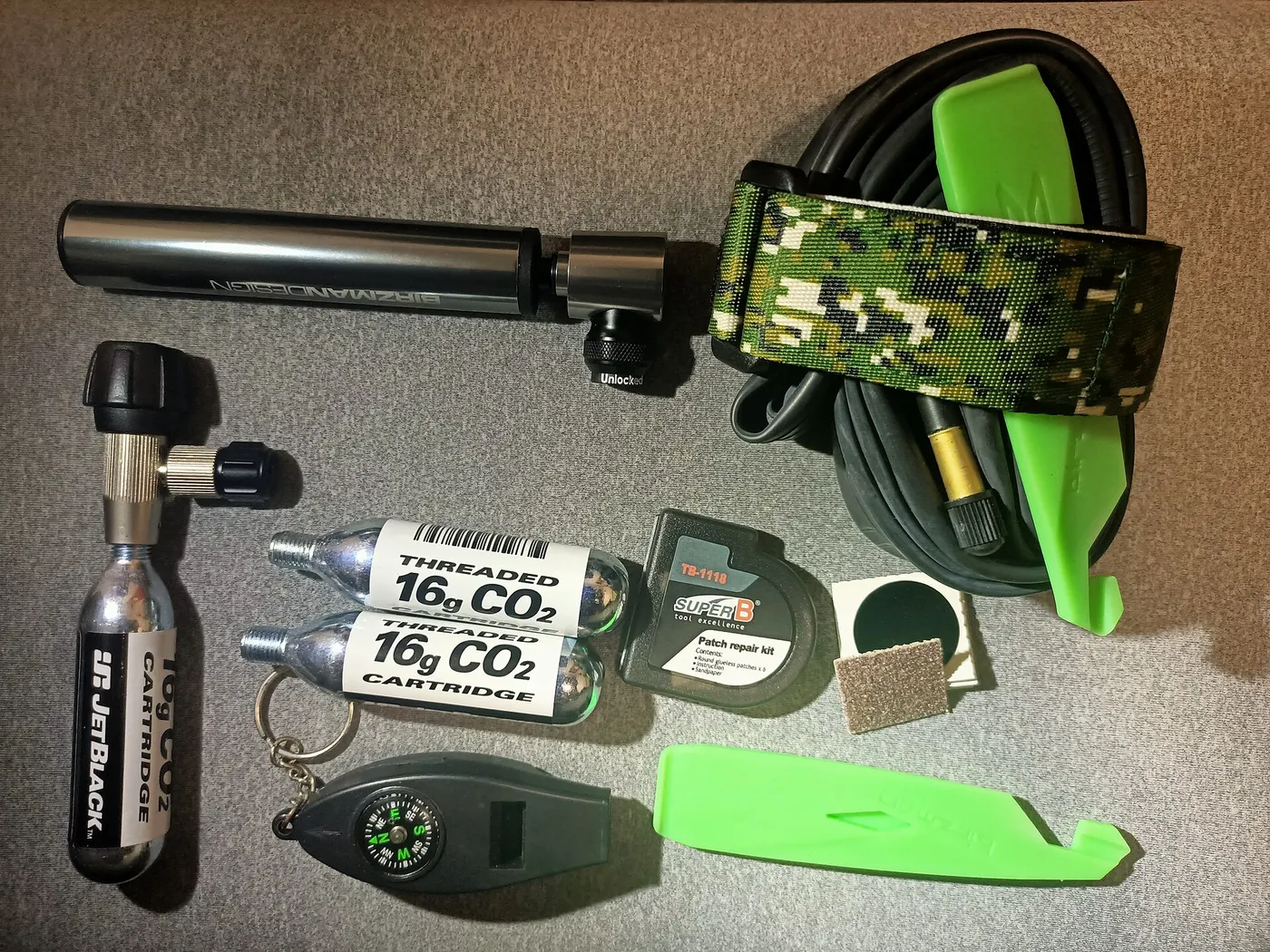
Bring the equipment required by the organizer and the exact vehicle routine, with compatible spares where appropriate. A standard bicycle kit may not support a trike's mixed wheel sizes, proprietary attachment or motor wheel. Know which tasks are within owner scope and which require service or recovery.
Do not assume that a skilled volunteer can repair every system roadside. Ask what support the event actually provides and retain a practical exit plan. The repair-shop guide explains service capability, while the puncture guide covers compatible tire preparation.
Secure supplies within the applicable payload and cargo instructions. A group outing is not a reason to hang extra bags from unapproved parts. Keep straps, tools and devices retained and clear. If panniers are fitted, use the rack-and-bag guide to establish that complete configuration beforehand.
Ask what to do if the group becomes separated, a rider stops, or the route must change. Keep the relevant contact information and a navigation backup appropriate to the outing. Handle device tasks at a safe stop. Do not try to catch the group by ignoring control, traffic or route restrictions.
If you need to leave, follow the agreed communication process where possible and choose a suitable next step. An adult trike can require a different transport arrangement from a conventional bicycle. Confirm recovery dimensions and equipment before relying on it. A car present at the event does not automatically have an approved way to carry the trike.
For an assisted model, energy planning and recovery remain separate. A spare battery, where approved, needs its own handling routine and does not eliminate route or mechanical uncertainty. Keep the whole exit plan practical rather than assuming a larger capacity is the only backup needed.
Record the organizer, outing type, route, pace process, vehicle access, communication, stop locations, supplies and recovery. Mark unresolved questions and who can answer them. The worksheet is a planning tool, not a certification of the event or a replacement for current local guidance.
| Item | Question to resolve |
|---|---|
| Group | What is the actual pace and regrouping process? |
| Route | Is the complete trike envelope and use permitted? |
| Communication | Which briefing and separation procedures apply? |
| Stops | Can the vehicle be parked and accessed appropriately? |
| Recovery | What happens when the trip cannot continue? |
Resolve essential issues before departure. A welcoming organizer and an attractive route do not cancel an inaccessible barrier or unsupported recovery assumption. Choose another suitable outing where necessary. A good first experience depends on clear practical fit rather than proving that every cycling group can accommodate every trike.
Imagine a social group proposes a mostly paved route ending at a café reached through a narrow passage. Give the leader your complete width and ask about the access and parking arrangement. Check the route's other relevant features and the actual pace process. Do not assume that the destination can be handled later because the riding distance is short.
If a permitted alternative entrance or parking location resolves the issue, record it with the plan. If not, choose another ride or destination rather than lifting the trike by an accessory or blocking the passage. The example illustrates advance coordination without making a rule for every café or group.
After a suitable ride, note which parts of the plan worked and which need better information. Record an access surprise, an unclear signal or a stop that needs another arrangement. Do not turn one successful outing into proof that every longer or faster group ride will be suitable. Conditions, route and participants can differ.
If equipment moved or a component behaved abnormally, address it through the instructions before another event. Social enjoyment should not conceal a maintenance concern. A useful group routine connects preparation, communication, route fit and a practical exit, leaving enough room to change the plan when new information appears.

Introduce the vehicle and the practical questions in a concise note. Include the complete width, relevant route concerns, assistance where fitted and any stop or entry arrangement that needs discussion. Ask about the actual surfaces, barriers, pace process and destination access. The organizer does not need a long equipment biography, but it does need enough information to assess the proposed outing rather than assume a conventional bicycle envelope.
State what you already know and what remains unresolved. For example, the normal controls are familiar and required vehicle checks are complete, while one gate or recovery arrangement still needs confirmation. This lets the leader address the specific gap without interpreting a broad request for a senior-friendly ride. Keep any clinical suitability question with relevant qualified advice, while the organizer handles practical event arrangements within its scope.
Ask for a clear next step when the answer is uncertain. That may involve route-operator information, another suitable outing or a confirmed alternative destination. A welcoming reply is valuable but not a substitute for essential access details. Preserve the agreed plan so the first meeting does not begin with conflicting assumptions about which route or stop was selected.
Ask where the group expects to stop and whether those locations offer suitable room for your trike. A regroup point that works for several slim bicycles can still be awkward for a wider vehicle. Include the normal parking and restart routine in the question. Do not assume that the group can stand wherever a gap appears without affecting other path users or traffic.
Keep the actual ride briefing and local rules authoritative. This article does not prescribe a universal position in the group or formation through every road section. If the ordinary arrangement conflicts with reliable control or clearance, discuss a suitable alternative before departure. A practical plan can accommodate different geometry without asking riders to imitate a tight formation that does not suit the outing.
If the route changes during the ride, reassess the affected access and stopping questions. A substitute passage may have different barriers or surfaces. Do not assume it is suitable because the leader can ride through on a bicycle. Communicate the relevant constraint from a safe stop and choose an appropriate next step. The group's experience is helpful context, while each vehicle's actual envelope and permitted use remain relevant.
Identify how to communicate a stop, which contact to use, and what happens if the ride cannot continue. Have suitable navigation information available and handle it while stationary. Do not rely on sprinting or increased assistance to recover a separation. A group ride should have a practical process for changed conditions, not pressure to restore proximity at the expense of control or traffic rules.
Confirm what recovery support actually includes. A ride advertised as supported may still have transport or equipment limits. Give the provider the trike dimensions and configuration where necessary, and establish an approved method rather than assuming an available car can carry it. If recovery remains unresolved, choose a shorter suitable plan or another event before departure.
After the outing, review whether the agreed process was workable. Record an access surprise, unclear signal or recovery assumption that needs improvement. Use those observations to plan another appropriate ride, without declaring every future group suitable from one positive experience. The useful progression is better information and coordination, not automatically increasing distance, pace or complexity.
Research-based coordination guide. No event, leader, route or rider was assessed. No universal formation, spacing, pace or legal rule is prescribed.
Guide
Choose your first adult tricycle by checking rider fit, storage, weight limits, gears, brakes, assembly, and service before buying.

Guide
Learn how to compare adult electric tricycles for control, fit, batteries, braking, transport, and ownership support.

Guide
Understand the leg and hip muscles used when pedaling a tricycle, plus how fit, resistance, and electric assistance change the effort.