



Guide
First Adult Tricycle Buying Guide
Choose your first adult tricycle by checking rider fit, storage, weight limits, gears, brakes, assembly, and service before buying.
We research everything we recommend. When you buy through our links, we may earn a commission. Learn more
Guide
Compare adult trike disc brakes through exact controls, parking, component fit, servicing, parts, route needs, and a documented purchase worksheet.

Updated · 12 min read
Mechanical and hydraulic disc brakes describe how force reaches the caliper. A mechanical system uses a cable; a hydraulic system uses fluid in a hose. That distinction affects adjustment and servicing, but it does not decide whether a complete adult tricycle is suitable for your hands, route, load, and maintenance arrangements. Compare the actual brake model and installed controls, not only the category in a specification table.
A useful buying decision begins with reliable access to the controls and the manufacturer's approved configuration. It also includes parking, service support, parts, and the checks required after work. This guide compares ownership questions rather than teaching a universal repair procedure. The brake and parking-brake guide explains the separate operating routine.
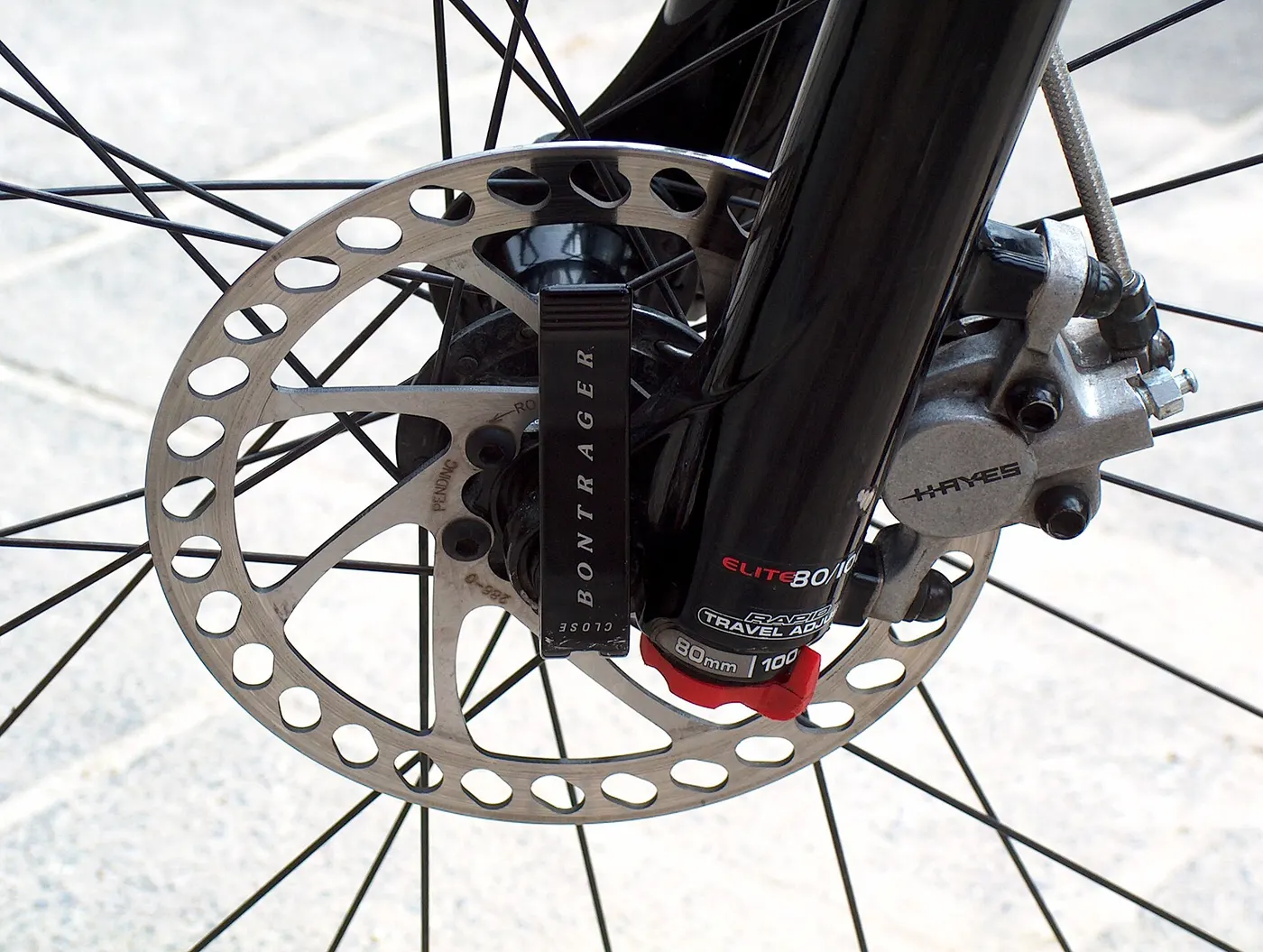
In a cable-operated disc system, the brake lever pulls a cable through housing to operate the caliper. In a hydraulic system, lever operation acts through the specified fluid and hose arrangement. Park Tool's mechanical brake explanation describes this distinction and different caliper designs. Do not infer that every mechanical caliper moves its pads in the same way or uses the same adjustment method.
Both arrangements depend on compatible levers, calipers, rotors, pads, mounting hardware, and the actual vehicle layout. A rotor's diameter is only one specification. The brake and trike makers establish the permitted combination and procedures. A component with a familiar brand name does not make an arbitrary mix of parts compatible, and a larger rotor is not automatically an approved upgrade.
Keep the terminology precise when asking a seller. A listing that says disc brakes may omit actuation type, caliper model, lever arrangement, and parking function. Ask for those identities before comparing service requirements or ordering replacement parts. A seller's statement that a system is premium does not answer how it works on the exact trike.
Ask the dealer to set up the demonstration vehicle through its instructions, then check control access while stationary and secured. Note whether you can operate the relevant lever through its intended movement without an awkward reach or interference from a display, mirror, clothing, or another control. Touching the lever is not the same as managing its required operation reliably.
Compare exact configurations rather than a hydraulic demo against a poorly adjusted cable system. If a demonstration brake appears abnormal, ask for assessment before drawing a category conclusion. Component condition can influence the observation. A short retail trial does not measure stopping distance or establish suitability for every load or descent.
The test-ride comparison guide provides a way to record the setup, route, and unresolved questions. Include which brake controls were fitted and what the dealer demonstrated. If the purchased configuration will differ, obtain a new fit answer rather than assuming the same lever experience transfers.
Trikes can use different wheel layouts and control arrangements. An upright delta and a tadpole recumbent may place brakes at different positions and operate them through different controls. Do not copy a conventional two-wheel bicycle technique or a different recumbent's instructions onto an unfamiliar vehicle. Learn the exact manufacturer's operation before moving.
Ask which wheel or wheels each control operates and how the parking arrangement works. A parking brake can be a separate system or a defined function of another control. Its presence does not establish the service brakes' condition, and service-brake operation does not automatically answer stationary holding. Keep both questions in the comparison sheet.
If a single-control adaptation is proposed, obtain approval for the complete arrangement and suitable fitting or instruction. It is not a matter of joining two unrelated cables or hoses. A compatible adaptation can be useful, but its operation, servicing, and parts support need their own documentation. This article does not certify an adaptation for any rider.

Mechanical systems can involve cable, housing, pad, and caliper-specific work. Hydraulic systems can involve their own pad, hose, fitting, fluid, and bleeding procedures. Neither category is maintenance-free. Identify which tasks the maker allows an owner to perform and which require appropriate tools and expertise. Do not turn access to a general tutorial into permission for every brake repair.
Hydraulic fluid specifications matter. Do not substitute or mix fluids based on the broad hydraulic label. A bleed kit must also be compatible with the exact system. Cable systems similarly need the specified parts and procedure rather than any spare wire and housing. Compatibility is a technical requirement, not an optional refinement for expensive equipment.
Ask a service provider whether it supports the actual brake model and can handle the trike's width and weight. A shop's ability to service ordinary bicycles does not necessarily include your proprietary control or adaptation. The repair-shop guide explains how to establish that scope before transporting the vehicle.
Rubbing, changed lever response, contamination, leakage, damaged cables, or loose mounting can require different assessments. Do not assume that every concern is solved by one adjustment. Report the actual symptom and component identity. Follow the relevant stop-use guidance and obtain service when the condition is abnormal or a required check cannot be completed.
A quieter brake is not automatically a correctly repaired brake. Likewise, a firmer lever feel is not proof that the full assembly is ready. The maker's required checks remain part of the work. Do not increase tightening force or alter pad positions merely to produce a reassuring sensation without the correct procedure.
The torque-wrench guide explains why the exact specification, joint condition, and tool matter. Generic values in an unrelated guide should not establish your trike's mounting requirement. Critical fastening deserves complete instructions, even where the component is small or familiar.
Describe the actual route, intended load, and permitted use to the dealer. Discuss long descents or demanding conditions through the vehicle and brake makers' guidance rather than asking which category is strongest. Heat, control, load, and operating procedure belong to the complete system. This article does not provide a stopping-distance chart or a model ranking because no such tests were performed.
Do not infer performance from a single specification such as rotor size or number of pistons. Those details can be relevant within a documented design, but they are not a complete comparison between two trikes. The frame, wheel arrangement, tires, controls, intended use, and component condition all remain relevant. Ask for appropriate documentation where a capability claim matters to the purchase.
Rain and contamination also need exact guidance. Disc brakes are not permission to ignore weather restrictions or oily friction surfaces. Use the rain guide and washing guide for related preparation, while the brake manual determines care. A marketing claim about wet performance does not authorize every cleaning product or route condition.

Find out how pads, rotors, cables or hoses, fittings, and controls are identified and obtained. A common-looking pad is not necessarily the correct replacement. Keep exact model and part references where available. Ask whether the local provider can source the specified components and what happens when a proprietary item is unavailable.
Compare total ownership effort with current direct quotes. Initial purchase price does not include every future service task, and this article does not invent universal maintenance costs. A system that costs more initially can be practical where support is clear; a less expensive system can also suit an owner when its intended service routine is manageable. The choice depends on the actual configuration.
For a used trike, condition and documentation can matter more than the category label. Ask about previous work, replacement components, and unresolved concerns. The used-trike inspection guide helps organize that decision. Do not accept a hydraulic label as proof of good condition or dismiss a documented cable system solely because it is simpler.
Changing actuation type can involve more than calipers. Levers, rotors, mounts, hose or cable routing, parking features, and an electrical cut-off where fitted may be relevant. Obtain approval for the exact complete conversion and a clear installation scope. Do not assume that a kit marketed for bicycles suits a particular adult trike.
Ask which existing functions would change or be removed and what checks follow the work. If the proposal affects a parking control or adaptation, that needs explicit resolution. An upgrade that improves one preferred feature while leaving a necessary function unsupported is incomplete. Compare the conversion with retaining a properly serviced approved system or choosing another complete vehicle.
Include professional installation, parts, and future service in the quote. Keep the resulting configuration record and manuals. A converted vehicle should not remain described only by its original specification, because future service providers need to know what is actually fitted. No conversion procedure or compatibility approval is supplied by this article.
Record the exact brake and control identities, wheel arrangement, parking method, fit observation, permitted use, service provider, parts route, and unresolved issue. Mark whether an answer came from a manual, manufacturer reply, dealer trial, or your own observation. These sources establish different parts of the decision.
| Comparison item | Evidence to collect |
|---|---|
| Controls | Exact layout and appropriate stationary operation |
| Configuration | Approved levers, calipers, rotors and connected functions |
| Parking | Documented holding arrangement and operating routine |
| Service | Accepted model, required procedure and parts access |
| Route | Manufacturer guidance for intended use and load |
Do not combine the worksheet into a false safety score. An unresolved control problem should not disappear behind a favorable price or brand preference. Resolve essential requirements first, then compare convenience, service effort, and preference among suitable documented configurations.

Imagine a buyer prefers the control feel of a hydraulic demo, while a cable-equipped model has more accessible local support. Record the exact setup and whether both vehicles were in the intended condition. Ask about the purchased configuration, parking routine, route limits, and future parts. Neither observation alone decides the complete ownership question.
If reliable control access remains unresolved on one model, seek fitting or another approved configuration before considering price. If both meet the essential tasks, compare service arrangements and ownership effort. A useful final explanation might be that one exact system suits the rider and has a workable support plan. It should not become a claim that the category is best for every adult or senior.
After brake work, follow the maker's required checks and any preparation specified by the provider, including component-specific bedding procedures where applicable. Do not perform an unapproved high-speed stop to prove performance. Learn any changed control arrangement in a suitable setting and stop if an abnormal condition remains.
Retain the service report and updated parts identities. If the original concern persists, describe it accurately and seek reassessment rather than assuming the invoice resolves every observation. This keeps the comparison grounded in present condition and documented work, not only the original purchase label.

Make a separate entry for each fitted caliper and control, including the model markings, rotor identity where documented, parking function, and connected electrical feature if present. Photograph the assembly and record the seller's service history. Do not infer that every wheel uses matching components because the trike originally shipped that way. Replacement parts and adaptations can change the actual configuration. An inventory gives a service provider something concrete to assess instead of the broad claim that the vehicle has hydraulic or mechanical discs.
Ask which parts were replaced and why, and whether the applicable procedures and checks were completed. A new pad or cable can be a routine service item, while an unexplained caliper substitution raises compatibility questions. Keep the answers factual. A seller's assurance that the brakes feel strong is an observation, not proof of approved parts or current condition. If identity or critical compatibility remains unresolved, obtain assessment before purchase or keep the uncertainty explicit in the decision.
Compare the inventory with the vehicle and component documentation through a suitable provider. The purpose is not to reject every repaired trike; a documented supported repair can be a positive part of ownership history. The important distinction is whether the fitted combination and completed work can be established. A premium category label should not make undocumented work disappear, and a simple cable system should not be discounted when its configuration and service record are clear.
Ask the dealer to demonstrate the exact control and parking arrangement, then assess it while stationary in the normal fitted position. Note the movement you can complete, any awkward reach, and interference from the actual layers or accessories. If adjustment is proposed, establish that it is permitted and record the resulting configuration. This creates a useful before-and-after observation without pretending to measure hand strength or braking performance in a retail appointment.
Keep the demonstration conditions comparable where practical. Identify the vehicles, settings, route and component condition, and report an abnormal response before continuing. A different lever position or poorly maintained demo can influence the result independently of actuation type. If one model requires another approved control option, do not rank that untested option as though it had been demonstrated. Mark it unresolved and ask for the specific follow-up needed to evaluate it.
After the trial, explain the result in task language. One control was reachable and operated through the instructed stationary routine; another configuration needs a fitting assessment. Those descriptions are more useful than declaring one technology effortless for all riders. The purchase should preserve the demonstrated arrangement or identify which changes require reassessment. Control preference, approved configuration, and measured performance remain distinct evidence categories throughout the comparison.
Request a quote for the actual accepted work rather than asking what hydraulic or mechanical maintenance usually costs. Identify assessment, parts, labor and any outside support, and agree when the provider will contact you before extending the scope. A routine pad replacement and a damaged hose, mount or proprietary control can involve different work. Current local quotes are the appropriate evidence; an invented average can obscure the task that makes your system more or less practical to own.
Ask what happens if the specified part is unavailable. A supported replacement may exist, but its identity and effects on the complete configuration need explanation. An alternative can change operation, parking, electrical cut-off or future maintenance. Keep those connected functions in the decision rather than approving only the caliper. If compatibility cannot be established, a deferred repair with a clear next step is more useful than an apparently completed upgrade based on a visual match.
At collection, obtain the work status and any required follow-up. Confirm which original concerns were resolved and which remain outside scope. Learn changed operation before an ordinary route, and retain the applicable instructions. This makes serviceability a real ownership arrangement rather than a promise that either technology is easy to maintain. The comparison is strongest when you know both how the actual controls work and who can support the installed system when condition changes.
Research-based buying comparison. No braking performance, stopping distance, hand-force requirement, or conversion was tested. Exact vehicle and brake instructions govern operation and service.
Guide
Choose your first adult tricycle by checking rider fit, storage, weight limits, gears, brakes, assembly, and service before buying.

Guide
Learn how to compare adult electric tricycles for control, fit, batteries, braking, transport, and ownership support.

Guide
Understand the leg and hip muscles used when pedaling a tricycle, plus how fit, resistance, and electric assistance change the effort.