
Guide
First Adult Tricycle Buying Guide
Choose your first adult tricycle by checking rider fit, storage, weight limits, gears, brakes, assembly, and service before buying.
We research everything we recommend. When you buy through our links, we may earn a commission. Learn more
Guide
A basket can keep a bag from falling straight down without keeping it still on a turn. A rack can support weight without providing a suitable place for.

Updated · 12 min read
A basket can keep a bag from falling straight down without keeping it still on a turn. A rack can support weight without providing a suitable place for every hook. Securing cargo on an adult tricycle therefore starts with the whole load and its intended support, rather than the strength printed on a strap package. The goal is a load that stays contained, leaves controls and wheels clear, and remains within every applicable vehicle and accessory limit.
This guide helps you choose a practical retention arrangement for ordinary errands. It distinguishes a bag closure, a cargo net, and a strap attached to an approved support. It does not authorize lifting, towing, carrying passengers, or changing the trike's capacity. Those are different tasks with different requirements. If the manufacturer does not identify a suitable attachment arrangement, resolve that question before buying stronger hardware and pulling it tighter.
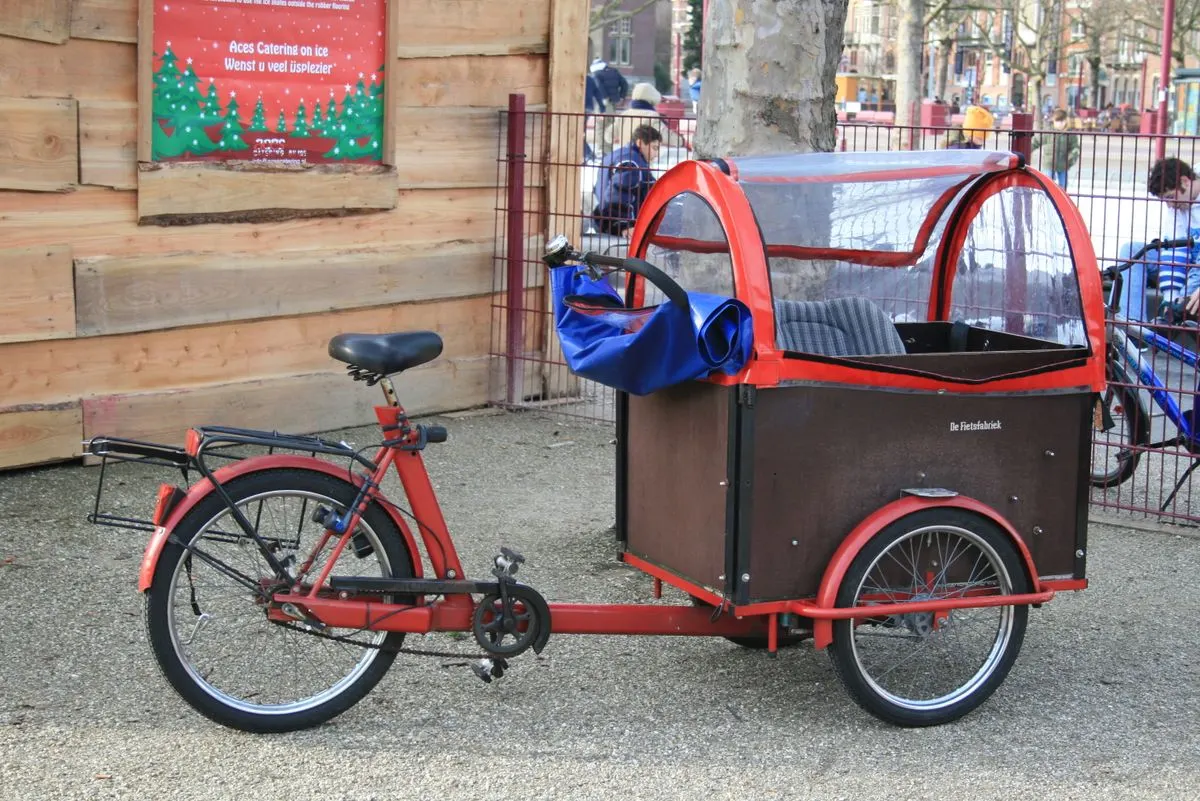
Write down what you normally carry: one rectangular grocery bag, several small packages, a folded chair, or a soft duffel. Shape matters because a strap that surrounds a firm box may compress a soft bag until its contents shift. Loose objects can also escape through a basket or net even when the main package remains in place. Describe the actual trip load rather than an empty bag displayed on a shelf.
Separate containment from restraint. A liner can hold small objects together, while a permitted strap arrangement may retain the resulting package on its support. Neither function automatically replaces the other. The basket bags and liners guide covers the first task. Here, the question is what prevents the complete package from moving or leaving its intended space when the vehicle is operated normally.
Consider the return trip as well as departure. An empty shopping bag can become several uneven parcels, and its handles may no longer close together. Choose a system that works with the expected range of loads rather than one ideal photograph. If shopping regularly exceeds the available space, reduce the load or change the documented carrying arrangement instead of building a taller stack with more straps.
Use the trike manual and accessory documentation to identify the basket, rack, platform, and intended cargo locations. Record their individual limits alongside the complete vehicle's rating. A strap's claimed strength does not increase any of these limits. The payload guide explains why a large total capacity cannot be treated as permission to put the same weight in one small basket.
Include the retention equipment and bag in the load where the maker's definitions require it. A bulky bag, rigid box, or substantial lock can consume part of the available allowance. Do not count only the groceries because the accessories remain permanently installed. Keep the calculation consistent with the manufacturer's definition rather than inventing a single capacity rule for every model.
Look at how the support itself attaches to the trike. A loose rack or damaged basket is not repaired by tying the contents to it more firmly. Have the support assessed when its condition is uncertain. Restraint should work with an intact, approved carrying system, not conceal a problem in the hardware beneath the bag.
Ask the vehicle or rack maker which points may be used for cargo retention. A convenient tube, fender stay, seat support, or steering part is not necessarily an anchor. Avoid routing straps around brake hoses, electrical cables, folding mechanisms, or moving drivetrain components. The accessory compatibility guide provides the wider framework for distinguishing a usable interface from a surface that merely accepts a clamp or hook.
Check whether a hook could slip off when its tension changes. A parked trike on level ground does not reproduce every movement of a soft load. Use the retention product only through its intended arrangement and within the support maker's instructions. Where the two sets of instructions do not establish a compatible setup, ask the suppliers rather than combining them by intuition.
Keep a photograph of the normal routing after the arrangement has been confirmed. This can help another household rider repeat the setup and identify a strap that has been routed incorrectly. A photograph is a reference, not proof of load security. The owner still needs the specified checks each time the contents and their shape change.
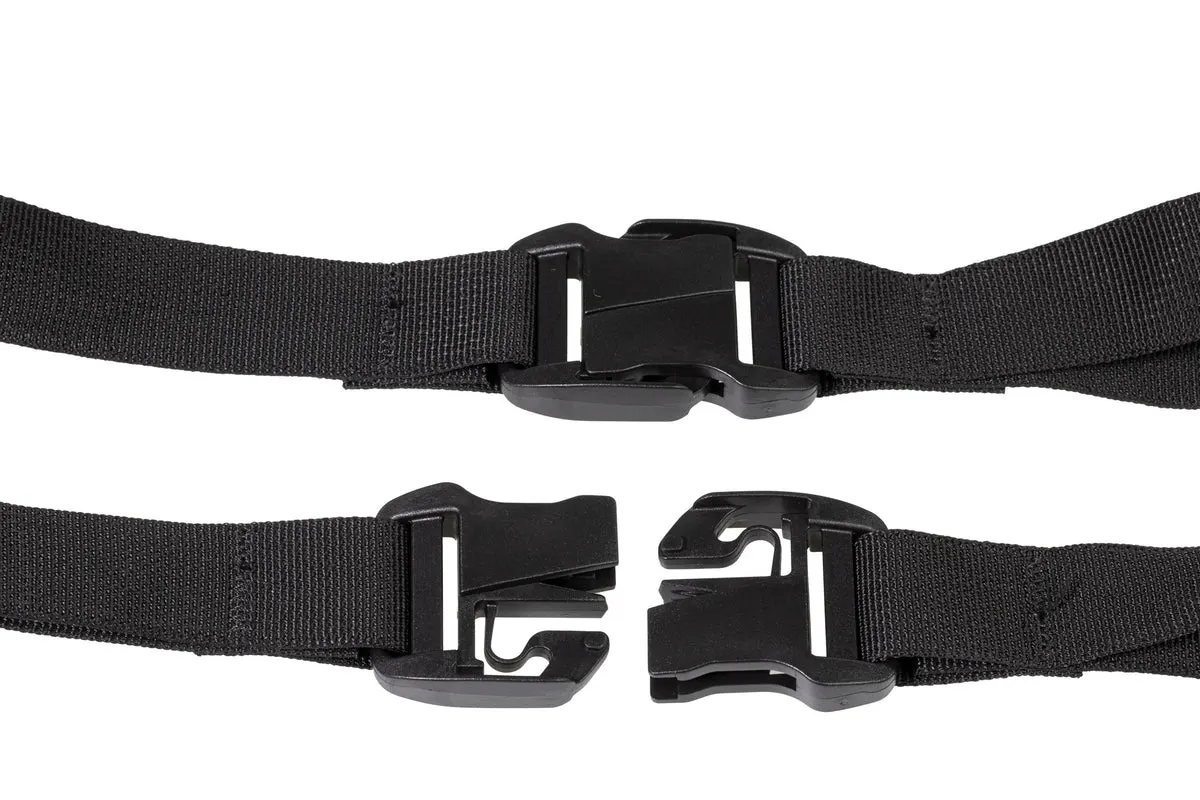
Elastic cords can accommodate changing shapes, but their extension and hooks introduce their own handling and retention questions. A non-elastic strap may provide a more defined loop but still needs suitable routing, adjustment, and a load that will not collapse beneath it. Neither category is universally correct for all trike cargo. Read the product's intended use instead of deciding that more stretch or less stretch is inherently safer.
An ordinary cargo cord should not be treated as a lifting sling, tow line, or passenger restraint. A number on its packaging may describe a condition unrelated to your proposed use. Do not convert an unfamiliar strength claim into an allowable trike load. If the terminology is unclear, obtain the manufacturer's explanation before relying on it.
For routine shopping, ease of correct use matters. A complicated arrangement that the owner cannot repeat while wearing gloves is a poor everyday choice even if it looks tidy in a demonstration. Practice the permitted sequence with an ordinary load in a suitable stationary setting. If the fastening method is confusing, choose a clearer supported alternative rather than improvising a knot around an unsuitable part.
A net may help retain a collection of items within its intended space, but mesh size and the shape of the contents matter. A small bottle, tool, or parcel can pass through a gap. Put small items in suitable containers before evaluating the complete arrangement. A net over an open basket is not a guarantee that everything underneath remains isolated from the wheels.
Check the net's specified attachment method and supported size range. Stretching it to reach unfamiliar points can place hooks near tires or cables and make removal awkward. More tension is not an answer to incompatible dimensions. A product that does not fit the intended basket should be returned or replaced through the supplier's process rather than extended with improvised connectors.
Inspect the complete net for damage according to its instructions. A frayed section or bent hook deserves attention even if most of the net looks normal. Store it so hooks and elastic material do not become tangled with tools or sharp objects. A small designated pouch can make inspection easier than pulling an unidentified knot of cords out of the bottom of a cargo bag.
Some cargo systems use dedicated loops, webbing channels, or attachment features on a bag. ORTLIEB's cargo-strap material is one example of a product designed around particular bag interfaces and supported uses. That example should prompt a compatibility check, not an assumption that any strap will work with any decorative loop on a different bag.
Read the bag and strap instructions together. Establish which loops carry retention loads and which are merely handles or organization features. A handle may be intended for carrying a bag by hand without being an approved attachment during travel. If the supplier cannot identify the intended interface, avoid using it as the anchor for a large item on the trike.
Check what is included in the package. Some systems contain several strap types or extensions, while a retailer image may show the complete arrangement with an optional bag. Record the required components before comparing prices. A cheaper package missing a necessary part is not directly comparable with a complete supported setup.

After fastening the load, account for every free end and handle. Long webbing can reach a wheel even when its attachment point is well above it. A strap end may also migrate after the bag compresses. Use only the product's intended end-management method and verify clearance with the full arrangement, including steering and any approved folding movement.
Do not trim an adjustable strap unless its maker permits the modification and explains how to finish the end. Cutting may remove useful adjustment range or affect the material. Likewise, do not add restrictive ties around a brake cable simply because they make the strap look neater. The loose-end solution should preserve the correct operation of the vehicle.
The clothing and chain-clearance guide discusses similar contact hazards for garments. Cargo handles need their own check because their position changes with the load. An empty bag tucked safely away at departure can return with long handles hanging over the edge of the basket.
View the loaded trike from front, rear, and sides. A secure bag can still cover the rear light, reflector, battery latch, parking control, or a useful handhold. The passive visibility guide explains why the loaded configuration should be the reference. Do not assume a reflective logo on the bag replaces documented vehicle equipment.
Keep necessary controls and emergency access available. A retention arrangement that must be dismantled before you can operate a parking function is poorly planned. On an electric trike, follow the maker's requirements for access and clearance around the battery and electrical equipment. Cargo should not force cables, press connectors, or interfere with intended removal procedures.
If a load blocks something essential, reduce it or use another approved location. A longer strap does not solve an obstructed control. This is a useful stopping rule when a shopping trip expands unexpectedly: the return load must still fit the whole vehicle's operating arrangement, not merely remain inside the outer dimensions of a basket.
Park and secure the trike as its instructions require, then place the load in the permitted support. Arrange individual packages so the restraint engages the intended structure rather than a fragile lid or loose handle. Apply the retention product according to its own instructions, manage the ends, and complete the vehicle and cargo checks before moving off.
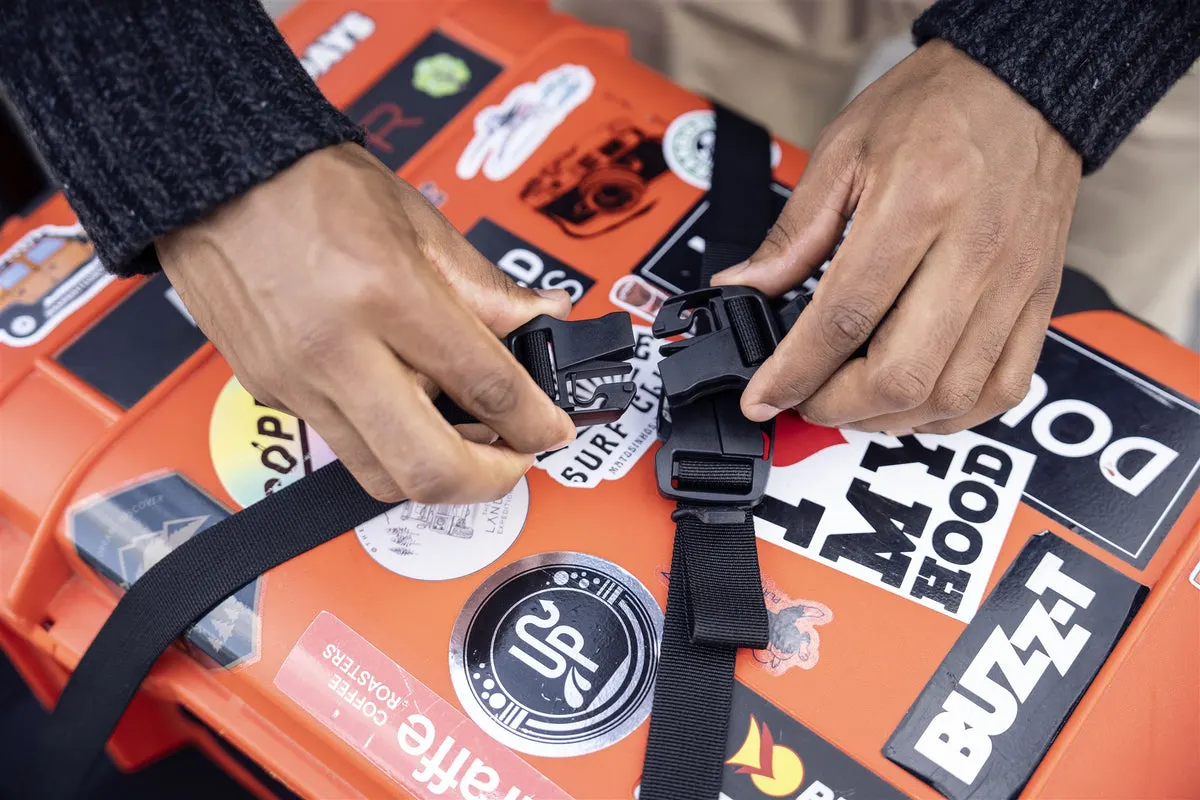
Do not assign a universal pull force or a standard number of turns around the bag. Different systems work differently. The owner should understand what correct engagement looks like for the chosen product and what damage or uncertainty requires stopping. If a buckle cannot be identified or its operation is unclear, resolve that before carrying a load into traffic.
Check the arrangement at a safe stop when the instructions or circumstances call for it. Soft contents can settle, but this should not become a reason to ride with knowingly loose cargo. Stop first, secure the vehicle, and inspect the load away from moving traffic. Never reach back while riding to tighten a strap or retrieve a sliding package.
Fishing rods, folded furniture, and long packages can extend beyond an ordinary basket. A secure tie-down does not establish that their length, position, or protrusion is suitable. Check the vehicle and accessory instructions and relevant local requirements. If no supported carrying arrangement exists, use a different transport method rather than tying the object to steering or seat hardware.
The fishing trip guide addresses rods and tackle as a separate task. For any long item, consider the complete path through gates, parking areas, and turns. A load that clears your garage door may still catch an obstacle when the trike changes direction. The practical assessment should include the trip, not just the loading spot.
Do not carry a person or animal as ordinary cargo. Their movement and containment requirements are different, and an impressive strap specification does not change that. The pet transport guide explains how a documented live-animal arrangement differs from securing groceries.
Imagine an owner carrying two grocery bags in a rear basket. One contains firm boxes; the other contains soft produce. A strap placed only over the soft bag compresses it while leaving the boxes free to move. The owner changes the packaging and uses the basket's supported retention arrangement, then checks that the complete load remains below the permitted limits and clear of the rear equipment.
On the next trip, the contents are different, so the previous photograph is used only as a routing reference. The actual package shape and loose handles are checked again. This is the central habit: repeat the method, but assess the current load. A familiar route and an undamaged strap do not make every new combination automatically suitable.
Keep the equipment simple enough to inspect and replace. Record the model and supplier, retire damaged items according to their instructions, and avoid accumulating unidentified cords. A small collection of appropriate retention products that are used correctly is more useful than a large bag of hooks whose intended tasks and limits are unknown.
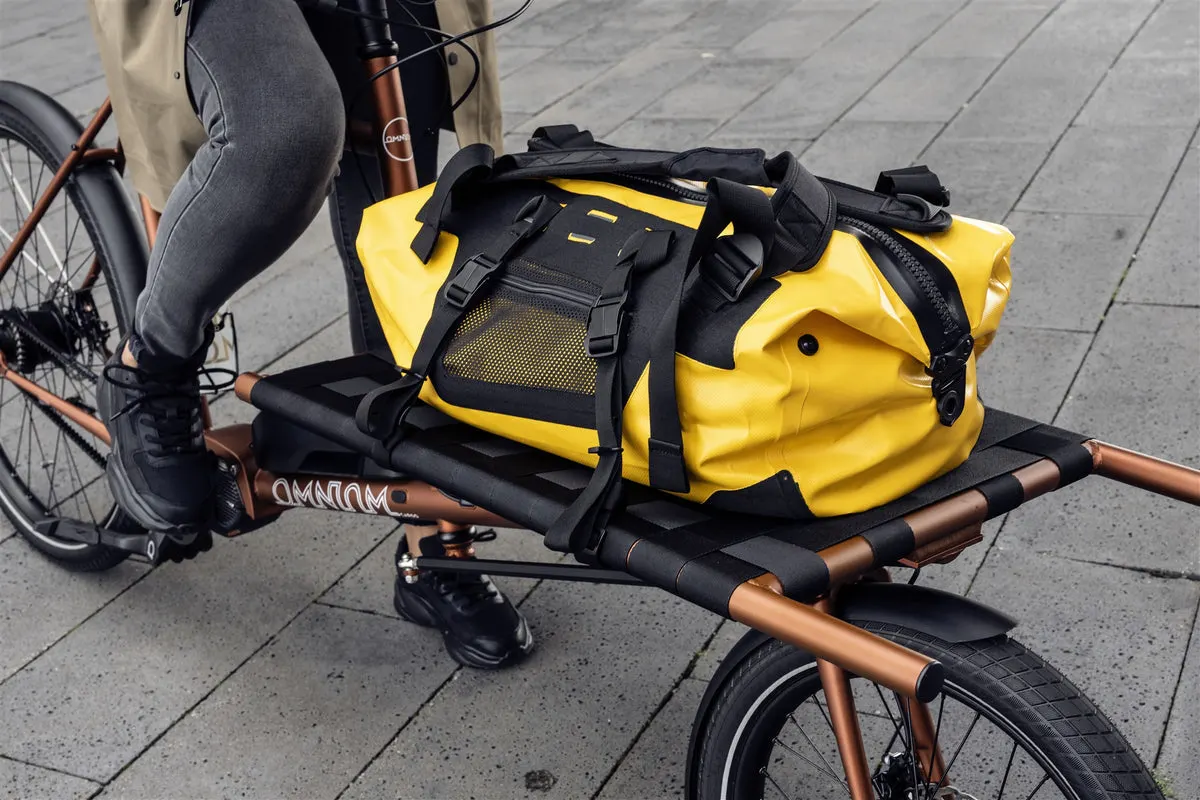
For a regular shopping load, keep a short card naming the support, approved retention product, normal bag arrangement, and items that must remain clear. Add the source of each limit rather than writing one unexplained number. The card can sit with the bag at home and help another rider understand the setup. It should describe an established arrangement, not imply that every load of the same approximate size is equivalent.
When the contents change, ask three separate questions. Does the support still carry the complete weight within its limit? Does the retention system engage the actual package through its intended method? Does the loaded outline preserve controls, access, and visibility? A yes to one question does not answer the others. This makes the card useful when an ordinary grocery trip unexpectedly includes a fragile box or an awkward household item.
Consider a soft duffel that becomes smaller after clothing is removed at a stop. The owner should not assume the original fastening remains correct because no hardware was touched. The changed shape needs the product's appropriate check before riding again. If the supported arrangement cannot retain the remaining contents, repack them suitably or change transport rather than adding an unidentified cord found in another bag.
Keep retirement decisions equally clear. A damaged buckle, an elastic section that no longer behaves as the maker describes, or a missing hook should be resolved through the product's instructions. Do not combine the best-looking pieces from several incompatible systems into an anonymous replacement. Record the actual model when ordering so the next purchase preserves the intended interface.
A useful cargo system is understandable to the person using it. If the owner cannot explain which points support the load and how the restraint is intended to close, the setup needs clarification. That is a more meaningful readiness check than pulling hard on a strap once and deciding it seems strong.
Research-based guide, 15 October 2026. No hands-on restraint testing or load certification was performed.
Guide
Choose your first adult tricycle by checking rider fit, storage, weight limits, gears, brakes, assembly, and service before buying.

Guide
Learn how to compare adult electric tricycles for control, fit, batteries, braking, transport, and ownership support.

Guide
Understand the leg and hip muscles used when pedaling a tricycle, plus how fit, resistance, and electric assistance change the effort.