



Guide
First Adult Tricycle Buying Guide
Choose your first adult tricycle by checking rider fit, storage, weight limits, gears, brakes, assembly, and service before buying.
We research everything we recommend. When you buy through our links, we may earn a commission. Learn more
Guide
Record wheel noise, movement and service history on an adult tricycle without guessing a bearing diagnosis or adjusting an unidentified assembly.

Updated · 12 min read
A rough sound near a wheel does not automatically mean that a bearing has failed. A rubbing brake, tire contact, loose accessory, damaged wheel attachment, or drivetrain component may produce a similar impression. On a three-wheel cycle, the sound can also travel through a rear axle assembly and seem to come from the wrong side. The useful first task is to describe what happened and decide whether the trike should remain parked.
This guide explains an owner's observation process, rather than a bearing overhaul. It applies to preparing a service request for upright and recumbent tricycles, including electric models, while keeping their differences visible. It cannot establish a safe amount of wheel play, identify a bearing from a photograph alone, or authorize a universal adjustment. A clear record can nevertheless prevent an unnecessary parts purchase and help a qualified technician start in the right place.

The word bearing describes a function, not one interchangeable component. Bearings allow parts to move relative to one another while supporting loads. An ordinary bicycle hub, a motor hub, a trike axle housing, and a steering assembly may all contain bearings, but their service procedures and replacement parts can differ substantially. A product listing headed bicycle wheel bearing is therefore too broad to establish suitability for your vehicle.
Identify the affected wheel by its position when seated on the trike: front, rear left, or rear right. On a tadpole recumbent, use front left, front right, and rear. Describe which wheels carry brakes and which appear to receive motor or pedal drive. You do not need to dismantle anything to make this sketch. Its purpose is to keep a later conversation from confusing the drive wheel with a wheel that merely supports the vehicle.
The guide to tricycle drive layouts explains why rear assemblies cannot be treated as ordinary bicycle hubs by default. A bearing question on a wheel mounted to a long axle may involve the wheel attachment, axle support, or another part of that assembly. The service provider should determine the construction before ordering components or choosing tools.
Park Tool distinguishes adjustable cup-and-cone bicycle hubs from cartridge-bearing designs in its hub service material. That distinction is useful vocabulary for an owner, but it is not a way to identify every tricycle assembly. Some designs have an adjustment procedure; others require replacement of a cartridge or a larger assembly. The exact component documentation should resolve which description applies.
Ask the shop to name the component, not simply to say that the bearing needs tightening. A useful answer identifies the hub or axle assembly and describes whether its bearing adjustment is permitted. An equally useful answer may explain that the movement comes from a mounting interface rather than the bearing itself. Either result is more informative than trying to cure every symptom with a wrench at home.
Do not select a replacement by matching only an outside diameter from an Internet photograph. Dimensions, sealing, fit, internal clearance, loading, and the manufacturer's specified part can all matter. Where the maker supplies a complete wheel or hub assembly rather than a loose bearing, the replacement route may be different from the one shown in a generic bicycle repair video.
Park the trike if a wheel visibly moves at its attachment, something has become displaced, the tire touches the frame, or braking or steering has changed unexpectedly. A grinding sound combined with a new handling problem deserves a service assessment before riding continues. This guide does not provide a threshold below which play is acceptable; that would require information about the actual assembly and its approved inspection method.
An owner should not ride farther simply to obtain a better recording of a concerning symptom. Move yourself out of traffic first and arrange assistance if the vehicle cannot be moved safely. A stationary photograph of the general assembly and a description of the last normal ride are often enough to begin a service conversation. The roadside recovery planning guide addresses how to get a wide or heavy trike home without relying on an improvised tow.
Electric assistance adds another reason to avoid casual spinning or handling of a drive wheel. Follow the vehicle's power isolation instructions before an approved inspection. Do not run the motor while the trike is supported on a household object, and do not reach near moving spokes or a rotor. If secure support is unavailable, leave the wheel on the ground and limit your observations accordingly.
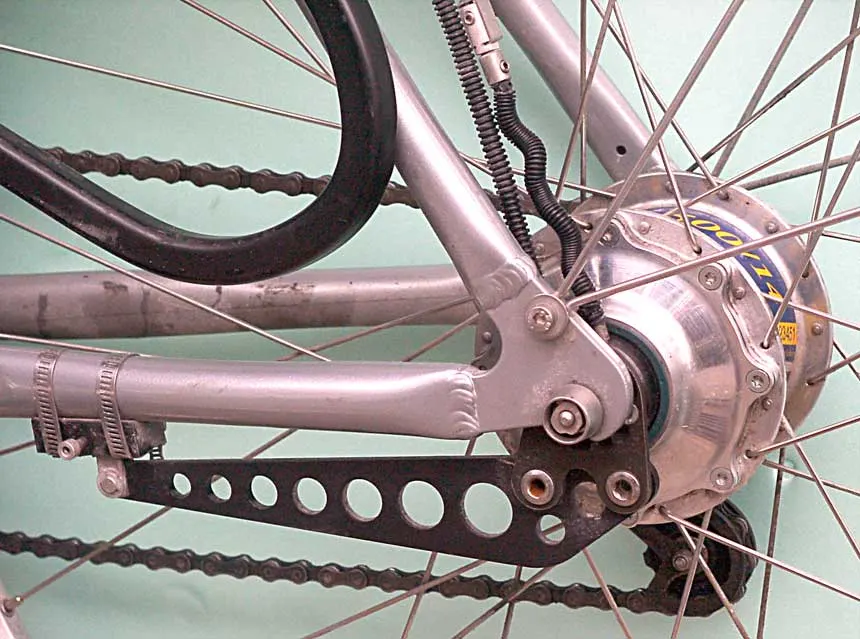
Write down whether the sound was a scrape, click, knock, rumble, or intermittent squeak. State whether it appeared during pedaling, coasting, turning, braking, or pushing the trike. These are observations, not diagnoses. Saying that a rumble happened while coasting is more useful than declaring that the left bearing is worn when that conclusion has not been established.
Include the first occasion you noticed it and any nearby event: transport, a pothole strike, washing, wheel removal, a long period in storage, or a recent repair. Sequence matters because it gives the technician a starting point. It does not prove causation. A sound first heard after cleaning may be unrelated to cleaning, and an accessory installed the same week may merely be coincidental.
Describe changes in effort separately from sounds. Was the trike harder to push on its usual level surface? Did a wheel seem reluctant to turn, or did the brake lever feel different? Keep the comparison modest. Wind, tire pressure, cargo, surface, and gradient affect perceived resistance, so a slower trip is not a bearing test. Note these circumstances instead of interpreting a single difficult ride as mechanical proof.
With the trike securely parked and power handled according to its instructions, look for obvious contact between the tire, fender, basket attachment, or loose strap. A bag hanging into a wheel can make a sound that seems internal. You may be able to photograph that contact without moving the vehicle. Avoid removing accessories if doing so requires disturbing a wheel attachment or brake component.
Examine visible wheel hardware for a missing item, an unfamiliar gap, or a displaced cover. Compare it with a clear photograph from before the problem if you have one. Appearance is not a torque measurement: a nut that looks seated may still need professional assessment, and an unfamiliar washer arrangement should not be reconstructed from a different trike's picture.
The tire deserves its own observation. A tire casing or bead problem can create a recurring movement that is easily described as wheel wobble. Keep tire appearance, rim movement, and hub movement as separate notes. The spoke and wheel inspection guide develops that distinction without turning an owner's visual check into an unqualified wheel-building procedure.
Online advice often tells riders to lift a wheel, rock it, spin it, or loosen its attachment. Those actions are not universally suitable for trikes. A front wheel supported on one side, a motor axle carrying a cable, and a wheel fixed to a rear shaft may need different methods. A safe support arrangement is also a separate problem on a heavy or unusually shaped vehicle.
If your own manual gives a specific owner check, use that method within your capability and record the result accurately. If it does not, ask the service provider what can be checked with the trike still assembled. A requested photo or short stationary video can be useful; a generic instruction to pull on the wheel is incomplete unless the provider has identified the construction and explained the safe setup.
Do not spray lubricant into a hub to see whether a noise disappears. The spray may reach brake surfaces or conceal a symptom without addressing the cause. Likewise, tightening an exposed nut to silence movement can alter the wrong interface. The torque and fastener guide explains why identifying a fastener's purpose comes before selecting a torque value.
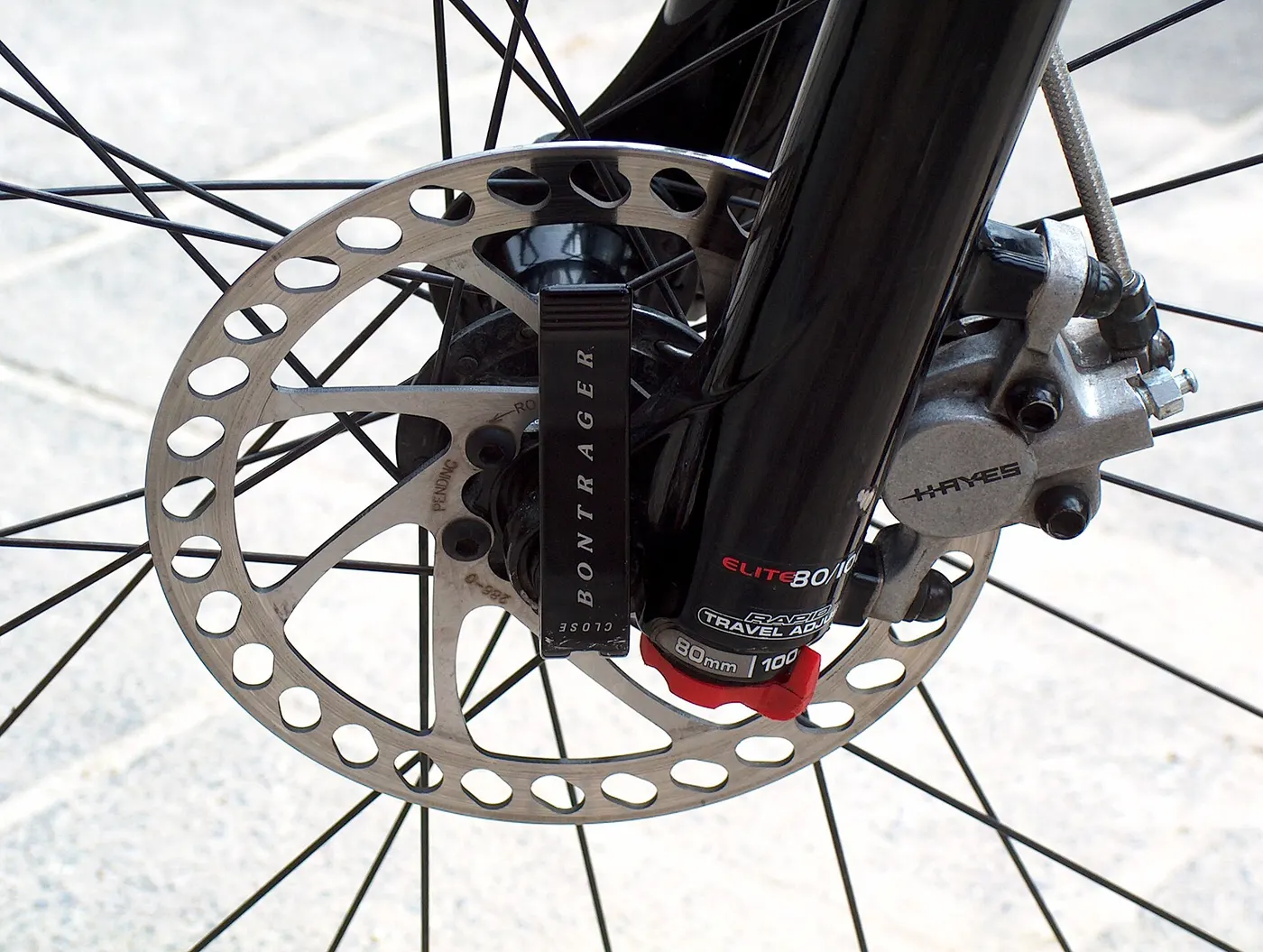
A sound synchronized with wheel rotation may originate at the brake, tire, rim, or hub. Its rhythm alone does not separate those possibilities. A technician may inspect rotor alignment, wheel attachment, and bearing condition together because they influence the same assembly. The owner should preserve that wider view rather than ordering a bearing before the vehicle has been examined.
Record whether applying the brake changed the sound, but do not deliberately ride with an unreliable brake to reproduce it. If a lever action changed during the same incident, include that prominently in the service request. A bearing-oriented appointment should not cause the shop to overlook a braking complaint. State both symptoms even if you suspect they have one shared cause.
For a trike with more than one brake lever or a combined control, describe which control was used. Avoid calling them front and rear unless you have confirmed which wheels they operate. The brakes and parking brakes guide provides a framework for mapping the actual controls, including cases where a parking function does not identify the wheel that produced a noise.
A practical packet contains the trike brand, model, approximate year, serial information if requested, photographs of the affected wheel, and the symptom timeline. Include the hub or motor label only when it can be read without disassembly. A photograph of the whole trike helps the shop understand its layout and space needs before you arrive with a vehicle that cannot fit their usual stand.
Add a list of recent work with dates and the parts changed. If someone removed a wheel, say so plainly. You are providing context, not assigning blame. A workshop can often give a clearer initial assessment when it knows whether it is examining an untouched assembly or one recently reinstalled after transport or a tire replacement.
Ask whether the shop can inspect your specific trike, whether the manufacturer must supply parts, and whether the quote includes removal and reinstallation of surrounding equipment. On some designs, the labor associated with access may be more important than the price of a loose bearing. The service shop guide helps evaluate those practical capabilities before booking.
Two quotes may describe different work. One may cover hub adjustment and inspection; another may replace a wheel assembly; a third may investigate an axle housing. Do not compare their prices as if they were the same service. Ask each provider what fault has been identified, what remains uncertain, and what parts or further inspection are included.
It is reasonable for a shop to say that a final estimate requires opening an assembly. Ask how authorization for additional work will be handled and whether old parts can be shown afterward. A transparent process is more useful than a confident prediction based only on a phone description. The owner should understand the proposed next step before approving an expanding repair.
Avoid paying extra for a bearing described merely as premium without a compatibility explanation. The important question is whether the part is approved for the identified assembly and whether the repair addresses the observed problem. A more expensive material or a familiar brand name does not by itself establish better operation in a particular tricycle hub or axle support.

Some faults cannot be reproduced during a short appointment. That does not mean the owner imagined the sound, but it also does not justify replacing parts at random. Explain the conditions under which it occurred and whether it has happened again. If the shop proposes monitoring, ask what change should end monitoring and prompt another assessment.
A simple log can contain date, route type, cargo, weather, symptom, and any relevant service. Keep entries factual and short. For example, a click heard while pushing after unloading groceries is distinct from a rumble heard only under motor assistance. These differences may help narrow the investigation without the owner needing to know the names of every internal component.
Do not record unnecessary personal information in photographs shared publicly. A service image can show hardware without exposing a home address, keys, registration paperwork, or other identifying details. Keep a full record privately for the workshop and share only what is needed in a forum. Forum suggestions can generate questions, but they cannot establish that a wheel is safe to ride.
Ask the technician to identify the repaired component on the invoice and note the installed part number when applicable. Record whether the work involved adjustment, replacement, or another source of noise. This becomes valuable at the next service and prevents a future owner or workshop from assuming the assembly is still in its original configuration.
Discuss any model-specific recheck or running-in instruction. There is no universal mileage interval in this guide because service requirements vary with the assembly and work performed. If the provider asks for a follow-up, put it on your calendar rather than substituting a generic Internet schedule. Retain the written instructions with the vehicle's manual and receipts.
Before returning to ordinary trips, carry out the maker's normal pre-ride check and follow the shop's return-to-use instructions. Pay attention to the original symptom without hunting for new noises on a risky route. If handling, braking, or wheel security is still questionable, stop and contact the provider. A repair invoice is helpful evidence of work, not a reason to ignore an unresolved change.

Imagine an upright trike that was quiet before a car journey and now makes a low rumble when pushed out of storage. The owner first parks it and checks visually for a luggage strap or fender contacting a tire. Nothing obvious appears. Instead of tightening axle hardware, the owner photographs both rear assemblies and records that the sound began after transport and occurs with power off.
The service request includes the transport method and whether any wheel was removed. The shop then decides how to distinguish attachment, brake, tire, and bearing issues. The owner has not solved the fault, but has avoided changing evidence or purchasing a guessed part. That is a successful observation process: it makes the next professional step clearer while keeping uncertain wheel security out of an ordinary ride.
Once the cause is established, the owner updates the maintenance record with the actual component and repair. If it turns out to have been brake contact rather than a bearing, that result should replace the original suspicion in the log. Future troubleshooting benefits from the correction. A history filled with assumed diagnoses is much less useful than one that separates observations from confirmed findings.
Research-based owner guide, reviewed 14 October 2026. Scenarios are illustrative; no hands-on diagnosis or product testing was performed.
Guide
Choose your first adult tricycle by checking rider fit, storage, weight limits, gears, brakes, assembly, and service before buying.

Guide
Learn how to compare adult electric tricycles for control, fit, batteries, braking, transport, and ownership support.

Guide
Understand the leg and hip muscles used when pedaling a tricycle, plus how fit, resistance, and electric assistance change the effort.