
Guide
First Adult Tricycle Buying Guide
Choose your first adult tricycle by checking rider fit, storage, weight limits, gears, brakes, assembly, and service before buying.
We research everything we recommend. When you buy through our links, we may earn a commission. Learn more
Guide
Plan grocery trips on an adult tricycle with clear cargo limits, compatible baskets, secure packing, parking, and a manageable ride home.

Updated · 12 min read
An adult tricycle can be useful for errands when its approved carrying arrangement fits the load and the route remains manageable. The basket's volume is not its weight limit, and a total vehicle payload is not the same as a rider or basket limit. Plan the trip from home storage through shopping, parking, packing, riding, and unloading. A vehicle that carries a bag on a level demonstration may still be inconvenient for a particular store or driveway.
This guide explains an everyday cargo workflow, not a ranking of shopping tricycles. It is research-based and does not include our own loaded handling tests. Use the exact vehicle and accessory instructions for mounting, cargo placement, and capacity. Do not carry a passenger or animal in an ordinary basket unless the complete vehicle and carrying system are expressly intended and approved for that use.

List what you normally buy, how often you shop, and whether you will visit more than one location. A few light groceries, several bottles, and a bulky household item create different loading problems. Consider both weight and shape. A light object can be too large to secure inside the basket.
Think about what happens before and after riding. Can you get the vehicle out of storage, park at the shop, carry the bag inside, and unload it at home? If a basket encourages purchases you cannot comfortably lift afterward, it has not solved the complete errand. Our guide to basket bags and liners covers fit, fastening and weather.
Use our first adult tricycle buying guide if you are still choosing the machine. Cargo is one requirement alongside fit, control, storage, and service. A large basket should not make an unsuitable vehicle seem acceptable.
Find the rider limit, total payload definition, and separate limits for each rack or basket. The vehicle may have a front and rear arrangement with different restrictions. Record which number applies to which part. Do not assume a combined total can be placed entirely in the rear basket.
Check whether the quoted accessory limit includes the weight of a liner, carrier, or other attached equipment. Ask the manufacturer when the definition is unclear. A seller's image or statement that the basket holds shopping does not establish how much is permitted on your configuration.
If sources disagree, resolve the discrepancy before loading. Do not choose the largest number because it accommodates the intended errand. Keep the manual and accessory instructions with the vehicle record. Model generations can change mounting and capacity even when the basket looks similar.
Make a simple list of the rider, usual carried items, and accessories, then apply the manufacturer's definitions. Weigh the packed bag where practical. A bag that feels light while lifting briefly may weigh more than expected, particularly when it contains liquids or dense household supplies.
A useful worksheet keeps the total payload and each cargo location separate. If the total remains under its limit but a basket exceeds its own limit, the load is still unsuitable. Conversely, an oversized object may fail the securing or clearance requirements while its weight remains acceptable.
Leave uncertain items marked as unknown. Ask whether a proposed crate or carrier is approved rather than assuming that its own advertised capacity determines the vehicle's capacity. The carrying arrangement is a system of attachment, basket, rack, frame, and vehicle limits, not a collection of independent promises.
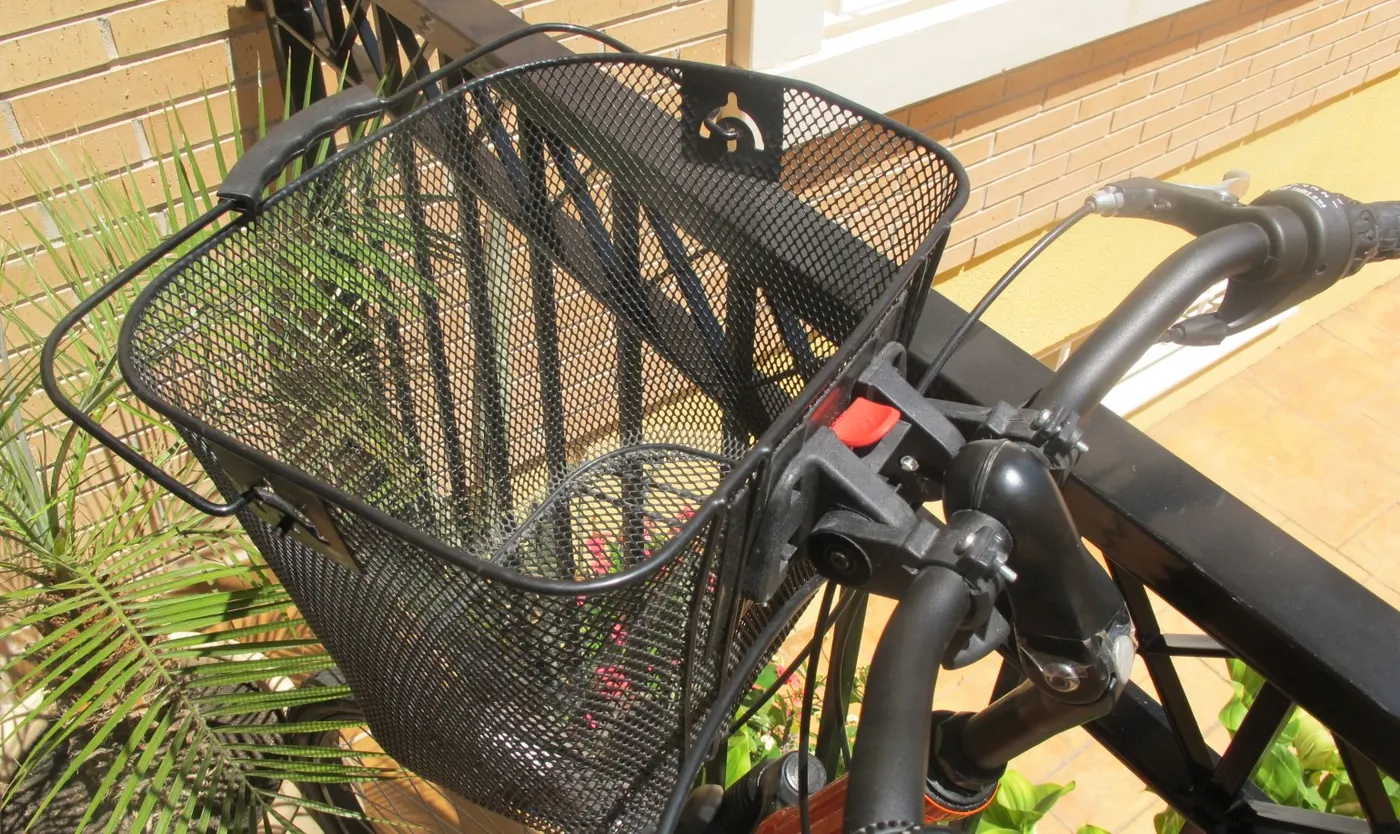
An accessory should match the vehicle and generation, use the approved hardware, and avoid interference with controls or moving parts. Lectric's accessory installation guidance, for example, distinguishes a basket's prescribed frame mounting. That is a reminder to identify the actual attachment rather than assume every front basket turns with the handlebar.
Ask who will install it and whether the vehicle manufacturer approves it. Do not drill the frame, add an improvised bracket, or use a flexible cable tie as a structural substitute without an approved procedure. A basket that seems secure while empty may behave differently under load.
Inspect the mounted accessory after installation using its instructions. Check clearance through the steering movement and access to necessary components. The maintenance checklist explains how to record installation and identify changes without blindly tightening every fastener.
A liner or bag can prevent small objects from passing through mesh and make unloading easier. Choose one whose dimensions and fastenings fit the basket. A universal label does not establish whether a loose corner can reach a wheel or whether handles trail into the drivetrain.
Test the bag empty before filling it. Confirm that it can be secured, removed, and carried without pulling the basket out of position. Check whether the bag closes and whether closure affects lights, reflectors, or access to the lock. Convenience should not introduce an obstruction.
Water resistance and insulation are separate properties. A bag that keeps occasional rain off an object is not automatically a food-temperature solution. Choose packaging appropriate to the contents and the time involved, following applicable food-safety guidance rather than assuming that any basket cover preserves groceries.
Keep items within the approved carrying envelope and secure them so they cannot shift or fall toward the wheels. Use the manufacturer's placement guidance. Avoid stacking a tall unstable tower merely because the basket is wide. Heavy or moving cargo can change handling and should not be treated as a benefit to stability.
Do not hang grocery bags from steering controls to accommodate overflow. Handles can catch, sway, obstruct a lever, or distract the rider. Split the shopping into another trip if necessary. A manageable load is more useful than forcing the entire purchase onto the machine.
Check straps and loose ends. A cargo net or fastening should suit the attachment points and remain clear of moving parts. Elasticity does not make every net compatible, and a strap pulled tightly over fragile goods may create another problem. Secure the load deliberately before moving.

Begin in a level, controlled area with a small secured load within all limits. Observe starting, stopping, broad turns, and parking. The goal is to learn the change in behavior, not to demonstrate the maximum capacity. Do not use a heavy load as an experiment to discover the handling limit.
Repeat the everyday actions that the errand will require. Can you stop at a gate, use the parking procedure, get off, and reach the bag without disturbing the vehicle? Can you move the tricycle through home access with the cargo installed? A comfortable straight ride is only one part of the task.
Our safe riding guide explains the transition from unloaded practice to real routes. Cargo should be added after basic control is familiar, not used to make an unfamiliar machine feel more planted. If loaded handling is concerning, stop and seek advice.
The return trip is loaded, so its demands can differ from the journey to the store. A hill, narrow gate, or sloped driveway that was easy with an empty basket may deserve a different plan. Consider crossings, potholes, path barriers, and where you can stop safely if needed.
Walk unfamiliar segments and check whether your vehicle is permitted on the route. A cycle path may include access barriers that are awkward for a wider tricycle. Avoid assuming a shopping-oriented design can use every sidewalk or shared path. Local rules and actual clearance both matter.
Choose a shorter, more forgiving first errand with an alternative way home. If the trip requires a challenging descent, think about braking as well as climbing. Our gears and hills guide addresses those different demands without assigning a universal gradient limit.
Check whether the shop's bicycle parking accommodates the width and lets you secure the frame without obstructing others. A rack suitable for a narrow two-wheel bicycle may be inconvenient for a tricycle. Do not force the vehicle into a position that blocks access or requires an awkward transfer.
Use the prescribed parking procedure on a suitable surface and secure the vehicle to an appropriate anchor. A parking brake is not an anti-theft lock. A built-in wheel lock may not secure the entire machine to the location. Evaluate the complete security arrangement rather than relying on one accessory name.
Our storage and transport guide explains access and security planning. Make the destination arrangement part of the errand, including where your bags, keys, and removable equipment will be while you are inside the store.
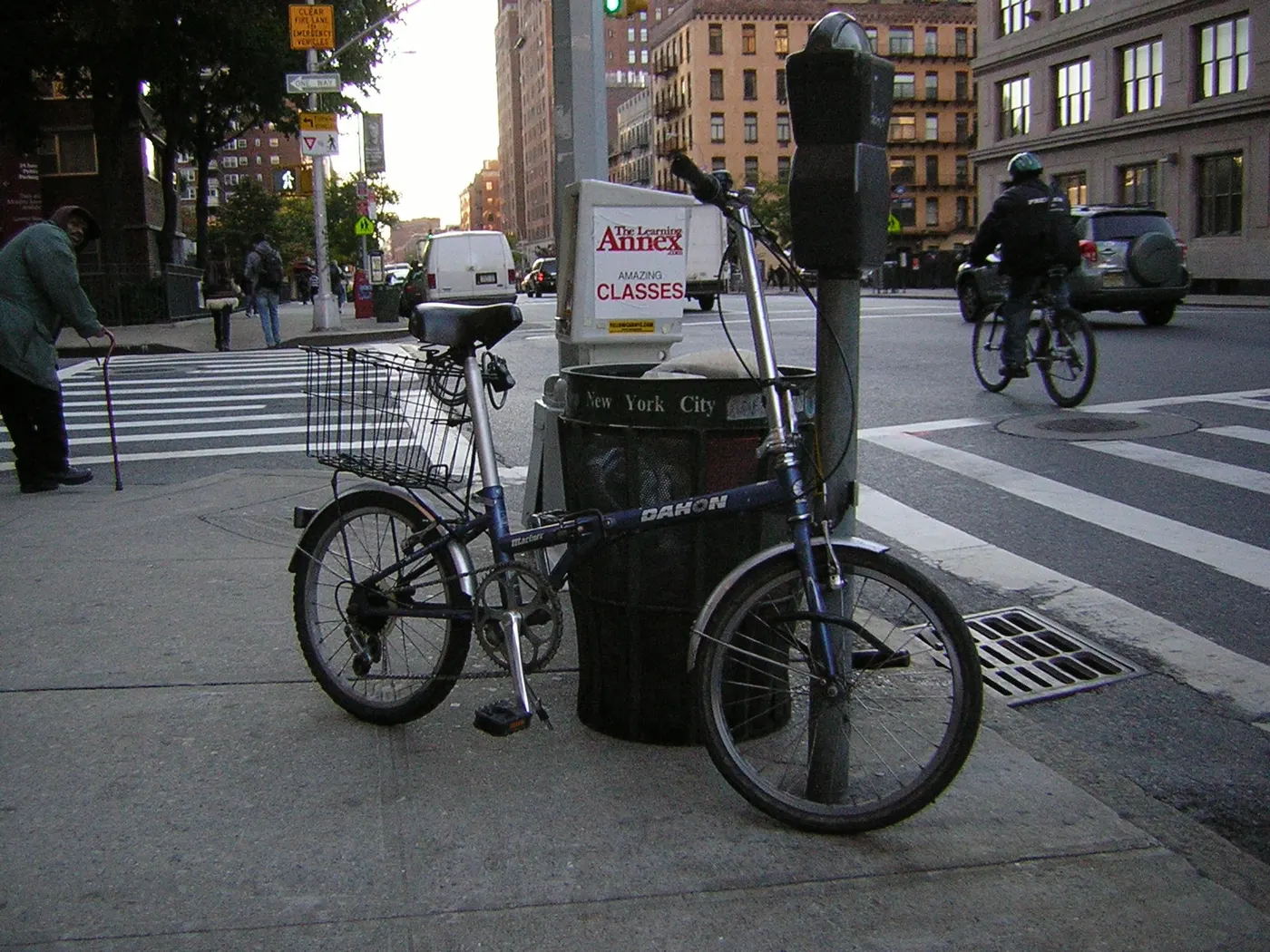
After packing, look around the whole machine. Confirm that the bag is contained, straps are secured, lights remain visible, and nothing has been hooked onto a control. Shopping can be distracting, so use a short repeatable check rather than assuming the load is ready because the bag is closed.
Verify the parking brake release and starting setup according to the manual. Do not reach backward to rearrange groceries while moving. If a bag shifts, stop somewhere suitable and fix the problem. The rider's attention should stay on the route rather than whether a bottle is about to fall.
If the purchase exceeds the plan, choose delivery, another trip, or help instead of improvising. A basket's generous appearance does not raise its approved capacity. Recognizing the limit before departing is easier than dealing with a loose or overloaded arrangement halfway home.
An electric tricycle's range depends on more than distance. Cargo, hills, assistance, starts, and weather can change the trip. Do not assume an empty test ride establishes a loaded shopping range. Plan with a comfortable return margin and a realistic recovery option.
A motor may make the added propulsion effort less noticeable, but control and braking still need attention. Do not use assistance to compensate for a load outside the approved limits. The vehicle's payload definition remains relevant even when it appears to move easily.
Our electric tricycle range planning guide explains how to build useful route observations without treating advertised distance as a guarantee. Keep charging arrangements compatible with the battery instructions rather than relying on an unplanned outlet at the store.
A shopping basket should not be treated as a passenger seat. An animal carrier also needs explicit approval for the complete arrangement and suitability for the animal. Movement, attachment, restraint, ventilation, and load distribution create questions that ordinary grocery packing does not answer.
Do not copy a promotional photograph and assume the same use is safe on your model. Ask the manufacturer whether the vehicle and carrier are designed for it, and follow relevant requirements. If approval is absent or unclear, use another transport method.
Even an approved arrangement needs a realistic trip and handling plan. A moving load is different from a sealed grocery bag. This guide does not provide pet-training or passenger-carrying instructions; the important boundary is not to infer authorization from basket size or a favorable customer review.
Park as instructed in a suitable area before reaching for the cargo. Think about the lifting movement and whether the bag can be removed without twisting or stretching. An easily carried shopping bag is useful only if it can be retrieved comfortably from its position on the vehicle.
Break the load into manageable parts if the approved arrangement allows it. Do not use the basket as a support for your body while leaning over unless it is designed for that purpose. Avoid leaving a heavy object temporarily balanced on a seat or handlebar while opening a door.
After unloading, inspect for damage or loose fittings introduced during the trip. Remove any remaining strap or bag end that could interfere with the next ride. A brief return-home routine prevents the next outing from beginning with forgotten cargo hardware.
For frequent small trips, easy bag removal and convenient parking may be more important than maximum basket volume. A smaller manageable load can reduce the temptation to carry awkward objects. Evaluate how long the complete errand takes rather than judging only the riding distance.
For a larger scheduled shop, weigh and measure a representative bag before relying on the machine. Confirm every capacity definition and trial the secured load within approved conditions. Think about the trip home, unloading, and whether shopping needs can vary enough to exceed the plan.
For multiple stops, security and packing sequence deserve extra attention. Items purchased at the first shop may remain on the vehicle while you visit the second. A lock or cover does not guarantee that unattended cargo is protected. Plan what stays with you and what can reasonably remain outside.
Choose a liner to contain small goods, a cover for an appropriate weather need, or a fastening to secure an approved load. Do not add accessories simply because they appear in a generic Best list. Each item introduces fit, weight, and attachment questions.
Record the accessory model and installed configuration with the vehicle information. Changes can affect clearance, load definitions, and lighting. If a new basket or bag requires a different mounting system, obtain approval before assuming the older setup remains valid. The carrying solution should be assessed as a whole.
A useful shopping tricycle is one that supports the ordinary errand reliably. Capacity, containment, parking, handling, and unloading all contribute. Plan those tasks together and resist the idea that a large basket automatically makes any tricycle a safe replacement for every car trip.
Before leaving home, check the planned purchase against the load worksheet and confirm the parking location. Take the bags and fastenings that already fit the vehicle instead of relying on whatever container becomes available at checkout. An empty outward basket can hide a return-trip problem, so the plan should specify what you intend to bring back.
At the shop, decide whether an unexpected purchase fits before paying for it. A bulky item can create a shape problem even when it is light. Ask about delivery or split the errand if necessary. Do not balance an object across the basket because it appears to stay still while the vehicle is parked. Road movement and turning add a different task.
After checkout, park securely for packing, confirm the load is contained, check straps and visibility, and verify the starting controls. If another person packed the bag, inspect the actual result rather than assuming they understood the wheel clearance and weight limits. A shared routine is particularly useful when family members help with shopping.
At home, unload from a stable position and inspect the accessories before putting the vehicle away. Note what proved awkward: bag removal, key access, a gate with cargo installed, or lifting a heavy container. Adjust the next errand around that observation instead of adding more accessories at random. The checklist is successful when it makes the ordinary trip repeatable, not when it lets you carry the largest possible shopping load once.
Guide
Choose your first adult tricycle by checking rider fit, storage, weight limits, gears, brakes, assembly, and service before buying.

Guide
Learn how to compare adult electric tricycles for control, fit, batteries, braking, transport, and ownership support.

Guide
Understand the leg and hip muscles used when pedaling a tricycle, plus how fit, resistance, and electric assistance change the effort.