
Guide
First Adult Tricycle Buying Guide
Choose your first adult tricycle by checking rider fit, storage, weight limits, gears, brakes, assembly, and service before buying.
We research everything we recommend. When you buy through our links, we may earn a commission. Learn more
Guide
Plan adult tricycle storage and transport by checking access, folded dimensions, security, battery care, loading, and carrier compatibility.

Updated · 12 min read
A workable storage plan begins with the path into the parking space, not just the floor area where the tricycle will sit. Measure gates, doorways, corners, and the space needed to walk beside the machine. For transport, measure the vehicle opening and the exact folded configuration separately. A folding frame does not guarantee that the rear axle becomes narrow, that the machine fits through a hatch, or that one person can lift it.
This research-based guide helps you evaluate those practical tasks before buying accessories or moving a heavy vehicle. It does not certify a rack, ramp, hoist, or building structure for your tricycle. Use the vehicle and carrying-equipment instructions, including approved attachment points and load limits. Electric batteries require their own storage and transport precautions; a weather cover is not a charging safety system.

Start where you return from a ride and follow the route to the intended parking location. Identify the narrowest opening, the sharpest turn, any steps or ramps, and places where you must change your hand position. A shed can contain enough floor space while its entrance or approach makes access impractical.
Measure usable clearance with doors fully open. Handles, hinges, stored boxes, and a gate's opening angle can reduce the space. Consider whether you will push beside the machine or move it from another position. The plan should allow your body to fit too, rather than merely permitting the vehicle to scrape through. Our guide to tricycle width and path clearance shows how to measure the whole route.
If you are choosing a model, record these constraints before ordering. Our first adult tricycle buying guide explains how storage affects the purchase. Do not leave access testing until a large box has arrived and return freight becomes a problem.
Use the complete assembled width, length, and height, then obtain dimensions for the exact folded arrangement. Ask whether baskets, a seat, or the battery must be removed to achieve the published size. A diagram should identify the configuration rather than display a favorable measurement without explanation.
Rear axle width often remains a limiting dimension even when the frame folds. Steering or pedals may also protrude. Compare the maximum footprint with the passage and parking area, and allow room for maneuvering. A dimension that only just matches an opening is not a comfortable everyday arrangement.
If information is missing, request a demonstration or measured photographs. Mark uncertainty honestly instead of filling it with figures from another generation. Our sizing and fit guide separates vehicle measurements from rider fit, which prevents a comfortable saddle from distracting you from an unusable doorway.
A tape outline or cardboard mock-up can help visualize the space described by the specifications. Include the widest parts and the access needed to reach a battery, lock, or folding latch. The outline is a planning aid, not proof that the machine can turn through every approach.
Move the planned footprint through the relevant corners on paper or with a carefully measured model. Consider door swing and whether household members need the same passage. A location that only works when every other object is removed may discourage regular use. Convenient storage can matter as much as rain protection.
Do not purchase a shed or storage tent solely because its exterior dimensions exceed the vehicle dimensions. Interior framing, door size, and the floor arrangement can reduce usable space. Ask for internal clearance and entrance measurements. Also check local building, tenancy, or property requirements where applicable.
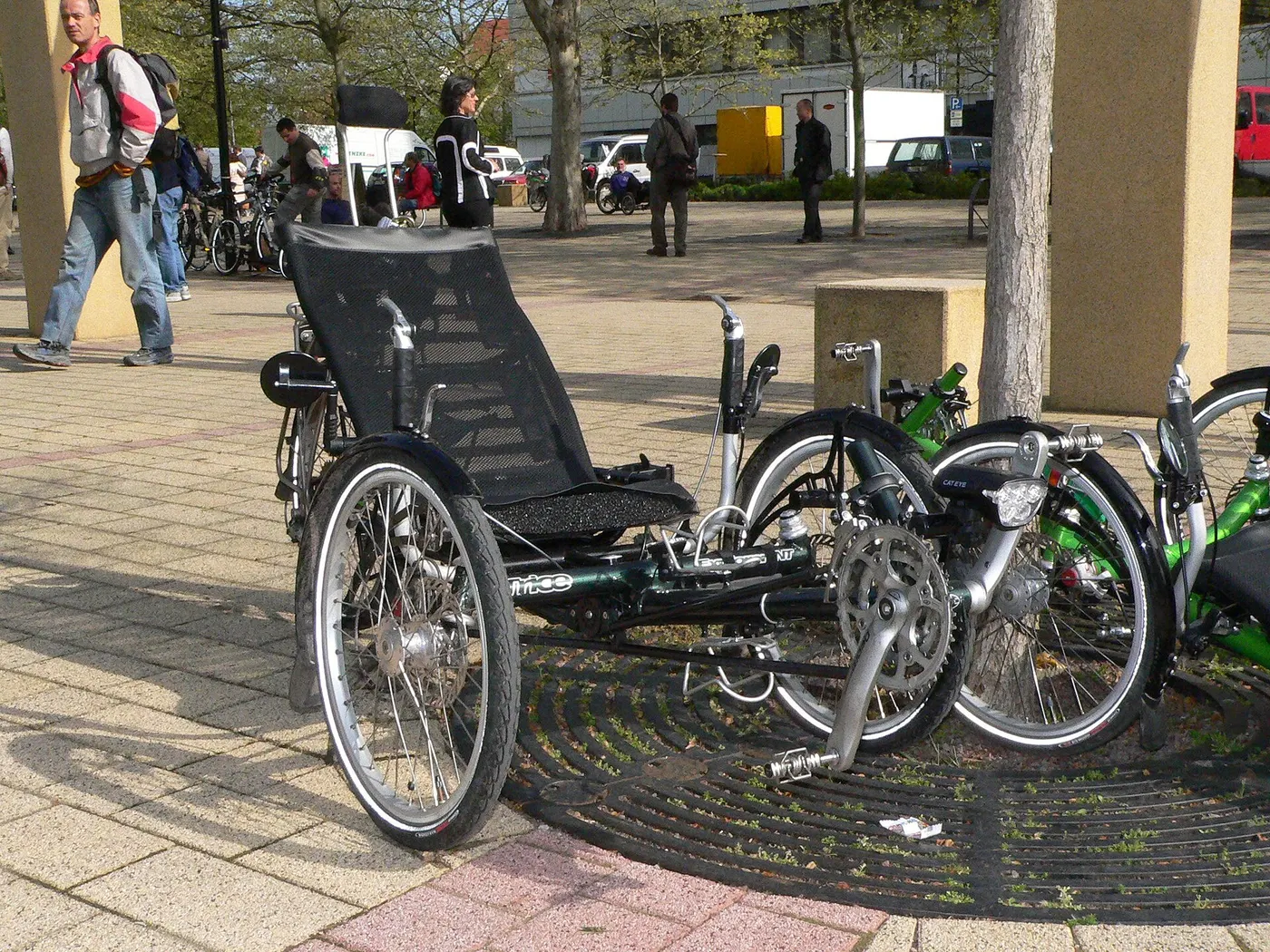
An indoor area should permit parking without blocking exits, circulation, or essential household access. Think about where mud and water will go after a ride and whether the surface can tolerate them. Use suitable floor protection if needed, but keep it flat and out of the transfer path.
Choose a position where the vehicle can be inspected and moved without reaching across it awkwardly. Leaving just enough space for the wheels may not leave enough space to operate a lock or remove a battery. Consider the actions you repeat every day rather than a one-time parking demonstration.
Avoid relying on unapproved wall hooks or overhead storage for a heavy tricycle. Vehicle mass, shape, and attachment points differ from a conventional bicycle. A structure and lifting system need to be designed and rated for the intended use. If you cannot load it safely, a theoretically space-saving arrangement may not be practical.
A cover can reduce exposure, but it should fit the full vehicle and remain secured without damaging components. Check the dimensions rather than relying on labels such as XL or universal. Baskets and mirrors can change the required shape. A cover that stretches tightly over a fragile component can introduce its own problem.
Select a location that limits persistent moisture and standing water. A waterproof fabric does not guarantee that condensation or damp ground is harmless. Check the cover and vehicle periodically rather than assuming that an enclosed object can be ignored for months. Follow the manufacturer's storage requirements for the machine and accessories.
Remove the cover before operating the vehicle and store its straps where they cannot become entangled. Do not leave a loose cover draped near the wheels or drivetrain while moving the tricycle. A repeatable uncovering routine makes it less likely that a fastening or lock will be forgotten.
A storage brake is not an anti-theft lock. Evaluate the lock, the point it attaches to, and the object securing the vehicle. A removable or weak anchor can undermine an otherwise strong lock. Avoid locking only a removable component while leaving the main frame unsecured.
Choose equipment that fits the actual frame shape and location. A short U-lock suitable for a narrow bicycle may not work conveniently with a tricycle and the available anchor. Confirm the lock can be used without contacting vulnerable wires or damaging finish. Security claims should be evaluated against the manufacturer's instructions and your circumstances.
Keep keys or combinations and identifying records somewhere separate from the vehicle. Photograph the serial number and any permanent identification. Check insurance conditions if relevant. No arrangement guarantees theft prevention, so think in terms of reducing opportunity and meeting requirements rather than making an absolute promise.
For an electric tricycle, decide where charging can occur within the battery instructions. Keep escape routes clear and use the supplied or specifically approved charger. CPSC's micromobility guidance advises being present during charging; an unattended overnight routine is not a good substitute for a proper arrangement.
Do not assume it is appropriate to charge under a fitted outdoor cover or inside an improvised enclosed storage tent. Temperature, moisture, ventilation, and nearby materials need to meet the actual instructions. A location that protects a mechanical frame from rain may still be unsuitable for charging a battery.
If the battery can be removed, check whether removal is practical and permitted for your use. Protect the connectors and carry the pack as instructed. Our electric tricycle guide explains battery handling and charger compatibility without treating every system as identical.
Read the battery and vehicle storage instructions before a seasonal break. The recommended charge state, temperature, and inspection interval are model-specific. Do not borrow a percentage from one manufacturer and use it as a universal lithium-battery rule. Keep the current manual with the vehicle's identifying information.
Clean and inspect the machine before parking it for an extended period. Address visible damage, wet surfaces, and maintenance needs rather than hiding them under a cover. A lock, pump, and inspection supplies should remain accessible so returning to use does not depend on finding equipment buried behind the tricycle.
Set a reminder for checks required by the manual. This is particularly useful when the vehicle is used seasonally. The interval should come from the equipment instructions and conditions, not an arbitrary generic schedule. A simple written record can reveal recurring pressure loss or other issues that need service.

Measure the opening, usable interior width, length, and height. Consider wheel arches, seats, hinges, and other objects. A machine may fit within the interior volume but not pass through the opening in the configuration you can safely handle. A photograph inside a different car is not proof for yours.
Check weight with and without removable parts. Do not assume a published figure includes the battery or every accessory. Removal may reduce mass but introduce additional tasks and loose parts. Ask whether you can perform the process safely, not simply whether the lightest configuration falls below an optimistic lifting estimate.
Assess the loading height and the positions available for your hands. A tricycle can be awkward even when its mass seems manageable. Do not use a basket, cable, or unapproved part as a lifting handle. If instructions do not identify suitable handling points, ask the manufacturer or a qualified supplier.
A ramp needs suitable capacity, traction, width, attachment, and geometry for the vehicle and loading surface. Supporting total mass is only one requirement. Wheel arrangement, clearance, and the ability to control movement during loading also matter. A narrow bicycle ramp may not accommodate a three-wheel footprint.
Use equipment expressly intended for the task and follow both manufacturers' directions. Do not improvise with loose boards or depend on a helper to catch a slipping vehicle. Evaluate unloading as well as loading; fatigue and a different parking surface can change the situation after the ride.
Motor-powered loading should only be used if the relevant instructions support it and you can control the complete process. Unexpected assistance is particularly undesirable on a ramp. A carrying system that requires skills or strength you do not have is not a useful solution merely because the vehicle physically fits it.
An external carrier must accommodate the tricycle's dimensions, wheel arrangement, permitted attachment points, and your vehicle's carrying limits. A rack that holds two conventional bicycles is not automatically approved for one tricycle. The frame and wheels interact with the carrier differently.
Consult the carrier and vehicle documentation together. The permitted limit may depend on the specific vehicle connection, accessories, and total load. Do not count only the tricycle while ignoring the carrier where a combined limit applies. Resolve uncertainties with the supplier before relying on the arrangement.
Check whether the load affects lights, registration visibility, driving clearance, or other legal requirements in your location. Use the approved security and tie-down arrangement. A carrier should be evaluated as part of the complete road vehicle setup, not as a separate product with a promising marketing number.
Use the specified restraint points and method. Loose cargo inside a vehicle can move during braking or a turn. A tricycle resting firmly during a stationary demonstration may still shift on the road. Baskets, handlebars, and frame joints need to be treated according to the equipment instructions rather than used as arbitrary anchor points.
Remove or secure loose accessories as required. Keep keys, battery packs, and tools stored appropriately so they cannot roll around or damage connectors. Do not place a removed battery where sunlight or vehicle heat violates its requirements. Inspect the load after following the instructions and before driving.
At the destination, choose an unloading location with room and a suitable surface. Do not let the availability of a scenic riding route push you into awkward roadside unloading. The practical journey includes parking the car, unloading, preparing the tricycle, riding, and loading again.
Follow the complete unfolding procedure and verify latches, cables, steering, seat position, and removed components. A folding action can change cable routing or reveal something left loose. Do not assume that opening the main frame latch is the only step required before riding.
Keep a checklist specific to the machine. If a seat or basket is removed during transport, include its installation and security check. A photograph of the original setup can help identify placement, but use the manual for fasteners and torque specifications. A memory of “about this tight” is not enough for a safety-critical joint.
Our maintenance guide explains documentation and pre-ride observations. Follow it with the model-specific manual, especially after transport or service. The first ride after unloading should confirm predictable operation in a suitable environment, not begin immediately on a steep or busy route.
Trial the complete storage or transport sequence before depending on it. Time is less important than whether every action is manageable: uncovering, unlocking, battery handling, moving through the gate, parking, and reversing the process after the ride. Identify where help is genuinely needed.
If another person will assist, agree on availability rather than assuming they can always lift or load the machine. A plan that works once with several helpers may not support independent daily trips. Consider a simpler home storage location or nearby route if frequent transport proves difficult.
The safe riding guide covers the next stage once the vehicle is ready. Storage convenience should support controlled riding, not pressure you into risky transfers or shortcuts to save time. A practical arrangement makes ordinary use easier to repeat.
Record assembled dimensions, folded dimensions, removable parts, measured weight definitions, carrying equipment, and approved attachment instructions. Include the source and model generation. This helps prevent a later accessory purchase from relying on a vague memory or specifications for another version.
Update the record when adding a basket, mirror, seat, or battery. Small changes can affect cover fit, loading clearance, and total weight. If you replace carrying equipment, repeat the compatibility assessment. A setup that worked previously is not automatically approved after a component change.
A successful storage and transport plan is one you can execute calmly with the actual machine and equipment. Measure the entire journey, confirm compatibility, keep charging requirements separate, and avoid unapproved lifting or carrying shortcuts. Those steps make a tricycle more useful than simply finding a corner large enough to contain it.
Imagine returning home with groceries while the weather is changing. Can you reach the lock, clear the doorway, remove the load, and park without leaving the tricycle where it obstructs other people? This scenario often reveals issues that a clean, empty showroom demonstration misses. The objective is not to rush through the process, but to make each step predictable.
Consider a second scenario in which the person who normally helps is unavailable. Identify which tasks you can perform independently and which require postponing the trip. Do not design the routine around occasional lifting help and then rely on that help every day without agreement. A less ambitious transport plan may support more regular riding.
Finally, consider where you will inspect the vehicle after unloading. If the only available space is a steep verge or a busy roadside, choose another destination or parking location. Loading convenience and ride quality should be assessed together. Good logistics leave time and space for checks instead of making them feel like an obstacle to reaching the trail.
Guide
Choose your first adult tricycle by checking rider fit, storage, weight limits, gears, brakes, assembly, and service before buying.

Guide
Learn how to compare adult electric tricycles for control, fit, batteries, braking, transport, and ownership support.

Guide
Understand the leg and hip muscles used when pedaling a tricycle, plus how fit, resistance, and electric assistance change the effort.