
Guide
First Adult Tricycle Buying Guide
Choose your first adult tricycle by checking rider fit, storage, weight limits, gears, brakes, assembly, and service before buying.
We research everything we recommend. When you buy through our links, we may earn a commission. Learn more
Guide
Choose and adjust adult tricycle mirrors by mount compatibility, seated sight lines, control clearance, vibration, and a useful observation routine.

Updated · 12 min read
A rearview mirror can help an adult tricycle rider monitor what is approaching without repeatedly twisting around. Its usefulness depends on the mounting position, the rider's posture, and whether the view remains clear while steering. A mirror that looks attractive in a product photograph may show mostly a shoulder or vibrate so badly that it gives little usable information.
Choose and adjust the mirror around the actual rider and tricycle. This guide covers upright and recumbent layouts, compatibility checks, stationary setup, riding habits, and troubleshooting. A mirror assists observation; it does not establish that a lane is clear or give another road user notice of your intention to turn.
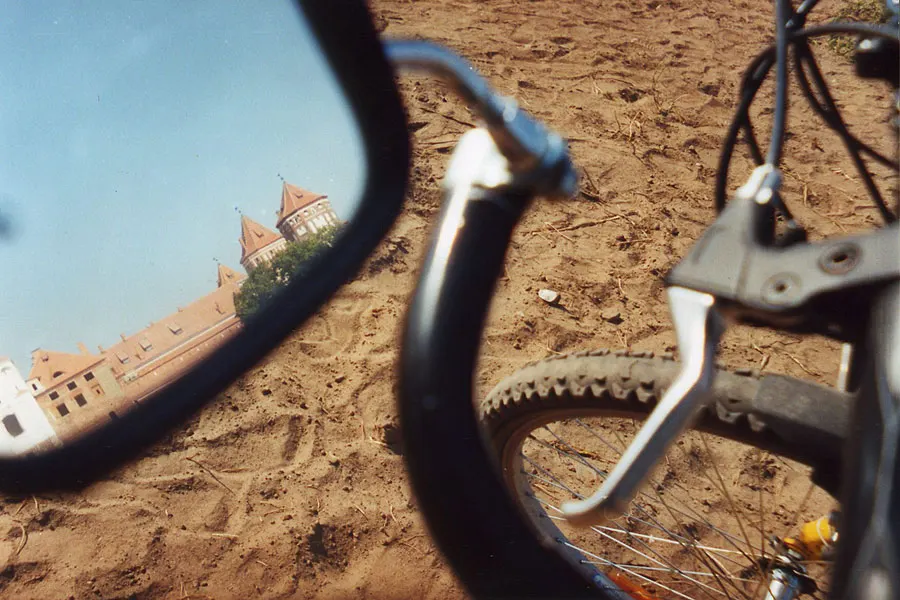
Write down the task before choosing the accessory. You may want to notice approaching cyclists on a shared path, monitor vehicles before a planned turn, or reduce the frequency of uncomfortable torso rotation. These uses have different demands. A small mirror may show movement adequately yet make judging the position of a vehicle difficult.
Consider your usual route, riding posture, and which side carries traffic in your location. On a low recumbent, seat height and under-seat steering can change both the view and the available mount. On an upright tricycle, a wide handlebar may put the mirror farther from the rider than expected.
If restricted neck movement is part of the reason for buying, treat the mirror as one adaptation in a wider riding assessment. Do not assume it makes every road maneuver manageable. A local instructor or adaptive cycling specialist can help evaluate observation, signaling, and control together. A camera display is also not automatically an equivalent solution.
Handlebar clamp mirrors attach around a section of bar, provided the clamp diameter and surface are appropriate. Bar-end mirrors use the opening at the end of the handlebar and need a compatible internal diameter and grip arrangement. A bar that looks open may contain hardware or an insert that prevents installation.
Helmet or eyewear mirrors move with your head and can preserve a view when the handlebar turns. They need their own learning period and must not interfere with helmet fit or eyewear. Follow the accessory and helmet manufacturers' guidance; do not drill a helmet, glue an unapproved bracket to its shell, or modify its protective structure.
Recumbent accessory mounts may place a mirror on a steering handle, mounting mast, or another approved location. Use purpose-designed hardware rather than clamping to a thin seat tube, brake hose, or unsupported plastic component. The upright-versus-recumbent comparison explains why the layouts need different accessory checks.

For a clamp mount, measure the intended bar section, confirm the specified diameter range, and check whether spacers are required. Examine available straight length as well as diameter. A clamp may fit the tube but collide with a brake lever or cable when tightened in the desired position.
For a bar-end mount, confirm the internal opening, insertion depth, and expansion mechanism. Determine whether removing the current plug is permitted and whether the grip needs replacement. Do not cut a grip until you understand how the mirror is intended to attach. Preserve a safe bar-end condition throughout the installation.
Record the mirror's projection beyond the vehicle. Update the width and path-clearance worksheet if the accessory becomes the widest point. A folding joint can help storage, but it must return to a secure, repeatable operating position. A loose joint that folds unexpectedly is not a convenient feature during a ride.
A convex mirror usually shows a broader scene than a similarly sized flat mirror. That can help detect movement across a wider area, but objects may look smaller and distance is harder to interpret. A flat mirror may give a less distorted view while covering less of the surroundings. Neither is universally preferable.
The shape and size also matter. A long mirror can capture more of the adjacent lane but may be harder to position without contact. A small round mirror may be easy to mount but require more precise alignment. Choose based on what you can recognize in a stationary demonstration, not just the stated diameter.
Do not calibrate a mirror by deciding that a car of a certain apparent size is a fixed distance away. Vehicle dimensions, angles, and mirror curvature vary. Use the mirror to gather information about approaching movement and position, then complete the appropriate checks before changing direction. Uncertainty is a reason to wait.
Place the vehicle on level ground with the parking brake applied as instructed. Sit in your normal riding position with the seat and bars already adjusted. Wear the helmet, eyewear, and clothing you intend to use. A bulky sleeve or shoulder can block a view that seemed clear during an indoor setup.
Aim the mirror so it includes a useful portion of the road behind and a small reference to the vehicle or rider if that helps orientation. Ask a helper to stand at several safe positions behind you. Check whether you can recognize their location without stretching or shifting your torso away from the controls.
Repeat at the steering positions used for normal turns. A handlebar-mounted mirror can rotate away from the useful view as the bar moves. This does not necessarily make the product unsuitable, but you need to understand when the view changes. Do not adjust the mirror while riding through a junction.

Operate the brake levers fully and turn the handlebars through their permitted range. Make sure the mirror and bracket do not restrict a lever, press a throttle, stretch a hose, or catch a cable. On a folding tricycle, also inspect the approved folding movement and verify that no mirror part is used as a lifting handle.
Tighten hardware to the accessory and tricycle specifications where provided. More force is not a substitute for the correct clamp. Excessive tightening can damage a bar or thread, while insufficient tightening lets the view move. If the instructions do not resolve a material or clamp compatibility question, contact the manufacturer or a qualified mechanic.
After a short controlled ride, stop and inspect the mount. Record any change in position, contact mark, or vibration. Do not compensate for a loose clamp by moving the mirror farther outward, where leverage may increase. Solve the attachment problem first, then reset the view.
Practice on a level, traffic-free course. Ride straight, glance briefly at the mirror, then return attention ahead. The vehicle should continue along a predictable line. If your shoulders twist or your steering changes every time, shorten the glance and reconsider the position before using it on the road.
Have a helper move between agreed positions well outside the riding line. Try identifying whether they are centered, offset, or approaching, then stop to compare your observation. This is a learning exercise, not a test of safe passing distance. Do not ask a helper to drive closely behind you to simulate traffic.
Once the simple routine is comfortable, practice it before a broad turn and before a planned stop. Pair the glance with looking ahead and around, not with a long fixation on the reflected object. The safe-riding guide provides the basic control sequence that should already feel manageable.
An approaching vehicle can enter a blind area, and a pedestrian can move from beside the tricycle rather than behind it. The mirror does not show every conflict. Before moving laterally or turning, use the appropriate direct checks and signals for your location while preserving control of the vehicle.
If direct observation is difficult, seek instruction on an alternative maneuver or route rather than relying entirely on the accessory. Stopping at a suitable place and crossing by an approved method may be preferable to a moving turn that exceeds your abilities. A mirror is a useful tool, not permission to skip an essential check.
Avoid watching a following vehicle continuously. That can pull attention away from pavement, other users, and the route ahead. A brief, purposeful glance answers a specific question; repeated anxious staring may not. If traffic conditions make the routine overwhelming, select a quieter route or time and revisit the skill in a controlled setting.

If the reflection shakes, first check whether the mount is secure and the mirror arm is within its intended adjustment range. Some vibration can arise from the vehicle or rough surface rather than the accessory alone. A new wheel wobble or severe steering vibration needs mechanical inspection, not a different mirror.
If the rider's arm blocks the view, experiment while stationary with height, angle, or a compatible mounting location. Do not extend an arm so far that it strikes objects or changes the vehicle width impractically. A second mounting style may solve the sight line more effectively than a longer unsupported stalk.
If the glass moves after folding or storage, mark the useful joint position with a removable reference if appropriate. Recheck it before every ride. A cracked mirror, sharp edge, failing joint, or mount that cannot stay fixed should be repaired or replaced according to the manufacturer, not held together with an improvised roadside arrangement.
Rain droplets, dirt, and condensation can reduce the view. Clean the mirror with the maker's recommended method and inspect it before leaving. Do not assume a clear reflection will remain clear throughout a wet trip. Use conservative observation and route choices when visibility deteriorates.
At night, glare can make lights appear bright without revealing the vehicle's size or position. The mirror is not a substitute for suitable front and rear lighting. Our night-riding lighting guide explains how to check the complete visibility setup, including blocked rear lights on a loaded basket.
Repeat the stationary sight-line test after adding a tall load, seat bag, or support accessory. A mirror that looked past an empty basket may show mostly groceries after shopping. Keep cargo within approved limits and positions. If the useful view cannot be maintained, repack or change the trip plan before departing.
| Question | Record before buying |
|---|---|
| Where will it attach? | Exact bar or approved accessory mount |
| Does the hardware fit? | Clamp range or bar-end internal dimensions |
| Can I recognize the scene? | Flat/convex view from my riding position |
| Does it affect controls? | Brake, throttle, cable, and steering clearance |
| Does it change access? | Added width and folding/storage behavior |
Test the finished setup with your usual clothing and a representative permitted cargo arrangement. If the mirror requires a new posture, assess whether that posture remains comfortable and allows a firm grip. The cheapest workable mirror is not necessarily the cheapest item; an incompatible mount can create replacement costs and wasted adjustments.
When two people use the same vehicle, mirror settings may need to change with seat and handlebar positions. Keep a short setup note for each rider. It can include seat reference, mirror angle, and any folding step. Do not assume a view suited to one person's height works for the other.
Make the adjustment part of the pre-ride routine, after rider fit and before moving. A household member can help confirm the reflected positions while the tricycle is stationary. The useful standard is whether the rider sees a clear, repeatable scene with normal posture, not whether the mirror points in the same direction as yesterday.
Revisit the setup after a crash, a hard knock, or a change to bars or seating. Keep the habits simple: secure mount, clear view, unobstructed controls, brief glances, and appropriate direct observation. Those checks make the mirror a practical aid instead of an accessory you fit once and forget.

Before practicing a turn, identify what the mirror can show on your vehicle and what remains outside it. In a controlled area, ride straight, glance briefly, look ahead again, and make the appropriate additional observation before any movement. Practice the sequence without traffic first. The mirror should reduce the effort of gathering information, not become the only place you look.
If a glance makes the tricycle drift, return to stationary setup and a simpler straight-line exercise. Check whether the mirror is too low, far away, or blocked by your arm. A new position may reduce the need to move your torso. Do not compensate by making a long stare that leaves the pavement ahead unobserved.
When practicing with a helper, define their positions in advance and keep them outside the wheel corridor. Ask them to report whether your description matches where they stood. This teaches orientation and the mirror's limitations. It does not establish a safe gap for moving traffic. Once you understand the view, seek appropriate local instruction for real road maneuvers if needed.
Two mirrors may be useful on some routes or recumbent layouts, but each needs compatible installation, adjustment, and a clear sight line. More reflections can also mean more scanning and a wider vehicle. Do not add a second mirror simply because it makes the cockpit look symmetrical. Identify the missing observation task first.
Check whether the second mount crowds a lever or changes access through a gate. Repeat the full steering and folded-configuration checks. A mirror that is only used occasionally still needs to stay secure and must not catch clothing during entry. If it cannot be positioned usefully, leaving it off may be better than retaining an obstructive accessory.
For shared vehicles, record both settings and make the reset easy. A rider should not start with one useful mirror and one showing the sky because adjustment feels tedious. A simple consistent routine is more valuable than additional equipment that is rarely set correctly.
If comparing mirrors, use the same rider, position, clothing, and stationary helper locations. Note the apparent scene, ease of adjustment, mount security, and control clearance. Do not call one product safer because it shows a larger area in a photograph. Curvature, camera position, and the rider's ability to interpret the view influence that result.
A useful review can say that a particular mounting style fits a measured bar and gives the reviewer a clear view in that configuration. It should not claim that the mirror detects every vehicle or removes the need for direct checks. Keep compatibility observations separate from road-safety outcomes, especially when no controlled testing was performed.
Research-based guide; no mirror products were hands-on tested. The worksheets and exercises are editorial synthesis and do not guarantee detection of every road hazard.
Guide
Choose your first adult tricycle by checking rider fit, storage, weight limits, gears, brakes, assembly, and service before buying.

Guide
Learn how to compare adult electric tricycles for control, fit, batteries, braking, transport, and ownership support.

Guide
Understand the leg and hip muscles used when pedaling a tricycle, plus how fit, resistance, and electric assistance change the effort.