Best
Best Lightweight Bike Helmets for Tricycle Riders
Four helmets built to feel light on the head, compared on weight, fit range and the protection they name.

Updated · 3 min read · 4 products evaluated
A heavy helmet tires your neck on a long, upright tricycle ride, and an uncomfortable helmet is one riders stop wearing. Light weight helps, but it must not come at the cost of a named safety standard or a fit that actually holds still.
We compared four helmets that describe a lightweight build. Only one, the Zacro at 260 g, gives a weight in grams, so for the others we compare construction and fit instead, and we say where a number is missing. Every helmet should be sized to your head circumference before you order.
Short answer
The Zacro is our best pick for weight, at 260 g with 18 vents and a 54 to 63 cm fit range. The Smith Signal is the premium choice with MIPS and Koroyd, the P2R A20 adds MIPS and a rear light, and the OutdoorMaster has two liner thicknesses for fine fit.
Quick Picks
Our 4 recommendations at a glance. Tap a pick for the full verdict.
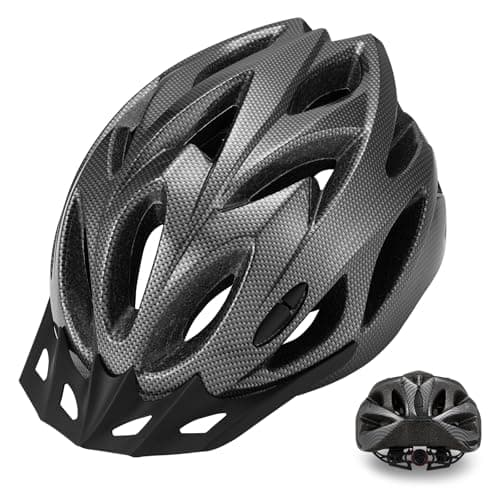
Lightest Stated Weight
Zacro Adult Bike Helmet
Riders who want a confirmed light weight and a wide size range
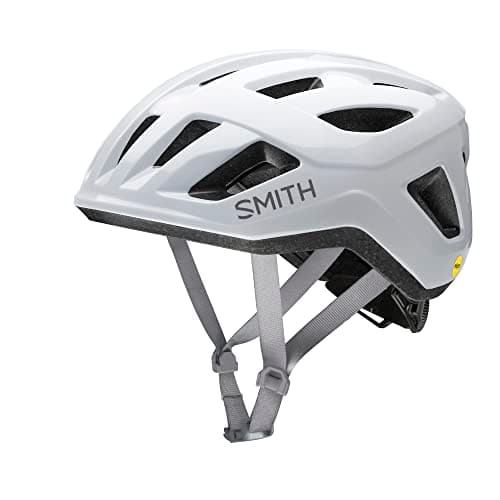
Best Premium
SMITH Signal Cycling Helmet
Riders who want MIPS and a refined fit system
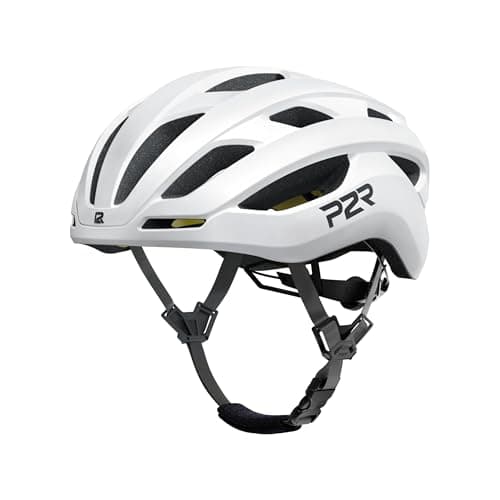
Best With Light
P2R A20 MIPS Helmet with Rear Light
Commuters and dusk riders who want visibility built in
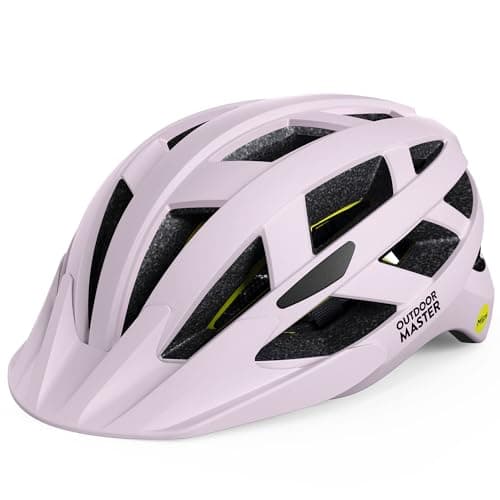
Best for Fine Fit
OutdoorMaster MIPS Cycling Helmet
Riders who need to tune fit around glasses or hair
Our Picks
Lightest Stated Weight1 of 4
Zacro Adult Bike Helmet
A helmet that gives its weight, 260 g, plus a wide fit range.
Best for
Riders who want a confirmed light weight and a wide size range
Why we like it
The Zacro weighs 260 g and has 18 vents in a polycarbonate shell, with CE and CPSC approval named. A dial adjusts the fit across a 54 to 63 cm head circumference, which is wider than the others here, and the visor and wrap-around pad both come off for cleaning. On a trike, where you sit upright and the helmet carries its weight on your neck, a stated 260 g is a real number to hold.
It has no MIPS, which the Smith, P2R and OutdoorMaster include, so you give up that rotational-impact layer for the weight number and the price. Measure your head with a soft tape and confirm it falls inside 54 to 63 cm.
Key specs
| Size | 260 g |
|---|---|
| Features | 18 vents, CPSC and CE, 54 to 63 cm dial fit, removable visor |
Specs can change between model years; confirm the exact version before buying.
Strengths
- Stated 260 g weight
- Wide 54 to 63 cm range
- Washable removable pad
- Visor comes off
Limitations
- No MIPS layer
- Fewer vents than the OutdoorMaster
- No built-in light
Consider it if
- Riders with larger or smaller heads
- Anyone who wants a confirmed weight
Skip it if
- Riders who want rotational impact protection
Best Premium2 of 4
SMITH Signal Cycling Helmet
A MIPS helmet with Koroyd lightweight energy absorption.
Best for
Riders who want MIPS and a refined fit system
Why we like it
The Smith Signal uses zonal Koroyd coverage for lightweight, energy-absorbing protection, along with MIPS and 21 fixed vents. The VaporFit system gives 270 degrees of fit adjustment at the turn of a dial, and the AirEvac system helps fogging by routing air to eyewear. It meets US CPSC requirements.
Compared with the Zacro it adds MIPS and a finer fit, and compared with the P2R it relies on Koroyd rather than a bundled light. It gives no weight number, so lightness is claimed by construction. Pick a size from Smith's chart after measuring your head.
Key specs
| Features | MIPS, Koroyd, 21 vents, VaporFit 270 degree dial |
|---|
Specs can change between model years; confirm the exact version before buying.
Strengths
- MIPS included
- Koroyd energy absorption
- 270 degree fit dial
- Helps glasses stay clear
Limitations
- No weight number given
- No built-in light
- Premium option
Consider it if
- Riders who wear glasses
- Riders who want MIPS and a precise fit
Skip it if
- Riders who want a weight in grams
Best With Light3 of 4
P2R A20 MIPS Helmet with Rear Light
A MIPS helmet with a rear light for dusk rides.
Best for
Commuters and dusk riders who want visibility built in
Why we like it
The P2R A20 combines MIPS with a named US CPSC 16 CFR Part 1203 standard and an included rear light. It uses a lightweight vented design with a rear adjustment system, adjustable straps and removable padding. For a trike rider, the light adds visibility behind a low, wide vehicle.
It gives no weight or vent count here, unlike the Zacro, so compare it on feature mix rather than grams. Against the Smith it trades Koroyd for a light. Measure head circumference and check the size chart before ordering.
Key specs
| Features | MIPS, CPSC 16 CFR 1203, included rear light, rear adjustment |
|---|
Specs can change between model years; confirm the exact version before buying.
Strengths
- MIPS included
- Named CPSC standard
- Rear light supplied
- Removable padding
Limitations
- No weight number given
- No front light
- Size numbers need checking
Consider it if
- Evening and commute riders
- Trike riders who want to be seen from behind
Skip it if
- Riders who need a confirmed gram weight
Best for Fine Fit4 of 4
OutdoorMaster MIPS Cycling Helmet
MIPS plus two liner thicknesses and 25 vents.
Best for
Riders who need to tune fit around glasses or hair
Why we like it
The OutdoorMaster includes MIPS, a removable visor and 25 vents. Two liner thicknesses, 0.23 and 0.31 inches, plus a dial let you fine-tune the fit, which helps with cycling glasses and different hair volume. A skin-friendly adjustable chin strap rounds out the fit.
It has the most vents of the four, so it is the airiest, and it gives no weight number or named standard. Compared with the P2R it lacks a light, and compared with the Smith it lacks Koroyd but offers more fit adjustment per dollar. Check the size chart.
Key specs
| Features | MIPS, 25 vents, two liners 0.23 and 0.31 in, removable visor |
|---|
Specs can change between model years; confirm the exact version before buying.
Strengths
- MIPS included
- 25 vents
- Two liner thicknesses
- Removable visor
Limitations
- No named safety standard
- No weight number given
- No built-in light
Consider it if
- Riders who wear glasses
- Warm-weather riders
Skip it if
- Riders who need a named standard
Spec Comparison
Key figures side by side. A dash means the brand gives no figure, so ask before you buy if it matters to you.
| Model | Features | Link |
|---|---|---|
| Zacro Adult Bike Helmet Lightest Stated Weight | 18 vents, CPSC and CE, 54 to 63 cm dial fit, removable visor | Check price |
| SMITH Signal Cycling Helmet Best Premium | MIPS, Koroyd, 21 vents, VaporFit 270 degree dial | Check price |
| P2R A20 MIPS Helmet with Rear Light Best With Light | MIPS, CPSC 16 CFR 1203, included rear light, rear adjustment | Check price |
| OutdoorMaster MIPS Cycling Helmet Best for Fine Fit | MIPS, 25 vents, two liners 0.23 and 0.31 in, removable visor | Check price |
How We Chose These Lightweight Bike Helmets
- Weight
- We favored helmets that state a weight, and we say plainly when a number is missing. Only the Zacro gives grams, so the rest are compared on construction.
- Named protection
- We checked for MIPS and for named standards such as CPSC. A light helmet that cannot say what it meets was ranked lower.
- Fit range
- We compared head circumference ranges and adjustment systems, because a helmet that does not fit does not protect. Dial, liners and straps all counted.
- Comfort features
- We considered vent count, removable visors, washable pads and rear lights. These are the details that decide whether you wear the helmet every ride.
What to Look for in a Lightweight Bike Helmets
What light really means
A lightweight helmet usually has a thinner shell, more vents or lighter foam, and the weight is only useful if it is stated in grams. Many helmets simply say lightweight with no number.
Look for a stated weight, and treat 250 to 350 g as a reasonable range for an adult helmet. If no number is given, compare construction and vents instead.
MIPS and rotational protection
MIPS adds a low-friction layer designed to reduce rotational forces in angled impacts. It does not replace a good fit or a named safety standard.
On a trike you fall less often than on a bike, but helmet choice still matters for tip-over and low-speed hits. Choose MIPS if the budget allows and confirm the standard.
Head circumference and fit
Helmets fit by head circumference in centimeters, and an adjustment dial only works within the stated range. A helmet that rocks forward or back is not doing its job.
Measure above the eyebrows with a soft tape, pick the model whose range covers your size, and test the fit after adjusting the dial and chin strap.
Vents, visor and light
More vents improve cooling but can reduce shell area, and visors shade the eyes but add a snag point. A rear light improves visibility from behind.
Upright trike riders often face the sun directly, so a visor helps, while a rear light helps most at dusk. Pick the features you will really use.
How to Choose
By Head Size
| Situation | Our pick | Why |
|---|---|---|
| Head 54 to 63 cm, want a stated weight | Zacro | 260 g with the widest stated range |
| Wear cycling glasses | SMITH Signal | AirEvac helps keep lenses clear |
| Between sizes, need fine tuning | OutdoorMaster | Two liner thicknesses plus dial |
| Ride at dusk | P2R A20 | Rear light included with MIPS |
MIPS vs Non-MIPS
- MIPS
- The Smith, P2R and OutdoorMaster include MIPS, which adds a rotational-impact layer. It usually adds cost and a small thickness inside the shell.
- Non-MIPS
- The Zacro skips MIPS and gives a stated 260 g with a wide fit range. It names CPSC and CE approval, which covers the basic impact standard.
Most riders should default to a MIPS model if the budget allows, unless a stated weight or a wide fit range matters more.
For Commuting at Dusk Specifically
- Look for
- A rear light or reflective surface and a named standard, so you are visible behind a low, wide trike and protected in a fall.
- In this comparison
- The P2R A20 includes a rear light and names CPSC 16 CFR Part 1203. Pair it with a front light and reflective clothing for full visibility.
When to Spend More
- Spend more if
- You wear glasses or ride long distances, where the Smith Signal's Koroyd, MIPS and 270 degree fit dial improve comfort and protection.
- Save if
- You ride short paths in warm weather; the Zacro at 260 g or the 25-vent OutdoorMaster covers comfort and cooling at a lower tier.
Frequently Asked Questions
How heavy is a lightweight bike helmet?
Adult helmets commonly weigh around 250 to 400 g, and a stated figure under about 300 g is light. The Zacro gives 260 g. The others describe a light build without a number, so compare vents and construction rather than assuming a weight.
Does a lighter helmet protect less?
Not necessarily. Light weight usually comes from thinner shells or more vents, and protection depends on the foam, the standard met and the fit. Check that the helmet names CPSC compliance and fits your head before weight.
How do I measure my head for a helmet?
Wrap a soft tape measure around your head about one finger width above your eyebrows and over the widest part at the back. Compare the number to the stated range, such as 54 to 63 cm for the Zacro, and choose a size that sits level with a snug dial.
Do I need MIPS on a tricycle?
Trike riders fall less than bike riders, but low-speed tip-overs and hits still happen. MIPS adds a layer aimed at rotational forces, and the Smith, P2R and OutdoorMaster include it. It is a worthwhile extra but not a substitute for a proper fit.
When should I replace a helmet?
Replace any helmet after a significant impact, and consider replacing it every few years because foam and straps age. Look for cracks, a loose shell or frayed straps, and follow the maker's guidance.
Bottom Line
For a confirmed light weight, the Zacro at 260 g with a 54 to 63 cm range is the clear value pick. Choose the Smith Signal for MIPS and glasses compatibility, the P2R A20 for a rear light, and the OutdoorMaster for fit tuning. Measure your head before ordering and replace any helmet after a crash.