Best
Best Cycling Sunglasses with Readers for Adult Tricycle Riders
Pick the magnification first, then decide between a full reader lens and a bifocal insert.

Updated · 3 min read · 3 products evaluated
Tricycle riders sit upright and often stop to read a phone map, a cycle computer or a shopping list taped to the basket. Reading glasses in the pocket get left behind, and regular sunglasses leave small print blurry. Reader sunglasses solve both problems in one frame.
The three pairs below were compared on magnification range, lens tint and coating, frame material and weight, and how much of the lens actually carries the reading power. Before ordering, know your usual drugstore reader strength, because choosing the wrong number makes the near zone as useless as no reader at all.
Short answer
Tifosi Optics Rivet Reader is the best overall pick because it combines a +2.5 reading strength with photochromic lenses that adjust from 14 to 64 percent light transmission, so one pair covers bright sun and shade. KastKing Tugaloo is the best polarized choice with a hard case. SKYOLUY is the lightest at 18 grams and offers the widest strength range.
Quick Picks
Our 3 recommendations at a glance. Tap a pick for the full verdict.
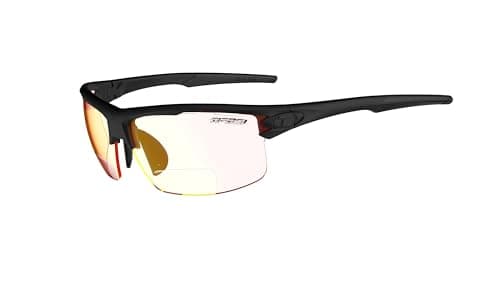
Best Overall
Tifosi Optics Rivet Reader Sunglasses
Riders who go from sun to shade
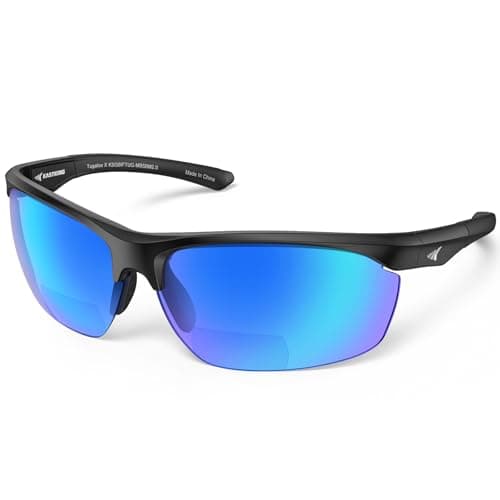
Best Polarized
KastKing Tugaloo Bifocal Polarized Sunglasses
Glare on water or wet pavement
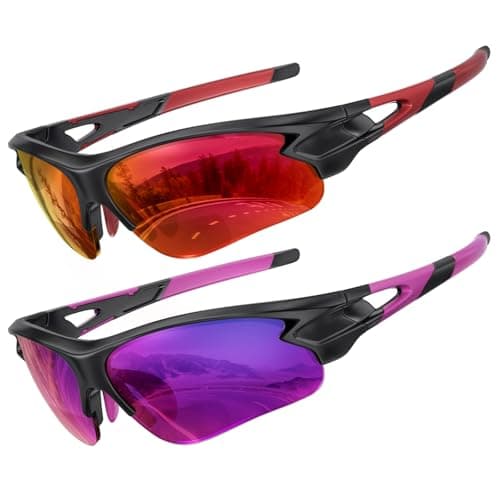
Lightest Pair
SKYOLUY Bifocal Reading Sunglasses
Riders sensitive to frame weight
Our Picks
Best Overall1 of 3
Tifosi Optics Rivet Reader Sunglasses
Photochromic lenses and +2.5 reading power in a light, adjustable frame.
Best for
Riders who go from sun to shade
Why we like it
The Rivet Reader pairs a +2.5 reading strength with shatterproof polycarbonate lenses and a Clarion Red photochromic tint that moves between 14 and 64 percent visible light transmission. The Grilamid TR-90 frame weighs 28 grams and has fully adjustable nose and ear pads that grip better as they get damp.
Compared with KastKing, it gives up polarization but gains a tint that adapts when an evening ride moves under trees. It is heavier than SKYOLUY, yet the adjustable pads suit a wider range of faces. Its strength is fixed as supplied, so confirm +2.5 matches your usual reader before buying.
Key specs
| Size | Medium to large fit |
|---|---|
| Features | +2.5 readers, polycarbonate lens, Grilamid TR-90 frame, 28 grams |
Specs can change between model years; confirm the exact version before buying.
Strengths
- Photochromic lens adapts to light
- Only 28 grams
- Adjustable nose and ear pads
- Shatterproof polycarbonate lens
Limitations
- One reading strength per version
- Medium to large fit only
Consider it if
- Mixed sun and shade routes
- Riders who use +2.5 readers
Skip it if
- Small faces needing a narrow frame
Best Polarized2 of 3
KastKing Tugaloo Bifocal Polarized Sunglasses
Polarized bifocal lenses with a coating that wipes clean easily.
Best for
Glare on water or wet pavement
Why we like it
The Tugaloo uses polarized polycarbonate lenses with a flush bifocal magnifier at the bottom, an oleophobic coating that repels oil and dust, and a flexible Grilamid frame with non-slip temple pads. Smoke lenses keep color realistic in bright sun, while brown lenses add contrast and depth in partial cloud. A molded hard case and microfiber pouch come in the box.
Against Tifosi, it trades the photochromic tint for polarization, which helps most on lake paths and wet roads. The bifocal segment means the top of the lens stays plain for watching the road. Pick the tint first, then confirm the magnification option before checkout.
Key specs
| Fit and mounting | Hard case and microfiber pouch included |
|---|---|
| Features | Polarized, bifocal, oleophobic coating, Grilamid frame |
Specs can change between model years; confirm the exact version before buying.
Strengths
- Polarized lenses cut glare
- Coating wipes clean easily
- Hard case included
- Non-slip temple pads
Limitations
- Fixed tint, no light adaptation
- Bifocal zone takes adjusting to
Consider it if
- Lakeside and wet-road riding
- Riders who want a hard case
Skip it if
- Riders wanting one lens for dusk
Lightest Pair3 of 3
SKYOLUY Bifocal Reading Sunglasses
18 gram TR90 frame with the widest strength range here.
Best for
Riders sensitive to frame weight
Why we like it
SKYOLUY builds a semi-rimless wraparound frame from TR90 that weighs 18 grams, with silicone nose pads and rubber strips on the temples. Reading power runs from +1.25 to +3.0, and the lenses block UV400 light. The lower segment is magnified while the top stays clear for distance viewing.
It is the lightest pair in this comparison and covers the most strengths, so riders with mild or strong needs both have an option. It lacks the photochromic tint of Tifosi and the polarization of KastKing, and the styling is marketed to women, so check frame width against your face before ordering.
Key specs
| Size | Semi-rimless wraparound |
|---|---|
| Features | Bifocal, UV400, TR90 frame, 18 grams |
Specs can change between model years; confirm the exact version before buying.
Strengths
- Only 18 grams
- Wide strength range
- Silicone nose pads
- UV400 lens protection
Limitations
- No polarized lenses
- Semi-rimless frame less rugged
Consider it if
- Light, comfortable all-day wear
- Riders needing +1.25 or +3.0
Skip it if
- Riders wanting polarized lenses
Spec Comparison
Key figures side by side. A dash means the brand gives no figure, so ask before you buy if it matters to you.
| Model | Size | Features | Link |
|---|---|---|---|
| Tifosi Optics Rivet Reader Sunglasses Best Overall | Medium to large fit | +2.5 readers, polycarbonate lens, Grilamid TR-90 frame, 28 grams | Check price |
| KastKing Tugaloo Bifocal Polarized Sunglasses Best Polarized | — | Polarized, bifocal, oleophobic coating, Grilamid frame | Check price |
| SKYOLUY Bifocal Reading Sunglasses Lightest Pair | Semi-rimless wraparound | Bifocal, UV400, TR90 frame, 18 grams | Check price |
How We Chose These Cycling Sunglasses with Readers
- Reading strength options
- A reader is only useful at the right strength. We compared how many strengths each pair offers and whether the number is fixed, since a wrong strength makes the near zone unusable.
- Lens type and tint
- Photochromic, polarized and plain smoke lenses behave differently in changing light. We weighed which tint suits upright trike riders who ride at slow speeds through sun and shade.
- Frame weight and fit
- Weight and nose pad design decide whether glasses stay put on bumpy paths. We compared the frame material, grams and adjustability for each pair, since slipping glasses are a hazard.
- Close and distance vision
- Where the reading power sits changes how safe the pair feels on the road. We compared bifocal inserts and readers by how much clear distance view stays available.
What to Look for in a Cycling Sunglasses with Readers
Reading strength
Reader power is measured in diopters, and a stronger number focuses closer. If you hold a phone at arm's length and still squint, a higher number helps, while too high a number forces you to hold things uncomfortably close.
Use the strength you already wear in drugstore readers, and check the product title for the exact number. Do not guess between two options, because a mismatch leaves you reading through a lens that blurs the very text you want.
Bifocal versus full reader lens
A bifocal puts the magnification in the lower part of the lens and leaves the top clear. A full reader magnifies the whole lens, which makes distant objects blurry unless you look over the top of the frame.
On a trike, the bifocal is usually safer because you can watch the road through the top and glance down at a phone or cycle computer. Be aware that the ground looks larger through the bottom zone, so keep your eyes level while moving.
Tint and light changes
Smoke lenses cut brightness evenly, polarized lenses cut reflected glare, and photochromic lenses darken in sun and lighten in shade. Each solves a different problem, and none solves all of them at once.
Match the tint to your route. Wet roads and lakes favor polarization, while tree-lined paths favor photochromic. Check the light transmission range in the title or bullets, and avoid dark tints if you ride near dusk.
Frame weight and grip
Heavier frames press on the nose after an hour, and slick temples slide when you look down. Adjustable or silicone nose pads and rubber temple strips keep the lens in place when you bend toward the handlebar.
Try the glasses on, nod your head forward, and shake gently. If they slip, adjust the pads or return them. Weight under about 30 grams is easy to forget, and every pair here falls below that mark.
How to Choose
By Light Conditions
| Situation | Our pick | Why |
|---|---|---|
| Sun to shade on tree-lined paths | Tifosi Optics Rivet Reader | Photochromic lens changes between 14 and 64 percent light transmission |
| Lake paths and wet pavement glare | KastKing Tugaloo | Polarized lenses reduce reflected glare from water surfaces |
| Mostly bright, steady daytime sun | SKYOLUY Bifocal Sunglasses | UV400 protection with the lightest frame for long rides |
Photochromic vs Polarized
- Photochromic
- A photochromic lens darkens in strong light and clears in shade, so it handles mixed routes without swapping glasses. Tifosi Optics Rivet Reader is the example here, with a tint that moves between 14 and 64 percent.
- Polarized
- A polarized lens filters reflected glare, which matters on lakes, wet roads and shiny cars. KastKing Tugaloo is the polarized option here, but it has a fixed tint, so deep shade will still look dim.
Most trike riders should start with the photochromic Tifosi, unless water glare is the main complaint.
For Reading a Phone or Cycle Computer Specifically
- Look for
- A lower reading zone that sits where you naturally glance down at the handlebar. The strength should match your regular readers, and the top of the lens should stay clear so you can watch the path.
- In this comparison
- KastKing Tugaloo and SKYOLUY both use bifocal segments, so the top stays plain. Tifosi Optics Rivet Reader offers a +2.5 strength, so choose it only if that matches your usual readers.
When to Spend More
- Spend more if
- You ride in changing light often, because Tifosi Optics Rivet Reader adapts without a lens swap. It also has adjustable pads, which matters if you wear glasses for hours.
- Save if
- You ride short loops in steady sun. SKYOLUY covers a wide strength range at the lowest weight, and KastKing Tugaloo adds polarization and a hard case without the photochromic tint.
Frequently Asked Questions
What reading strength should I choose?
Use the same strength you wear in your regular reading glasses, usually printed on the frame. If you are between two numbers, choose the lower one for outdoor use, because an overly strong reader blurs phone text at a normal holding distance.
Are bifocal sunglasses safe on a tricycle?
They can be, because the top of a bifocal stays clear for distance. Practice in a car park first, since the ground looks closer through the lower zone. Keep your head level while moving and glance down only at stops.
Can I wear these over my own prescription?
Reader sunglasses replace reading glasses, not a distance prescription. If you wear distance glasses, ask an optician about prescription sport lenses instead, because stacking a reader pair over another pair is awkward and can fog.
Do photochromic lenses work behind a windshield?
A tricycle has no windshield, so photochromic lenses get full outdoor light and darken as intended. Expect a short delay when moving from sun to shade, and avoid relying on them for fast changes like tunnels.
How do I clean reader sunglasses?
Rinse off dust with water, then wipe with a microfiber cloth. Avoid paper towels and shirts, which scratch coatings. A coated pair such as KastKing Tugaloo wipes clean more easily, but still needs a soft cloth.
Bottom Line
Tifosi Optics Rivet Reader is the best all-round choice because its photochromic lens suits mixed light and the frame stays comfortable. KastKing Tugaloo is the better fit for water glare, while SKYOLUY suits riders who want the lightest frame. Confirm your reading strength first, then pick a tint.