Best
Best Fully Reflective Cycling Vests
Four vests that put reflective material on the front, back and sides, with one that adds its own LEDs.

Updated · 3 min read · 4 products evaluated
A trike rider sits low and wide, so approaching drivers often see a small shape in the shadows. A vest with reflective material all the way around helps drivers pick you out from behind, ahead and at angles.
Four vests qualify for 360 degree coverage. Three are passive reflective only, and one adds USB rechargeable LEDs, so the choice depends on whether you want zero upkeep or a light of your own.
Short answer
The IDOU vest is the best overall pick because its reflective material meets EN471 and it has a zippered pocket and adjustable waist. The TCCFCCT vest adds ANSI/ISEA 107-2015 compliance, the SAWNZC offers a wide adjustment range and the Topward adds its own LEDs.
Quick Picks
Our 4 recommendations at a glance. Tap a pick for the full verdict.
Our Picks
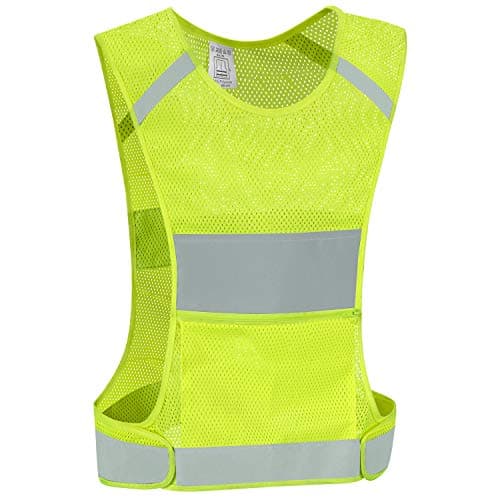
Best Overall1 of 4
IDOU Reflective Running Safety Vest
A 360 degree vest with EN471 reflective material and a zipped pocket.
Best for
Everyday night riding
Why we like it
The IDOU uses lightweight quick dry mesh with 360 degree reflective trim that is described as meeting EN471. A nylon hook and loop waist adjusts for a t-shirt or winter layers, and a larger zippered pocket holds small items.
It matches the TCCFCCT on coverage and pocket, but cites a different standard, EN471. It gives no light of its own, so the reflectivity depends on headlights hitting it.
Key specs
| Size | Nylon hook and loop waist adjustment |
|---|---|
| Features | 360 degree reflective trim, EN471, zippered pocket |
Specs can change between model years; confirm the exact version before buying.
Strengths
- 360 degree reflection
- EN471 reflective material
- Zippered pocket
- Adjusts over thick clothing
Limitations
- No light of its own
- Standard applies to the material, not a fit
Consider it if
- Commuting after dusk
- All season layers
Skip it if
- Riders wanting self lit visibility
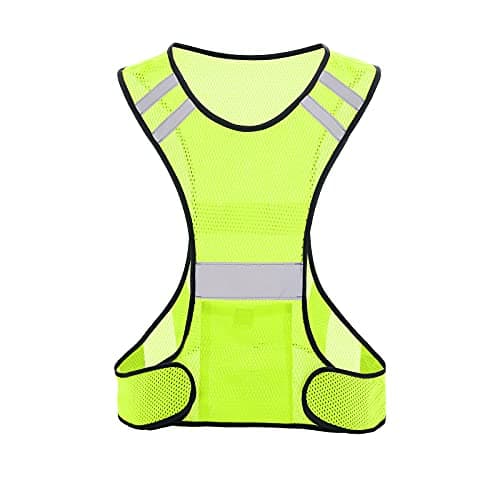
Best for Standards and Pocket2 of 4
TCCFCCT Reflective Running Vest
Reflective strips on shoulders, chest, back and waist, with a large inner pocket.
Best for
Carrying a phone
Why we like it
The TCCFCCT covers the shoulders, chest, back and waist with reflective strips on 100 percent polyester mesh. It carries a large inner pocket for a phone and earphones, folds flat and needs no batteries.
Compared with the IDOU it cites ANSI/ISEA 107-2015 and an inner rather than outer pocket. Compared with the SAWNZC it has less stated adjustability, so sizing needs checking.
Key specs
| Storage | Large inner pocket |
|---|---|
| Features | Strips on shoulders, chest, back, waist, ANSI/ISEA 107-2015 |
Specs can change between model years; confirm the exact version before buying.
Strengths
- Full torso reflective strips
- ANSI/ISEA 107-2015 cited
- Large inner pocket
- Folds flat, no battery
Limitations
- Size range needs checking
- No light of its own
Consider it if
- Phone and key carry
- Daily storage in a basket
Skip it if
- Riders needing a stated size range
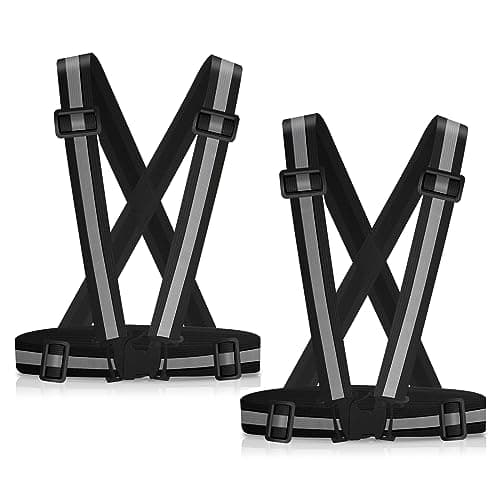
Best Adjustment Range3 of 4
SAWNZC Reflective Running Gear Vest
Four buckles adjust from a 25 to 45 inch waist.
Best for
Sharing between riders
Why we like it
The SAWNZC uses elastic fabric and four adjustable buckles, with shoulders expanding from 14 to 24 inches and the waist from 25 to 45 inches. Silver reflective stripes provide 360 degree visibility, claimed at 800 feet.
It has the widest stated size range, which helps over a bulky coat, but it has no pocket. It is the pick when fit and sharing matter more than storage.
Key specs
| Size | Shoulder 14 to 24 inches, waist 25 to 45 inches |
|---|---|
| Features | Four buckles, elastic fabric, silver stripes |
Specs can change between model years; confirm the exact version before buying.
Strengths
- Wide stated size range
- Four adjustable buckles
- Fits over a winter coat
- Light and breathable
Limitations
- No pocket mentioned
- Distance claim is a maker figure
Consider it if
- Larger riders
- Several riders sharing
Skip it if
- Riders who want a pocket
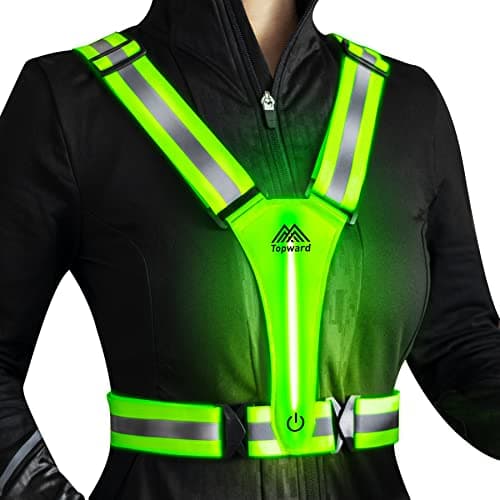
Best with Lights4 of 4
Topward LED Reflective Vest
A USB rechargeable vest with LEDs front and back plus reflective strips.
Best for
Dark rural roads
Why we like it
The Topward adds LED flash lights at the front and back to its reflective strips, with a stated 5 to 9 hour runtime and a 2 hour charge. It weighs 5.1 ounces and adjusts at the waist over jackets.
It is the only one of the four with its own light, which matters on unlit roads, but you must charge it. The reflective strips still work if the battery dies.
Key specs
| Weight | 5.1 oz (145 g) |
|---|---|
| Features | LEDs front and back, reflective strips |
Specs can change between model years; confirm the exact version before buying.
Strengths
- LEDs front and back
- 145 g weight
- Adjusts over jackets
- USB rechargeable
Limitations
- Needs charging
- Runtime shorter on steady modes
Consider it if
- Unlit roads
- Dusk and dawn rides
Skip it if
- Riders who forget to charge
Spec Comparison
Key figures side by side. A dash means the brand gives no figure, so ask before you buy if it matters to you.
| Model | Size | Features | Link |
|---|---|---|---|
| IDOU Reflective Running Safety Vest Best Overall | Nylon hook and loop waist adjustment | 360 degree reflective trim, EN471, zippered pocket | Check price |
| TCCFCCT Reflective Running Vest Best for Standards and Pocket | — | Strips on shoulders, chest, back, waist, ANSI/ISEA 107-2015 | Check price |
| SAWNZC Reflective Running Gear Vest Best Adjustment Range | Shoulder 14 to 24 inches, waist 25 to 45 inches | Four buckles, elastic fabric, silver stripes | Check price |
| Topward LED Reflective Vest Best with Lights | — | LEDs front and back, reflective strips | Check price |
How We Chose These Fully Reflective Cycling Vests
- All around coverage
- Each vest has reflective material on the front, back and sides or shoulders. Prefer a vest that reflects on the front, back and sides over one with only a rear panel or mesh sides.
- Standards named
- We noted EN471 and ANSI/ISEA 107-2015 where cited. These refer to reflective material or garment standards, not to your comfort or fit.
- Fit and adjustment
- A vest has to go over shirts and coats. We compared buckles, hook and loop and stated size ranges.
- Pockets and power
- We counted pockets for phones and keys and noted the one vest that has its own lights. Both change daily use.
What to Look for in a Fully Reflective Cycling Vests
Reflective coverage
Reflective strips throw headlight beams back to the driver, so more strips around the torso give more angles of recognition. A rear panel alone misses side approaches.
Look for wording like 360 degree and strips on shoulders, chest, back and waist. Check photos to see strips from the side.
Standards and what they mean
EN471 and ANSI/ISEA 107 are standards for high visibility garments and materials. A named standard shows a baseline for reflective area and brightness.
Read the exact wording before buying. A standard on the material does not guarantee fit, and some standards are for work wear, not cycling.
Adjustment and bulk
A vest has to fit over a t-shirt in summer and a jacket in winter. Buckles, elastic and hook and loop each handle different ranges.
Look for the stated waist and shoulder range, such as 25 to 45 inches, and measure your chest over a coat before ordering.
Passive vs lit
A passive vest works only when light hits it and never needs charging. A lit vest adds LEDs that work on unlit roads but require a charge.
On a trike, which sits low, a rear LED helps. If you choose lights, look for a runtime figure and keep the reflective strips as backup.
How to Choose
By Riding Conditions
| Situation | Our pick | Why |
|---|---|---|
| Street commuting after dusk | IDOU Vest | 360 degree trim and EN471 material |
| Unlit rural road | Topward LED Vest | LEDs front and back, 5 to 9 hours |
| Winter coat layers | SAWNZC Vest | Waist expands from 25 to 45 inches |
| Phone and keys on hand | TCCFCCT Vest | Large inner pocket, folds flat |
Passive vs Lit Vests
- Passive reflective
- The IDOU, TCCFCCT and SAWNZC have no battery and are ready every ride. They depend on headlights, so they shine only when a car approaches.
- Lit vest
- The Topward adds LEDs front and back with a stated 5 to 9 hour runtime. It is more visible on dark roads but needs a 2 hour charge.
Most riders should start with a passive vest and add a trike tail light.
For Phone and Key Carry Specifically
- Look for
- A zippered or inner pocket large enough for a phone, which keeps your hands free and the phone off a trike basket.
- In this comparison
- The IDOU has a larger zippered pocket and the TCCFCCT has a large inner pocket. The SAWNZC has no pocket named.
When to Spend More
- Spend more if
- You ride unlit roads. The Topward adds its own LEDs, which passive vests cannot give when no headlights are near.
- Save if
- You ride lit streets. The IDOU or SAWNZC give 360 degree reflective coverage without a charger.
Frequently Asked Questions
Is a reflective vest enough on a trike?
It helps a lot, but a trike also needs a tail light and a headlight. A reflective vest works only when headlights hit it, so add a rear light that flashes. A vest and lights together give drivers more cues from behind.
What does EN471 mean for a vest?
EN471 is a European standard for high visibility clothing that sets minimum reflective area and brightness. IDOU cites it for its reflective material. It is not a guarantee of fit or comfort, so check sizing before buying.
Will the vest fit over a winter coat?
The SAWNZC states a waist range from 25 to 45 inches and shoulders from 14 to 24 inches, which is the widest here. The IDOU also uses a hook and loop waist for thick clothes. Measure over your coat before ordering.
How do I wash a reflective vest?
Follow the care label, but most mesh vests do well with a gentle wash and air dry. Hot water and dryers can crack reflective trim. Wash separately from items with hooks, and check strips for peeling after each wash.
Do I need a vest with lights?
Only on unlit roads. The Topward offers LEDs with a stated 5 to 9 hour runtime. On lit streets a passive vest and a good trike tail light often give enough visibility, and avoid charging worries.
Bottom Line
Choose the IDOU vest for most trike riders because it combines 360 degree EN471 reflective trim, an adjustable waist and a zipped pocket. Pick the TCCFCCT for its cited ANSI/ISEA standard, the SAWNZC for the widest fit range, and the Topward when you ride unlit roads.