Best
Best Bike Computers Under $60
This band adds bigger screens, navigation and sensor support over basic wireless units.

Updated · 4 min read · 5 products evaluated
Cheaper bike computers show speed and distance. Up to this band you add GPS accuracy without a wheel magnet, bigger screens, and on some units navigation and sensor pairing. That matters on a trike, where a wheel sensor is awkward to mount.
These five sell strongly but have unverified ratings, so we judged stated specs only. Check handlebar diameter and phone app needs before buying.
Short answer
The CYCPLUS G1 is the simple, small, long-battery pick. The BKVTOP has the best specs for hills, the CooSpo pairs with ANT+ sensors, the GEOID adds color navigation, and the iGPSPORT has the biggest screen.
Quick Picks
Our 5 recommendations at a glance. Tap a pick for the full verdict.
Best Small and Simple
CYCPLUS G1 Wireless GPS Bike Computer
Riders who want the longest battery
Biggest Screen
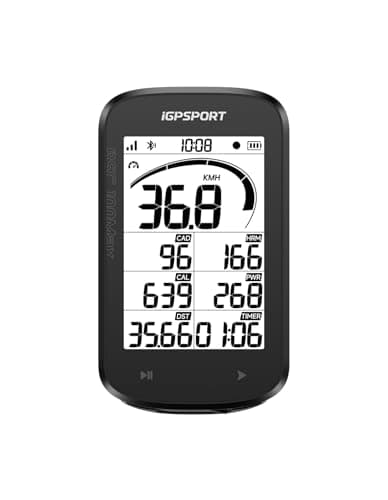
iGPSPORT BSC100MAX GPS Bike Computer
Riders who need to read it easily
Our Picks
Best Overall1 of 5
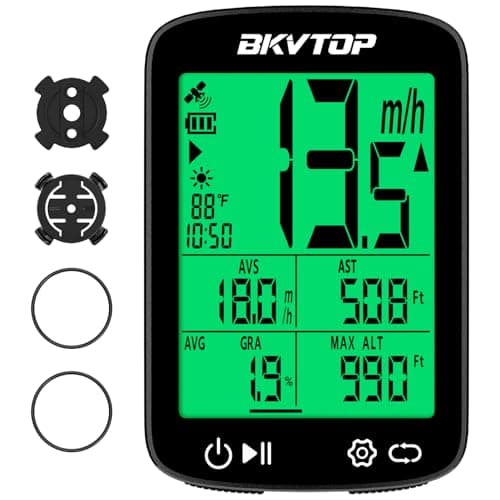
BKVTOP Wireless GPS Bike Computer
2.4 inch screen, 28 hour battery, IPX7 and gradient data in a 50g body.
Best for
Hill and everyday riding
Why we like it
The BKVTOP tracks speed, distance, temperature, altitude, gradient and accumulated ascent from GPS without a wheel sensor. It has a green auto backlight, auto start and stop, a USB-C cable and a standard mount, with IPX7 waterproofing.
It beats the CYCPLUS on screen size and water rating but has no navigation or sensor pairing like the CooSpo and GEOID. Gradient and ascent suit hilly routes. Confirm the mount fits your trike's handlebar diameter.
Key specs
| Fit and mounting | Standard mount with rubber pad and rings |
|---|---|
| Features | 2.4 in screen, IPX7, gradient and ascent |
Specs can change between model years; confirm the exact version before buying.
Strengths
- No wheel sensor needed
- Gradient and ascent data
- IPX7 waterproofing
- Auto start and stop
Limitations
- No navigation
- No sensor pairing mentioned
Consider it if
- Hills
- Simple riders
Skip it if
- Riders wanting route maps
Best Small and Simple2 of 5
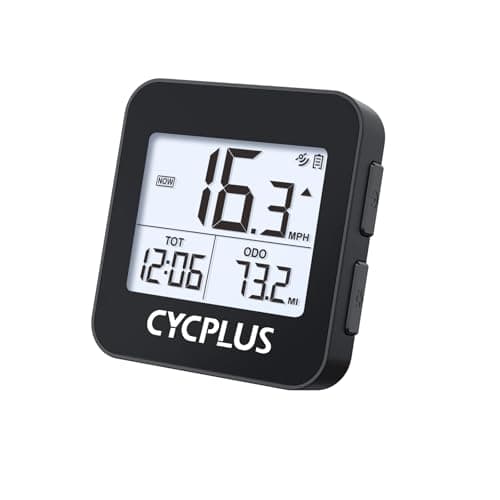
CYCPLUS G1 Wireless GPS Bike Computer
70g unit with a 2.0 inch screen, automatic backlight, IPX6 and more than 55 hours of runtime.
Best for
Riders who want the longest battery
Why we like it
The G1 has a 2.0 inch FSTN screen with automatic backlight, GPS-based speed and distance, and a 1200 mAh battery with more than 55 hours of runtime. It sleeps after 10 minutes of inactivity and shows your last ride data.
It has a smaller screen than the BKVTOP but longer battery life, and less navigation than premium units. It suits riders who value long battery and a simple display. It needs charging, and the screen is small if your eyes are weak.
Key specs
| Fit and mounting | Handlebar mount |
|---|---|
| Features | 2.0 in screen, automatic backlight, IPX6 |
Specs can change between model years; confirm the exact version before buying.
Strengths
- No wheel setting needed
- 2.0 inch screen
- Automatic backlight
- IPX6 water resistance
Limitations
- Needs charging
- Less navigation than premium units
Consider it if
- Long rides
- Minimal setup
Skip it if
- Riders who need a big screen
Best for Sensors3 of 5
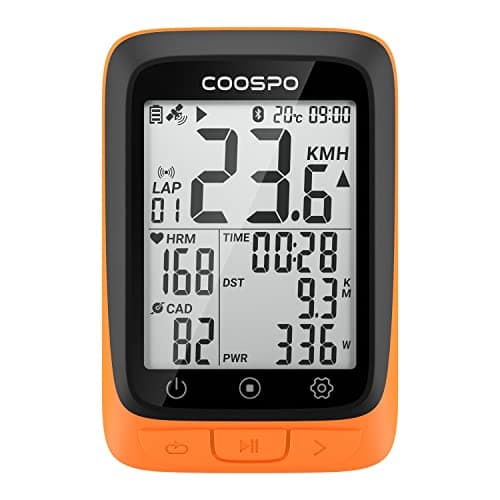
COOSPO BC107 GPS Bike Computer
2.4 inch screen with GPS and BeiDou, ANT+ pairing for heart rate and cadence sensors.
Best for
Riders adding sensors
Why we like it
The BC107 has a 2.4 inch display, GPS and BeiDou positioning, and pairs with ANT+ sensors such as heart rate monitors, speed and cadence sensors and power meters. It does not support Bluetooth for sensors.
It is the one for riders who want a heart rate strap, but it has no color map like the GEOID. Check your sensors are ANT+, and note a long front mount may be sold separately.
Key specs
| Fit and mounting | Front mount; extension sold separately |
|---|---|
| Features | 2.4 in screen, GPS and BeiDou, ANT+ sensors |
Specs can change between model years; confirm the exact version before buying.
Strengths
- ANT+ sensor support
- GPS and BeiDou
- 2.4 inch display
- Rugged ABS and TPU body
Limitations
- No Bluetooth sensors
- Long mount sold separately
Consider it if
- Heart rate tracking
Skip it if
- Bluetooth sensor owners
Best Navigation4 of 5
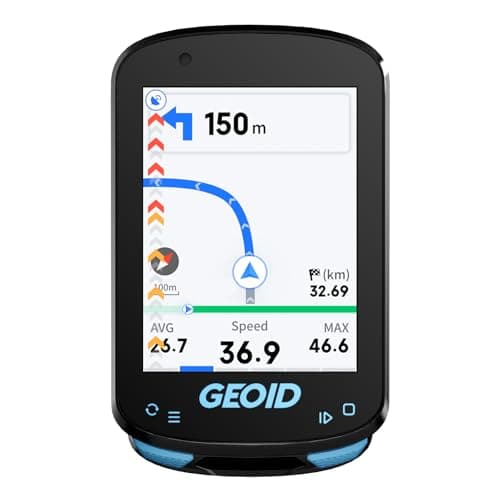
GEOID CC600 Color Bike Computer
2.4 inch color screen with turn reminders, rerouting, GPX upload, WiFi and Bluetooth.
Best for
Route followers
Why we like it
The CC600 has a 2.4 inch color display, turn-by-turn style reminders, rerouting, GPX upload through its phone app, WiFi and Bluetooth sync, support for five satellite systems and 100 hours of storage. Custom data pages go up to 10.
It does more than the BKVTOP but needs setup through an app. It suits riders who explore new routes. Sync AGNSS data before rides for quick positioning, and check battery runtime.
Key specs
| Features | 2.4 in color screen, GPX route navigation, WiFi and Bluetooth sync, 100 hour storage |
|---|
Specs can change between model years; confirm the exact version before buying.
Strengths
- Color navigation
- Automatic rerouting
- WiFi and Bluetooth sync
- Custom data pages
Limitations
- Setup through an app
- Battery runtime not given
Consider it if
- New routes
- Tech-comfortable riders
Skip it if
- Riders wanting plug and play
Biggest Screen5 of 5
iGPSPORT BSC100MAX GPS Bike Computer
3 inch anti-glare screen, five-satellite GPS, Strava sync and data alerts.
Best for
Riders who need to read it easily
Why we like it
The BSC100MAX has a 3 inch anti-glare screen, five-satellite positioning, smart auto pause, threshold alerts such as heart rate, and an app that syncs to Strava and Komoot.
Its screen is larger than every other pick, which helps weak eyes. It lacks the color navigation of the GEOID. Battery and waterproof ratings are not given, so check them.
Key specs
| Features | 3 in anti-glare screen, 5 satellite GPS, Strava sync |
|---|
Specs can change between model years; confirm the exact version before buying.
Strengths
- 3 inch screen
- Five-satellite GPS
- Strava and Komoot sync
- Automatic pause
Limitations
- Battery life not given
- Water rating not given
Consider it if
- Older eyes
- Data trackers
Skip it if
- Riders wanting map navigation
Spec Comparison
Key figures side by side. A dash means the brand gives no figure, so ask before you buy if it matters to you.
| Model | Fit | Features | Battery | Link |
|---|---|---|---|---|
| BKVTOP Wireless GPS Bike Computer Best Overall | Standard mount with rubber pad and rings | 2.4 in screen, IPX7, gradient and ascent | Up to 28 hours, USB-C | Check price |
| CYCPLUS G1 Wireless GPS Bike Computer Best Small and Simple | Handlebar mount | 2.0 in screen, automatic backlight, IPX6 | 1200 mAh, 55+ hours | Check price |
| COOSPO BC107 GPS Bike Computer Best for Sensors | Front mount; extension sold separately | 2.4 in screen, GPS and BeiDou, ANT+ sensors | — | Check price |
| GEOID CC600 Color Bike Computer Best Navigation | — | 2.4 in color screen, GPX route navigation, WiFi and Bluetooth sync, 100 hour storage | — | Check price |
| iGPSPORT BSC100MAX GPS Bike Computer Biggest Screen | — | 3 in anti-glare screen, 5 satellite GPS, Strava sync | — | Check price |
How We Chose These Bike Computers Under $60
- Screen size
- We compared display size first, since a trike rider sits upright with the bars at arm's length and needs speed digits that read at a glance, from 2.0 inch up to 3 inch.
- Battery and water
- We compared stated runtime and IP ratings, because a long ride in drizzle should not end with a dead or fogged screen, and some units give no battery figure at all.
- Sensor support
- We checked whether each unit pairs with ANT+ or Bluetooth sensors, since heart rate and cadence belts only work with the protocol the computer actually supports.
- Setup and apps
- We weighed whether a computer works straight from the box or needs a phone app, route files or sync accounts before it becomes useful on the first ride.
What to Look for in a Bike Computer Under $60
Screen size
Screen size sets how large the speed and distance digits can be drawn. Bigger screens such as the 3 inch iGPSPORT are easier to read than a 2.0 inch unit when your eyes are on the road ahead.
Look for the screen measurement in inches, not just the word large. Imagine the unit on your handlebar at arm's length, and pick the biggest display you can mount without crowding lights or a bell.
Water rating
An IPX rating describes how well a sealed case resists water. IPX7, as on the BKVTOP, handles brief immersion, while IPX6 on the CYCPLUS G1 handles strong spray, so both suit normal rain.
Find the actual IPX number in the specs, since two models here give no water rating at all. If the trike is stored outdoors, wipe the unit dry and avoid charging it while wet.
Sensor protocol
ANT+ and Bluetooth are two different wireless languages used by heart rate straps and cadence sensors. A computer that only speaks ANT+ cannot read a Bluetooth-only strap, and the reverse is also true.
Check what your sensor says on its box before choosing. The COOSPO BC107 supports ANT+ only, while the GEOID CC600 offers WiFi and Bluetooth sync, so match the protocol before you buy.
Handlebar mount
Trike handlebars vary in diameter and often carry brake levers, bells and baskets, so a standard bicycle mount may not clamp cleanly. A wrong fit means a computer that rotates or rattles.
Measure your bar diameter with a tape before ordering, and leave room next to the grips. The COOSPO BC107 needs an extension that is sold separately, so plan for that extra part if your bar is crowded.
Battery runtime
Battery life decides whether you can leave the computer unplugged for a full week of rides. The CYCPLUS G1 gives more than 55 hours and the BKVTOP gives up to 28 hours, while other units give no figure.
Compare the runtime in hours against your longest ride, and add margin for cold weather. Where no figure is given, assume you will charge after each long day and carry a USB cable.
Navigation and app setup
Navigation units show turn reminders and reroute when you miss a turn, but they depend on route files and an app for setup. Simple units just show speed and distance from the first press.
Decide whether you actually follow routes. The GEOID CC600 handles GPX routes and sync, but if you ride the same loop every day, a simpler unit saves effort and reduces setup mistakes.
How to Choose
By Main Need
| Situation | Our pick | Why |
|---|---|---|
| Hills and everyday rides | BKVTOP Wireless GPS Bike Computer | Gradient and ascent data, IPX7, up to 28 hours |
| Longest battery between charges | CYCPLUS G1 Wireless GPS Bike Computer | 1200 mAh battery, more than 55 hours |
| Heart rate or cadence sensors | COOSPO BC107 GPS Bike Computer | ANT+ pairing for sensors on a 2.4 inch screen |
| Following routes with turn prompts | GEOID CC600 Color Bike Computer | Color screen, rerouting and GPX route upload |
| Easiest screen to read | iGPSPORT BSC100MAX GPS Bike Computer | 3 inch anti-glare screen with Strava sync |
Simple vs Navigation
- Simple
- The BKVTOP Wireless GPS Bike Computer and CYCPLUS G1 Wireless GPS Bike Computer show speed and distance without route files. The CYCPLUS adds automatic backlight and a long battery, and neither needs wheel size entry.
- Navigation
- The GEOID CC600 Color Bike Computer gives turn reminders, rerouting and GPX upload with WiFi and Bluetooth sync. It needs an app for setup, which suits explorers more than riders on a fixed loop.
Choose a simple unit unless you regularly ride new routes and want prompts at junctions.
For Weak Eyes Specifically
- Look for
- Look for the largest screen you can mount, high contrast and anti-glare, since small digits are the first thing older riders complain about.
- In this comparison
- The iGPSPORT BSC100MAX GPS Bike Computer has a 3 inch anti-glare screen, the largest here, while the BKVTOP and COOSPO BC107 offer 2.4 inch displays.
When to Spend More
- Spend more if
- You want maps and prompts, where the GEOID CC600 Color Bike Computer gives color navigation and rerouting that the simpler units do not.
- Save if
- You only need speed and distance, where the CYCPLUS G1 Wireless GPS Bike Computer or BKVTOP covers the basics with a long battery.
Frequently Asked Questions
Do I need a wheel sensor?
No. GPS bike computers read speed and distance from satellites, so there is no magnet, sensor or wheel size entry. That makes install simple on a trike. A wired sensor model would only be needed if you wanted wheel-based counting, and none of these five require it.
What is ANT+ and does it matter?
ANT+ is a wireless protocol used by many heart rate straps and cadence sensors. It matters only if you own such a sensor. The COOSPO BC107 pairs with ANT+ but not Bluetooth sensors, so check your strap before choosing it.
Which computer handles rain best?
The BKVTOP is rated IPX7 and the CYCPLUS G1 is rated IPX6, so both handle rain well. The GEOID and iGPSPORT give no water rating, so treat them as splash resistant at best and wipe them dry after wet rides.
Can I follow a route on these?
Yes, on the GEOID CC600, which accepts GPX route uploads and gives turn reminders and rerouting. The simpler units show speed and distance only, so if route prompts matter to you, the GEOID is the pick to consider.
Will they fit a trike handlebar?
Probably, but measure your bar diameter first. Trike bars can be wider or more crowded than a bicycle's. The COOSPO BC107 needs a separate extension mount, so allow for that. Confirm there is space near grips, bells and lights before ordering.
Bottom Line
The BKVTOP Wireless GPS Bike Computer is the best all-round pick, with an easy setup and IPX7 sealing. Choose the GEOID CC600 if you want navigation, the iGPSPORT BSC100MAX for the largest screen, the CYCPLUS G1 for battery life, and the COOSPO BC107 for ANT+ sensors.